


























































Do you know that Software Modernization Services is not an optional plan of IT bucket list anymore? It’s a mandatory decision-making process that requires immediate contemplation. Being a company that has already relied on digital infrastructure must think of offering beyond-app-experience to the customers. This is only possible when Software Modernization Services is the top priority on your list.
However, software product modernization is not an easy game; you have to understand the profit scope, requirement listing, legacy modernization approach, technical analysis, and key strategies for successful execution. In this blog, we will delve into a similar notion.
Key takeaways:
- Market Scope of Software Modernization Services
- When do you need to look for Software Modernization Services?
- Technical audit before software modernization
- Key factors impacting software modernization
- 7R strategies for Software Modernization
- General FAQs
Market Overview: Software Modernization Services is No Longer an Option B
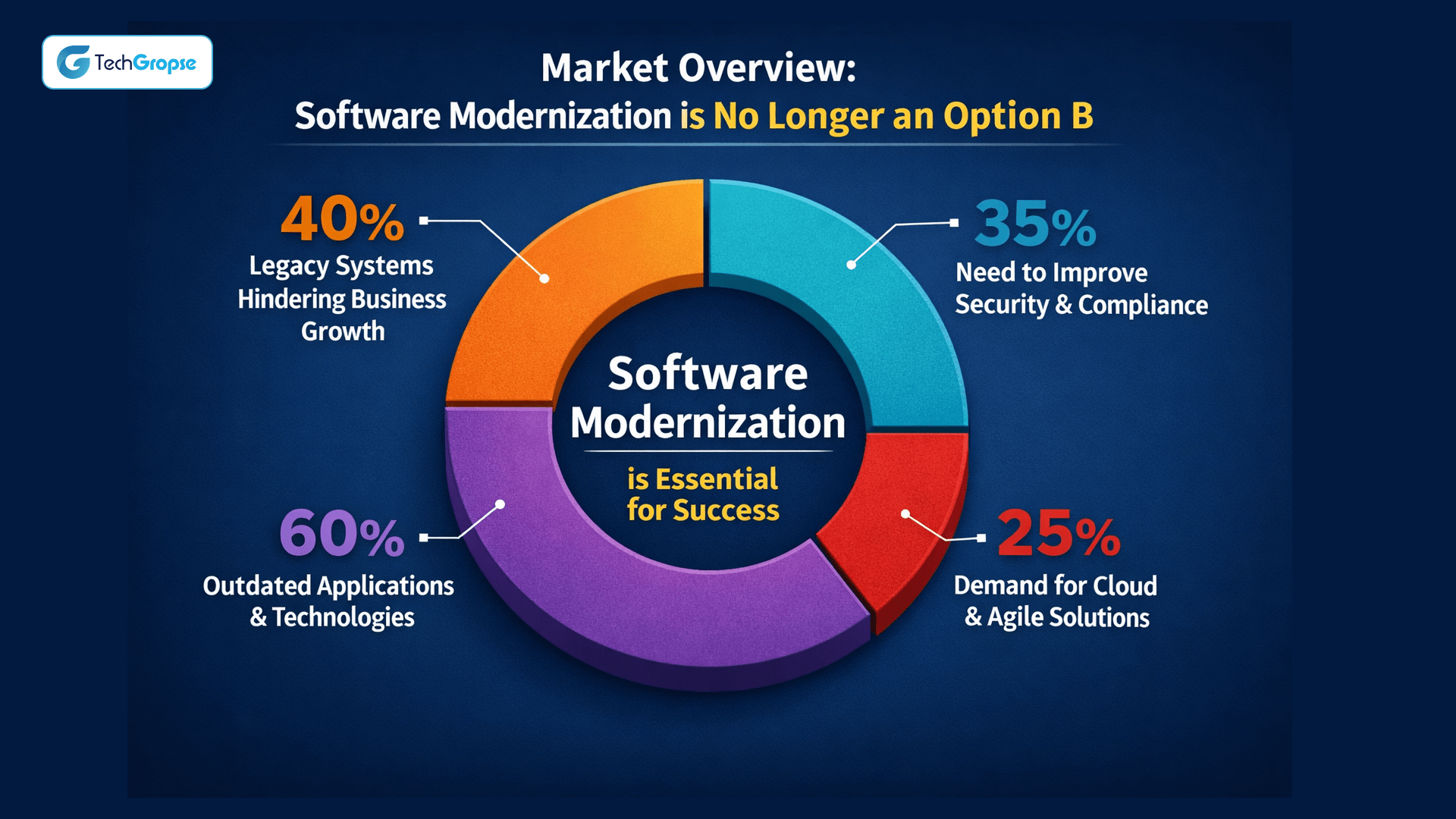
Techradar data says that modernized apps are 3× more likely to deliver tangible returns from AI tools compared to outdated systems, showing the strategic importance of modernization for innovation.
Another Techradar data reveals that 93% of IT leaders say updating software is essential to improve AI capabilities, highlighting that modernization is foundational for advanced tech adoption.
Statistics from WeCanDevelopit stats that Cloud migration and modernization can reduce infrastructure costs by ~28% on average, while increasing agility and availability.
A report from BAYONE says that Modernization can cut annual infrastructure costs by 15–35% and maintenance costs by 30–50%, according to industry research.
Warning Signs: Symptoms that Your Software has Turned Obsolete!
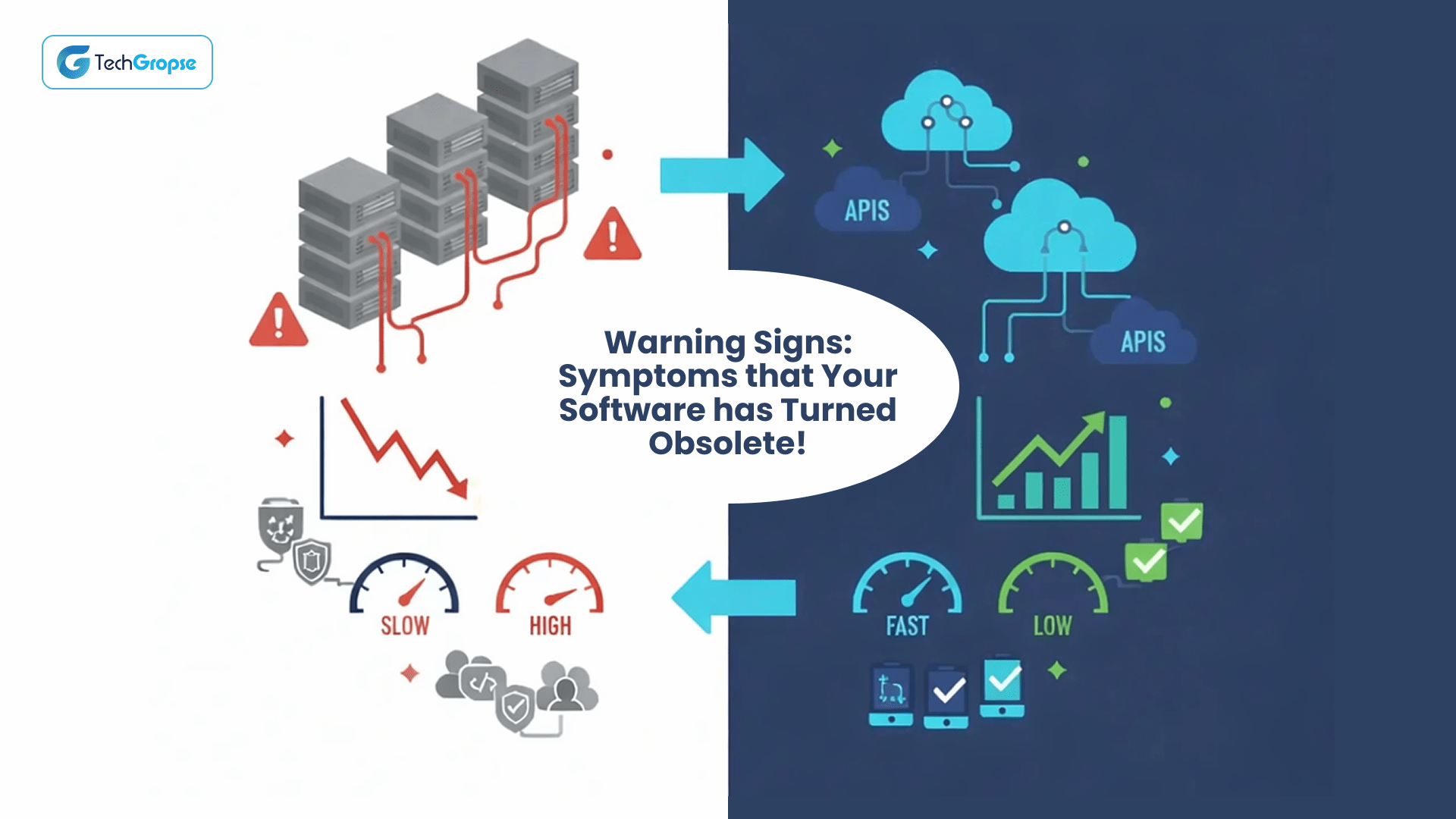
Software Modernization is not a sudden decision-making process. Your current legacy and cloud infrastructure will show you certain compelling factors to initiate the first step to adopt legacy modernization software.
High Maintenance Cost
When a major portion of your budget goes on support and maintenance services, it’s high time to modernize your software solution. A costly bug fixing, load optimization, and performance optimization comes up with mitigated ROI, eventually producing the requirement of Software Modernization.
Inefficient Performance
Low-performing software infrastructure is a symptom that your application has turned obsolete in the market. Frequent crashes, slow loading speed, and performance bottlenecks are some of the warning signs that you should go ahead with quick Software Modernization.
Technical Debt
Growing technical debt is due to poor system documentation, unsupported frameworks, and absurd codebases. An abundance of technical debt in your application ecosystem would route you towards Software Modernization.
Security Vulnerabilities
Legacy systems and obsolete cloud infrastructure often lack modern defense mechanisms. Increasing data breaches and unpatched frameworks are critical security concerns that push organizations toward modernization. To protect your data, we align our modernization processes with the NIST Cybersecurity Framework , ensuring your updated systems meet global security standards.
Limited Scalability
Obsolete software struggles to scale with business growth, seasonal demand, or new digital channels, restricting agility and future expansion. It often fails to support cloud environments, distributed users, and real-time data processing, making your system build more affinity for Software Modernization.
Technical Audit Before You Hire Software Modernization Services: Step-by-Step Guidelines
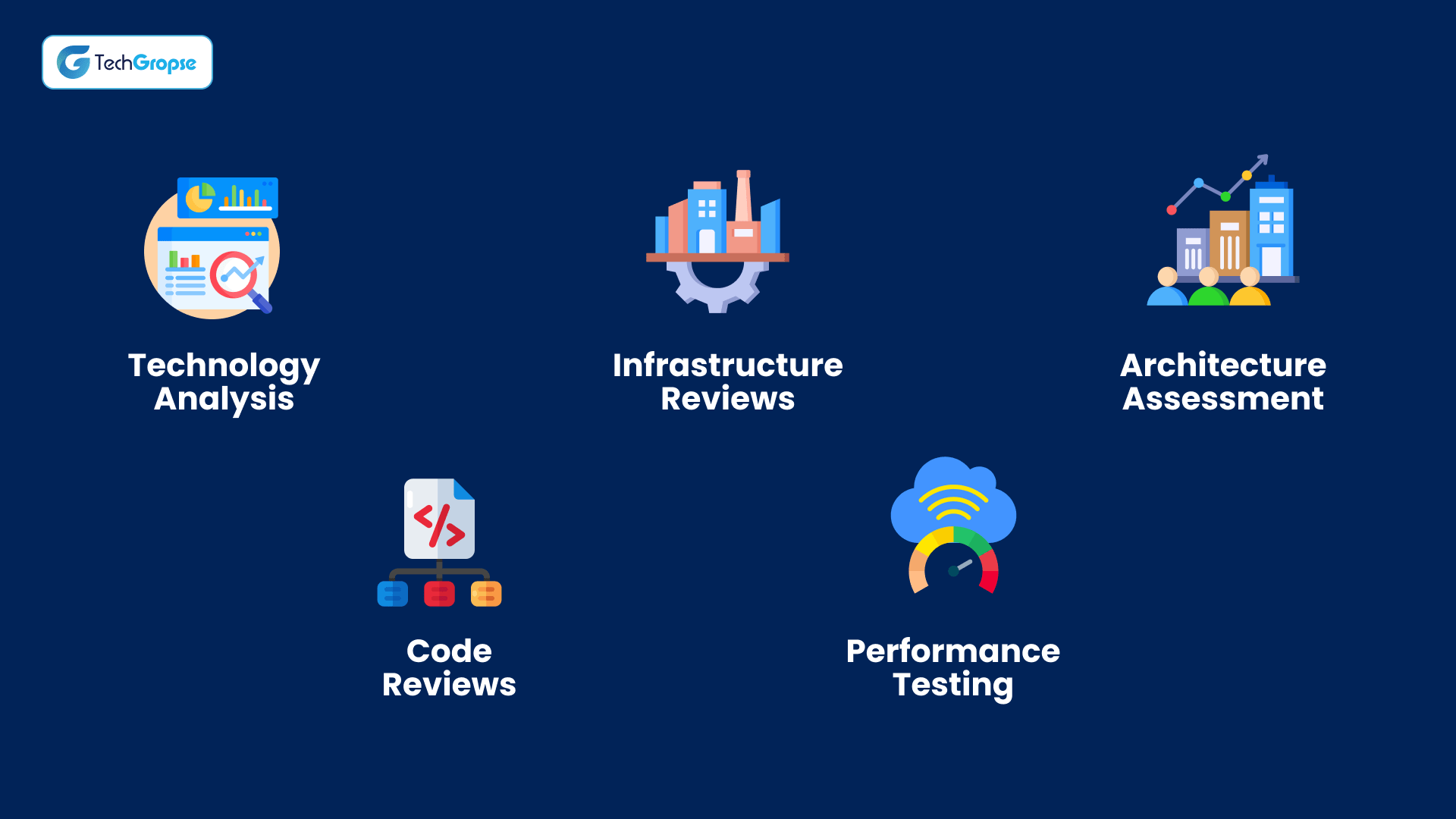
A technical audit is a comprehensive assessment of your existing software system regarding quality accomplishment, system performance, scalability, and potential risks.
Let’s explore some of the key factors of a technical audit.
Technology Analysis
- Recognize non-functional frameworks and programming languages.
- Check cloud compatibility and microservices architecture.
- Analyse API dependencies and third-party integration.
- Recommend a tech-boutique aligned to business goals.
- Review compliance issues and licensing costs.
Infrastructure Reviews
- Which one to choose: On-Premises, Cloud, or Hybrid infrastructure?
- Check DevOps integration and CI/CD pipelines.
- Evaluate disaster recovery and backup systems.
- Analyse accessibility control and security infrastructure.
- Recommend a cloud-first infrastructure model.
Architecture Assessment
- Recognize microservices vs monolithic infrastructure.
- Evaluate vertical and horizontal scaling potential.
- Analyse technical debt in Architectural design.
- Review coupling levels and system dependencies.
- Recommend a future-ready infrastructure pattern.
Code Reviews
- Assess code readability, structure, and maintainability.
- Identify duplicated, unused, or legacy code blocks.
- Evaluate adherence to coding standards and best practices.
- Review documentation quality and inline comments.
- Identify security vulnerabilities in code.
Performance Testing
- Identify response time and system latency.
- Conduct load testing and performance testing.
- Analyse CPU consumption and memory usage.
- Identify scalability limitations under growth scenarios.
- Assess performance monitoring and logging tools.
Key Factors of Software Modernization Services in 2026
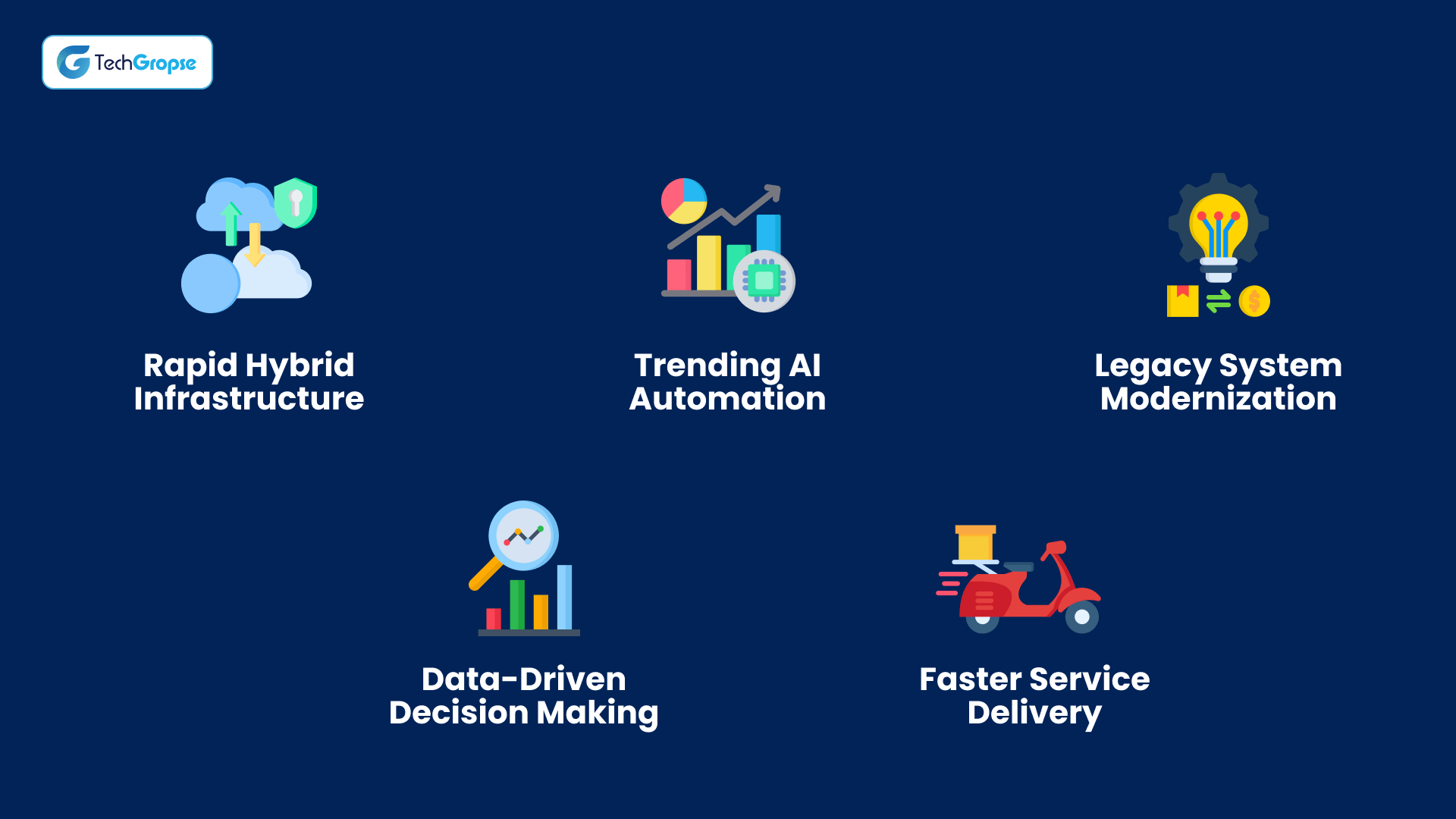
Now, let’s explore the key factors of Software Modernization in 2026.
Rapid Hybrid Infrastructure
With seamless workflow distribution, high scalability, resource optimization, improved business continuity, and disaster recovery readiness, hybrid infrastructure is the best prospect of Software Modernization in 2026.
Trending AI Automation
Integrating AI automation is the fundamental baseline of any digital business today. From modern APIs to improved compliance postures, eliminating technical debt is a core part of the Legacy App Modernization journey. By transforming legacy apps into cloud-native infrastructure, enterprises can reduce maintenance costs while accelerating innovation.
Legacy System Modernization
When it comes to holistic software modernization, you have to transform the legacy app to cloud based digital infrastructure. From modern APIs to compliance posture, eliminating technical debt to mitigating maintenance and support costs, everything comes under the umbrella of Legacy App Modernization.
Data-Driven Decision Making
Data-driven decision making uses real-time analytics and actionable insights to guide strategic choices, reduce risks, optimize operations, and improve business outcomes through accurate, evidence-based intelligence.
Faster Service Delivery
Speed-to-market ratio is another integral factor for Software Modernization. When it comes to leveraging the digital-first landscape, reducing the operational bottlenecks and serving the user faster becomes the cornerstone for your business success.
Legacy Software Modernization Services: Know the 7R Strategy
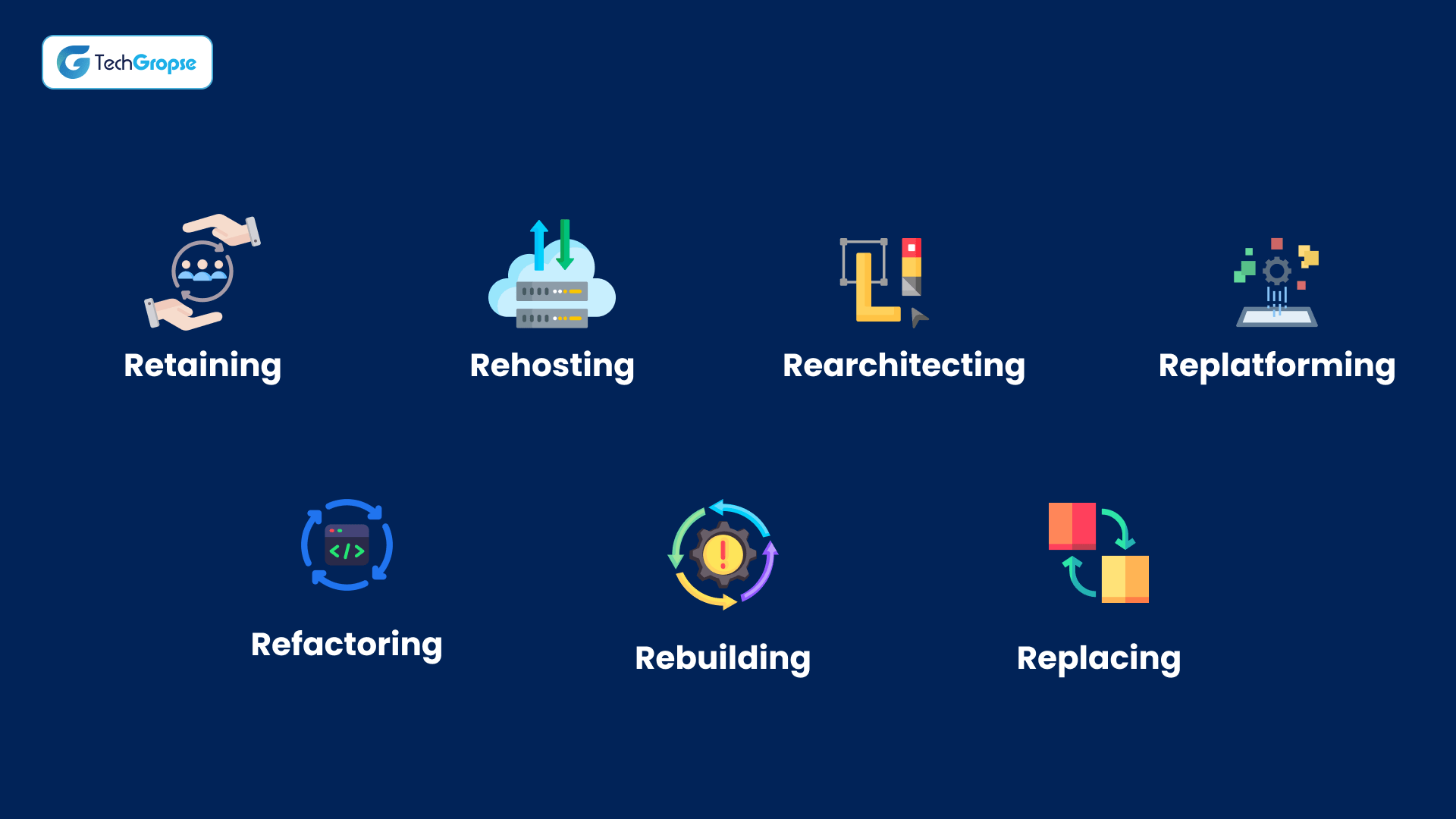
Before you adopt the modernization planning and process, know the 7R strategy that paves the pillar to this journey.
-
Retaining
As the name says, Retaining doesnot emphasizes on transforming the existing application. It rather focuses on continuing with the existing system without leaping for a substantial change.
Why choose “Retaining”?
When the existing operation is satiated with the current ROI, we “Wait and Watch” to observe the penetration of recent trends, without risking the monetization harmony.
- Rehosting
Also termed as “Lift & Watch”, here we move the application and digital resources from one infrastructure to another, possibly from legacy to cloud ecosystem, without changing the codebase.
Why choose “Rehosting”?
For quick migration, minimum risks, and low upfront modernization cost, we choose the “Rehosting” strategy. For organizations seeking rapid scalability, we often reference AWS Cloud Migration best practices to ensure zero data loss during the transition.
- Replatforming
A step ahead of “Rehosting”, “Replatforming” also involves making nominal changes in the codebase along with shifting the application from one environment to another.
Why choose “Replatforming”?
Without elevating the budget scale, risk factor, and time engagement, oreganization choose the replatform resources for scalability improvement and performance acceleration.
- Refactoring
Making a strategic move ahead of “Replatforming”, “Refactoring involves altering and optimizing the codebase, without disrupting the application functionality.
Why choose “Refactoring”?
To eradicate the maintenance issues, technical debt, and poor quality, Refactoring is broadly chosen by organizations.
-
Rearchitecting
“Rearchitecting” involves redesigning the entire infrastructure of the application to incorporate serverless computing, microservices, and API driven-system.
Why choose “Rearchitecting”?
Rearchitecting is chosen when the existing system architecture can’t support scalability or modern integration needs. If your business requires more than just a simple shift, our team specializes in custom digital solutions that re-architect your platform for future-ready performance.
-
Rebuilding
“Rebuilding” involves writing a fresh new code base and integrating modern technologies. Only the business workflow remains constant.
Why choose “Rebuilding”?
When the existing system is completely obsolete, outdated, and complex, we choose to rebuild the entire application.
-
Replacing
“Replacing” involves decomposing the entire existing system and adopting a completely new SaaS-based cloud-focused application.
Why choose “Replacing”?
When none of the components of your business application are meeting the operational requirement or making any financial sense, we choose to dump and replace the entire infrastructure.
Cost of Software Modernization Services in 2026
Let’s evaluate the cost of Software Modernizaion in 2026.
| Modernization | Scope | Budget |
|---|---|---|
| Rehosting | Cloud Migration Nominal Code Changes | $40,000 – $150,000 |
| Replatforming | Cloud Optimization Code Updates | $80,000 – $250,000 |
| Refactoring | Code Restructure Performance Optimization | $150,000 – $500,000 |
| Re-architecting | Microservices Platform Scalability | $250,000 – $1,000,000+ |
| Rebuilding | End-to-end application development | $300,000 – $1,200,000+ |
| Replacing | SaaS/COTS implementation & data migration | $50,000 – $300,000 |
Conclusion: Hire the Best Software Modernization Services
TechGropse is a leading mobile app development company with 10+ years of experience in the software business. Having worked on 3000+ projects across multiple industries, we are the best mobile app development partner in regards to comprehensive Software Modernization journey.
As a Legacy Software Modernization Company, we offer:
- End-to-end Software Modernization services.
- Legacy assessment and modernization blueprint.
- Cloud-native modernization approach.
- Modern architecture and technology upgrade.
- Protected & compliance-ready modernization.
- Zero downtime modernization approach.
- Industry-focused modernization expertise.
- Post-delivery support & maintenance services.
- AI smart automation system.
FAQs
Software Modernization is the process of updating and upgrading the legacy software boutique for better performance, increasing operational efficiency, and reduce maintenance costs.
Software Modernization is all about updating and upgrading the existing system, while digital transformation is the process of transforming the business model for a better user experience.
When there is a precise lack of scalability, low ROI, high maintenance costs, and less customer acquisition, it’s high time that your operations need Software Modernization.
The 7R known as Rehosting, Refactoring, Rearchitecting, Replatforming, Rebuilding, and Replacing are the best strategies of Software Modernization.
Challenges like legacy system rigidness, downtime issues, ROI limitations, skill gaps, and migration complexities are some of the major challenges of current-day software modernization.
Ideally, a scratch-to-end software modernization would take 3-8 months. Depending on the planning assessment, architectural design, Migration planning, testing, and optimization execution, the time-to-market varies.
Yes. With proper segmentation of modernization phases, parallel system deployment, a strangler migration pattern, API-first architecture, comprehensive testing, and strong change management, we can adopt safe Software Modernization without disrupting business operations.
With flexible infrastructure, phase-wise cloud migration, accelerated time-to-market, reduced maintenance cost, improved security, modern architecture deployment, high-end business continuity, and continuous optimization, your cloud computing can precisely support Software Modernization.
Evaluating the end-to-end modernization expertise, assessing technical depth, adopting risk-mitigation strategies, adopting a security & compliance framework, assessing a transparent cost-engagement model, and analyzing DevOps initiatives are some of the green flags for hiring your Software Modernization partner.
Yes. Being a leading digital transformation partner, TechGropse offers end-to-end Software Modernization services. According to its company and services overview, TechGropse helps modernize existing infrastructure with AI, cloud, and product engineering support, scaling solution architecture and delivery.

Hello All, Aman Mishra has years of experience in the IT industry. His passion for helping people in all aspects of mobile app development. Therefore, He write several blogs that help the readers to get the appropriate information about mobile app development trends, technology, and many other aspects.In addition to providing mobile app development services in USA, he also provides maintenance & support services for businesses of all sizes. He tried to solve all their readers' queries and ensure that the given information would be helpful for them.
 info@techgropse.com