

























































What is the cost of an AI solutions development?
This is a common question that lingers in the minds of businesses. Its answer is quite simple: the cost would depend on the software’s complexity and development time. Not just that, certain determinants impact this costing. If you are planning to develop your own product, then this article is a must-read for you.
In this article, we will go through the necessary steps needed to develop an AI solutions and what is the actual cost of developing the same is.
Step-by-Step AI Software Development 2026
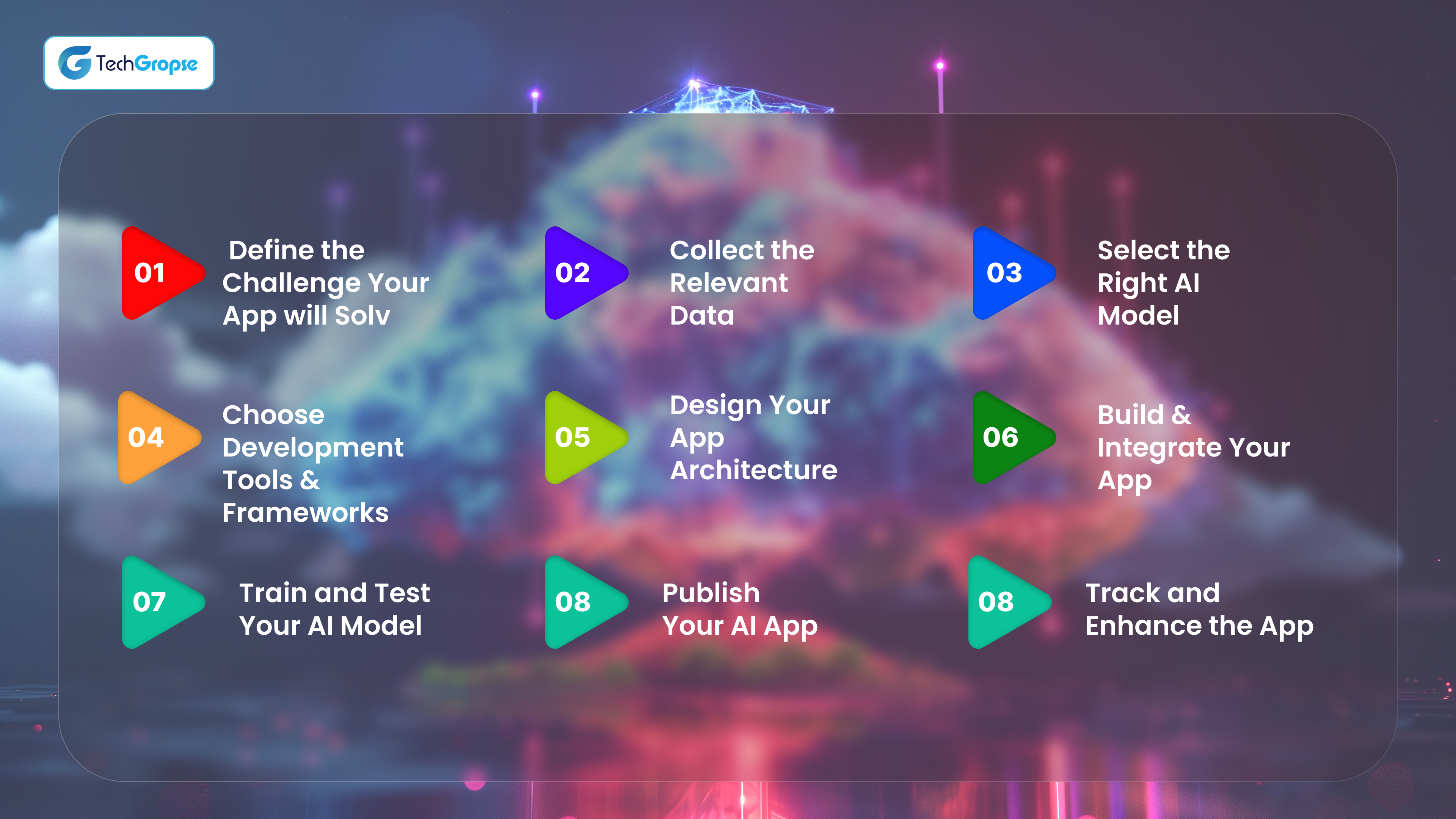 Define the Challenge Your Software will Solve: Before you start working with the coding stuff, you need to specify the type of challenges your software will fix. You must clearly define the objectives of the software that clearly align with the business goals. For instance, you might need to analyze the customer churn depending on the data used, or just want to provide real-time sales insights.
Collect the Relevant Data: Your AI solution can only work efficiently if it has been fed the right sort of data. You should start by gathering data from systems or third-party solutions. Next, cleanse the collected data by eliminating duplicates and fixing data errors. You also need to perform data labeling, anonymizing, and segregating them into the training datasets.
Select the Right AI Model: Based on the type of software use case, you need to choose from a variety of AI models. For example, you can choose from classification models, regression models, clustering models, and neural networks. Additionally, you can also pick from pre-trained models through platforms like Google Vertex AI and OpenAI. As compared to this, custom model training is a costly option, but it does offer the flexibility to mold the model as per your use case.
Choose Development Tools & Frameworks: Utilize industry tools and frameworks to develop your AI software. This includes Python for machine learning algorithms, TensorFlow for neural networks, and Pandas for data manipulation. Moreover, you also have scalable computing environments and AI model training integrated services through cloud platforms such as Google Cloud AI, Azure ML, or AWS.
Design Your Software Architecture: Make sure the software architecture is scalable and aligned to fit the expanding nature of the business. Some architectural pieces such as Frontend, Backend, AI Model Layer, Database, Analytics, etc. Additionally, ensure that your application architecture also accommodates real-time inference in case any additional updates are required.
Build & Integrate Your Software: Having done the above, you should now proceed and build and integrate the AI model in the application. You can integrate the AI engine with your AI via the backend services, and the data flows and user experiences are managed by APIs. If you are collaborating with AI software developers, then you have to ensure that all of them are on the same page with the integration requirements.
Train and Test Your AI Model: Train your model should include giving it the cleaned data and tuning its parameters to enhance the performance. After training, test the AI model by verifying the various datasets to confirm that it is compatible with accuracy and bias requirements. You can perform different types of testing on the software, including functional, accuracy, bias, and performance training. Furthermore, refine your model before moving into the production stage.
Publish Your AI software: Next, publish your AI software to your chosen platform, such as web, iOS, Android, or all. You may also use the DevOps tools and CI/CD pipelines for correctly automating the deployment and keeping the version control. Using cloud services such as the Google Cloud Run, you can scale the software according to its increasing demand.
Track and Enhance the Software: After launch, you need to check the Software from time to time for reducing performance, server or response times, user activity, etc. Depending on the data you gain, update the Software periodically to ensure it is appropriate for your users.
What Is the Cost of Developing an AI Software?
Building an AI Software is not only about thinking about a platform; it is also about handling the features, timelines, and long-term objectives of your Software. So, the price of your Software may rely on various parameters such as the intricacy of the Software, whether you are developing an MVP or an intricate solution. So let us take the price of developing both in consideration below.
MVP Costing Range: If you are creating an AI-powered MVP, then the costing might be around $ 30000 and take 12 weeks to build. This version will be created by incorporating the basic functionalities in order to understand whether it is a market fit or not.
Moreover, through this setup up you can easily validate your Software idea while also keeping the initial investment as low as possible. Furthermore, by gathering user feedback, you can also test and improve your product over time.
Full Fledged Software Cost Range: The fully functional AI-featured Software with more advanced features, such as voice search or predictive analytics, might cost between $50000 to $ 80000+. The fully featured Software needs more infrastructure to handle more users, and it also uses advanced models, thereby making it a costly investment.
Factors Impacting AI Software creation cost 2026
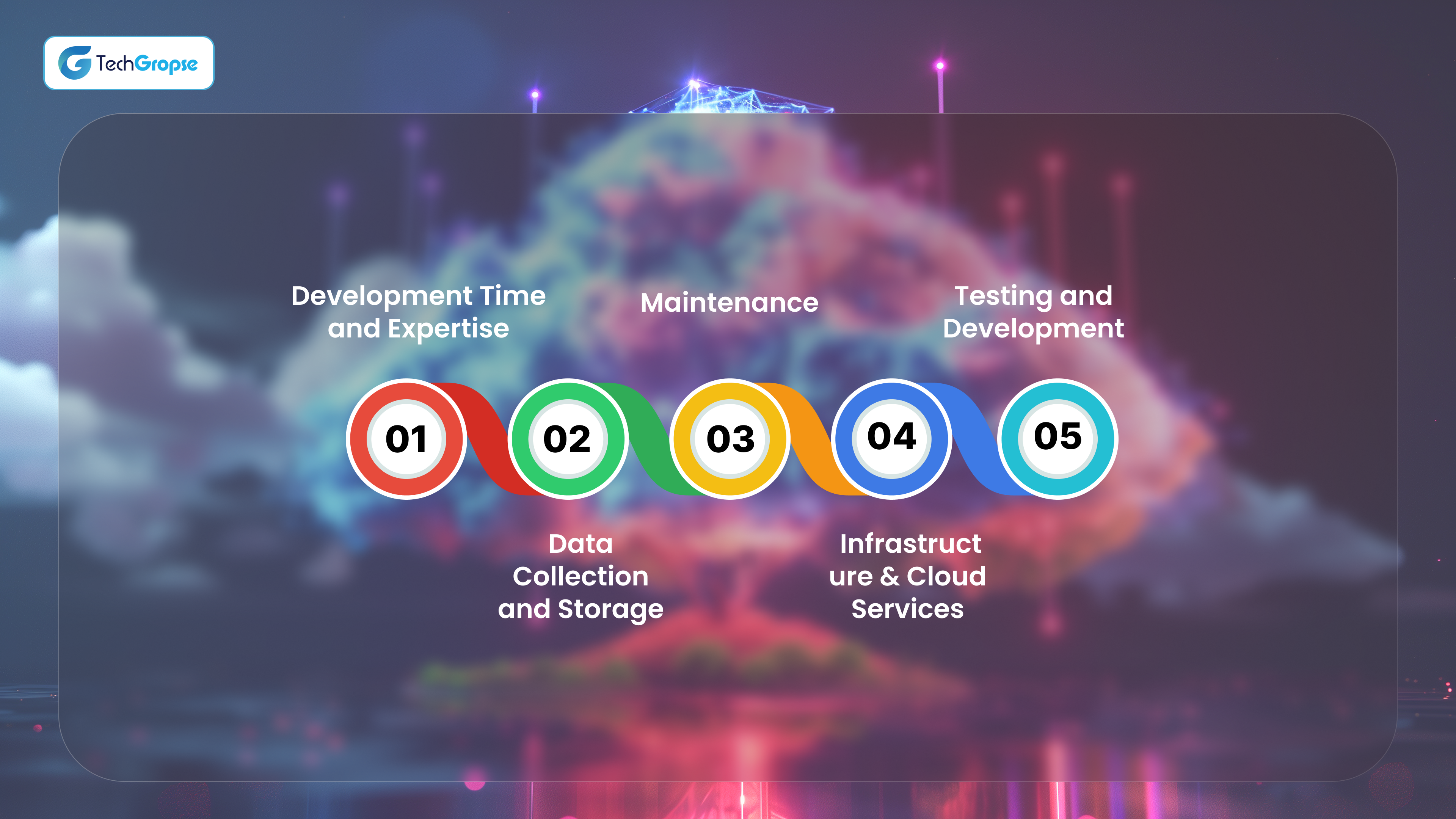
The AI Software creation cost in 2026 can vary based on several factors, as enumerated below:
Development Time and Expertise: Developing AI Softwares needs deep industry knowledge and expertise. Thereby, working with developers, machine learning experts, and data scientists could be a costly option. Moreover, the Software complexity would also impact the development period. The Software with complicated features would take more time to develop as compared to a simple MVP product.
Data Collection and Storage: The AI Software you are planning to build needs huge datasets to work properly. Acquiring and keeping this data could be a costly affair, especially if you are purchasing third-party datasets or maintaining complex databases.
In addition to that, the data storage and processing might need high-power servers that also contribute to the AI Software creation cost in 2026.
Maintenance: The AI models need to be regularly updated in order to remain accurate and operate properly. This adds to the overall development costs along with security updates, feature updates, and bug fixes.
Infrastructure & Cloud Services: Developing and running an AI Software also needs cloud services and infrastructure in order to manage the computing power and data storage needs. Cloud platforms like Google Cloud and AWS do offer these resources, but you need to pay a hefty amount for them. The more data your Software processes, the higher the cloud service charges will be.
Testing and Development: Pre-launching your Software, you need to test the Software in order to ensure that it works properly. As compared to traditional Software testing, AI Software testing is a bit difficult, as you need to test how AI behaves with different use cases or data sets. Moreover, the deployment costs can also vary depending on the platform chosen, and any issues identified after the post-deployment may also lead to additional costs.
Challenges You Might Face While Building an AI Software
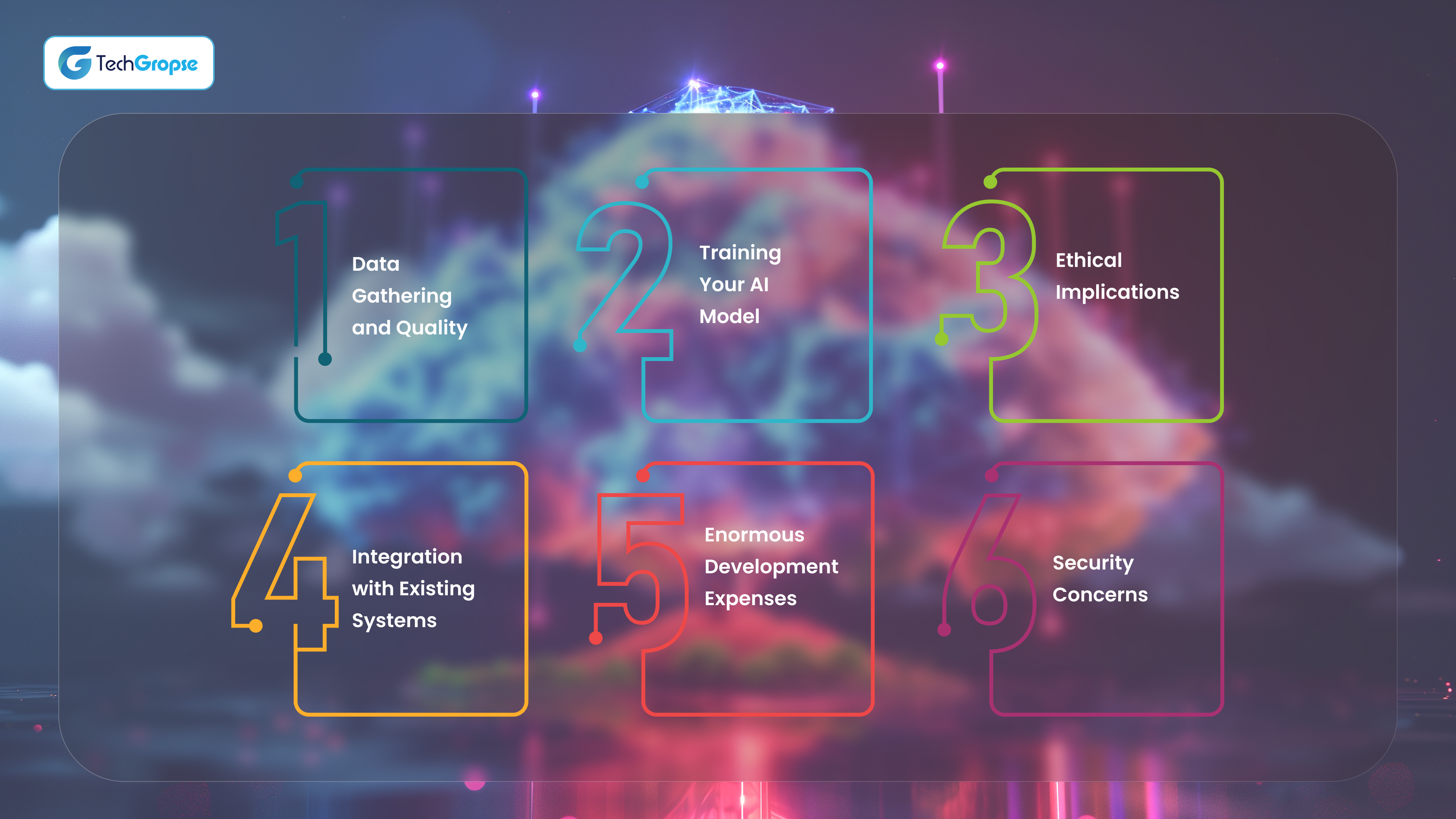
Developing an AI Software might sound good, but it also comes with its own set of challenges, as enumerated below:
Data Gathering and Quality
Your AI Software would heavily rely on the data for learning and decision-making. But collecting data from various resources can be challenging. Moreover, the data being fed must also be accurate and clean for your Software to function properly.
Without this, your AI Software might not be able to deliver the right insights, resulting in inaccurate or poor predictions. Therefore, gathering the right set of data is difficult especially when it involves sensitive or confidential information.
Training Your AI Model
Once you have gathered all the necessary data, the next step is to train your AI models. In this, you need to input all the data into the model and let it learn from it.
However, keep one thing in mind that these models might not work properly in one go; you need to train them on a regular basis, which requires time and high computing that making the development cycle lengthy and costly.
Read More: Mobile App Development Services in Dallas
Ethical Implications
Your AI application will act accordingly as per the input data. If biased input data is fed, your AI will also provide biased output. This is crucial, particularly for domains such as law and healthcare, where biased outcomes may result in unequal decisions.
Thus, it is critical that you make sure your Software is ethical and does not entrench unhealthy bias. Thus, you may find it difficult to be able to ensure transparency and accountability in developing the AI Software.
Integration with Existing Systems
Most companies already have existing systems, and integrating the new Software into those systems could be a difficult task.
Hence, you need to make sure that your application integrates seamlessly with your current systems or applications that require further testing and development.
In addition, you may also face compatibility problems, data migration, and a requirement for regular upgrades, which may complicate the integration even more.
Enormous Development Expenses
Developing an AI Software may seem simple, but it is not. You will require a team of professional developers and AI engineers to develop an AI Software; acquiring them may add to the cost of development.
In addition, you will require high-end infrastructure to develop AI Software, like high-speed computing servers and storage, which will add to the cost of development. Thus, you should think about all these points before spending on AI Software development.
Security Concerns
In most cases, AI applications deal with sensitive data, and the privacy of this information is of vital concern. With the AI feature to process large data sets, user privacy and data security are of vital concern.
Therefore, it is crucial to implement several security measures to prevent data breaches and also ensure that there is compliance with regulatory bodies, such as GDPR may be a major challenge.
AI-Powered mobile Software best practices 2026
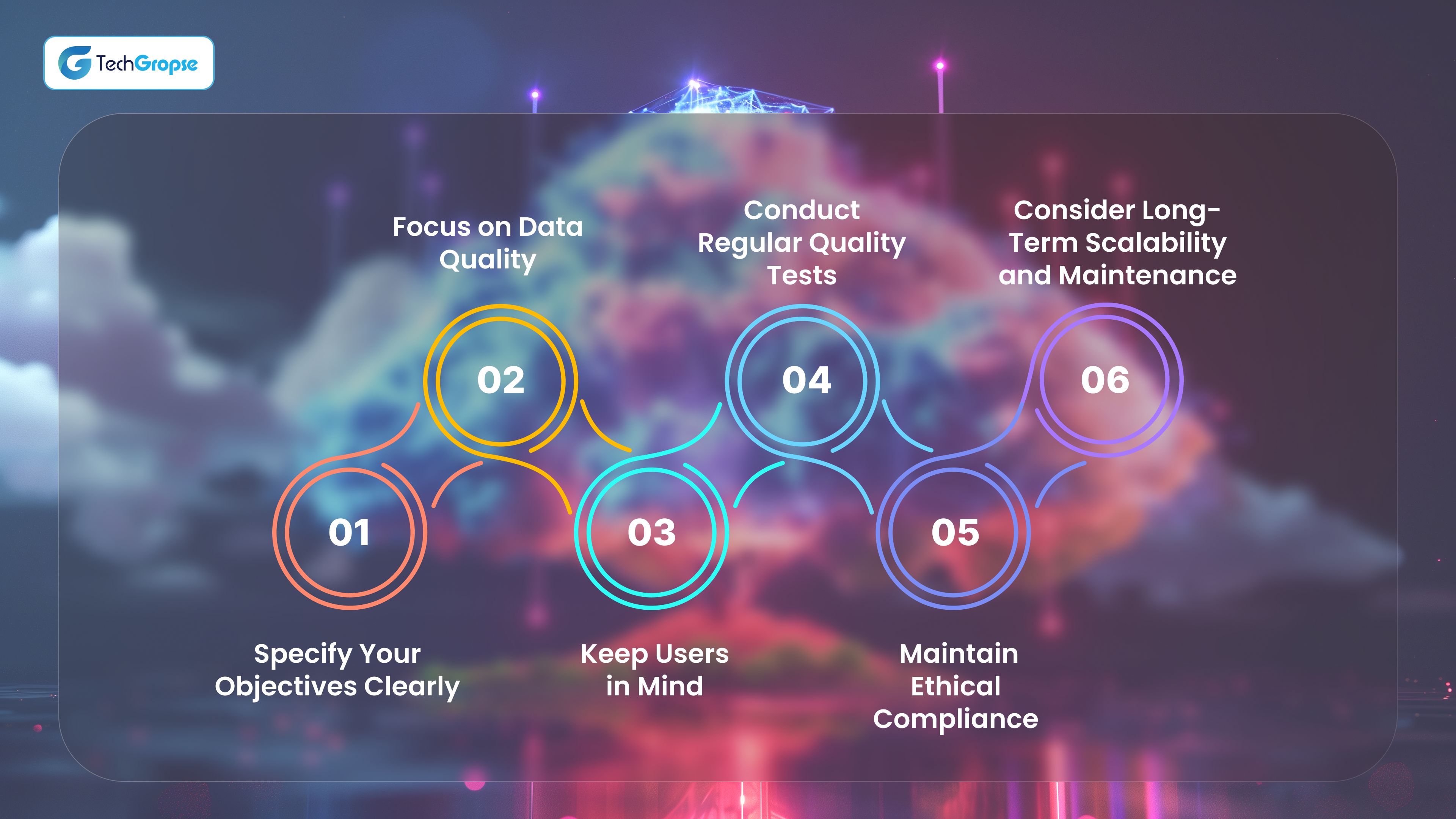
Developing a high-quality AI Software includes more than just writing the code and deploying a model. It needs a well-curated development plan, incorporation of ethical responsibilities, while also focusing on the long-term Software performance.
Here are some other best practices that you need to incorporate to create a high-quality Software.
Specify Your Objectives Clearly
Before you dive into the actual development process, it is important that you clearly define the challenges your Software will be solving.
For example, if you want to improve the customer experience, then you can consider developing an AI bot for the same. Avoid using vague goals; instead, focus on metric-driven goals.
Focus on Data Quality
The AI models would work really well when they are trained on good data sets. While you will get a lot of datasets for training but you must maintain the accuracy and authenticity of the data. Focus on data labeling, data cleansing scripts, and also the governance policies for data integrity. Good data quality can, in turn, provide good insights that improve decision-making.
Keep Users in Mind
You can only increase the engagement rate of your AI Software when they are intuitive and easy to navigate for your users. You must design your Software in such a way that it complements its AI capabilities. For instance, if the chatbot cannot answer a question, you must also provide an option to communicate with a human. This type of transparency will help in increasing user trust and engagement.
Conduct Regular Quality Tests
Your AI Software will work differently in various situations and scenarios. Therefore, regular testing is necessary to keep the Software working properly as per your users’ needs. For that purpose, consider unit and integration tests, model validation tests, A/B testing, usability tests, etc.
You also need to integrate a proper feedback loop into the workflow in order to keep all the AI models updated.
Maintain Ethical Compliance
Working on responsible AI development involves making these models explainable, just, and secure. Most industries, like finance and healthcare, have their own compliance and regulatory requirements.
Therefore, it is important that you leverage explainable AI frameworks for just decision making. You must also conduct regular bias audits in Predicts and implement role-based permissions to access the data.
Furthermore, ensure all these AI models are fully compliant with the respective compliance requirements. In this way, you can increase the user adoption rate.
Consider Long-Term Scalability and Maintenance
The AI models need regular training as the data evolves. Therefore, you must do proper planning for regular updates and ongoing maintenance. For this, you can automate the model training, analyze their performance, and maintain proper documents for model versions. When you plan for the future, you can significantly reduce the downtime and boost the reliability of your AI Software.
Conclusion
AI is no longer a futuristic thought but the foundation on which modern Softwares are built. Throughout the article, we have covered the complete step-by-step guide to creating AI development Softwares and what it costs to create one. Moreover, we have also highlighted the best practices to make the Software development smooth and hassle-free for your business. At TechGropse, we help you turn your ideas into high-value AI Softwares. Whether you are in the planning stage or have a proper roadmap, our team is here to guide you along the way.

FAQ
The cost of AI Software development depends on the Software’s complexity. For instance, if the Software is simple, the cost would to less. But if you are building a complex Software, the cost would be higher.
To incorporate AI in your Software, you need to define your use case and build a development strategy. Next, prototype the AI model, then test and iterate it. Once done, deploy and optimize it regularly.
Training the AI models is expensive when you are developing the models with large datasets that need additional computing power and resources.
Begin by clearly outlining your Software’s goal and identifying the target audience it aims to serve. Next, conduct in-depth market research and create a strategic development roadmap. Prepare the necessary data and choose the appropriate AI model. Develop a Minimum Viable Product (MVP) that highlights the core features, integrates the AI component, and carries out extensive testing. Once validated, launch the Software and ensure ongoing performance monitoring and maintenance for long-term success.
Yes, you can create your own Software by leveraging AI development tools and partnering with an Software development company for the same.
The cost of building and starting an AI Software would be less due to minimal functionalities. However, the cost will increase as you will develop more complex features.

Anup Kumar is a visionary Director of Technology specializing in Artificial Intelligence, bringing over a decade of experience in driving AI innovation, digital transformation, and business growth. With advanced expertise in machine learning, natural language processing, AI application development, and scalable AI infrastructure, he leads high-performing, cross-functional teams to deliver intelligent, enterprise-grade solutions. Anup has a strong track record of building and deploying impactful AI-powered applications, cultivating data-driven cultures, and aligning cutting-edge technology with strategic business objectives. Passionate about ethical AI and continuous innovation, he is committed to solving complex challenges and unlocking new opportunities across global markets.


 info@techgropse.com