



























































Your website might look fine on the surface, but what’s happening behind the scenes tells the real story. Plugins age. Security patches expire. Hosting environments change. And if no one is paying attention, small technical issues slowly turn into bigger problems. When people neglect to monitor systems, all minor technical problems will progress into major technical breakdowns. Your website elements which include slow loading times and invalid SSL certificates and malfunctioning contact forms and security vulnerabilities will result in decreased traffic and leads and revenue loss.
That’s why website maintenance cost is such an important topic in 2026. Most businesses think about website development cost when launching a site, but far fewer consider the ongoing website maintenance cost required to keep it secure, fast, and competitive.
Before we talk about numbers, it’s important to understand what website maintenance really includes and why it plays a critical role in protecting your long-term digital investment.
What Is Website Maintenance Cost?
Website maintenance cost refers to the ongoing expenses required to keep a website secure, updated, functional, and optimized after launch. Many business owners confuse this with website development cost or web design cost. They are not the same.
- Website development cost is what you pay to build the site.
- Website maintenance cost is what you pay to keep it running properly.
Think of it like owning a car. Buying it is one expense. Servicing, insurance, and repairs are ongoing costs. A website works the same way.
Website Maintenance vs Website Redesign Cost
Website maintenance focuses on updates, security patches, performance improvements, and small content changes. Website redesign cost involves rebuilding the layout, structure, branding, or user experience.
Maintenance is preventive. Redesign is corrective.
If you invest in preventive website maintenance, you reduce the risk of needing an expensive redesign every few years. That is part of smart website lifecycle management.
Why Website Maintenance Is Important in 2026
Web technology is evolving faster than ever. Security threats are more sophisticated. Search engines are stricter. Users are less patient. Skipping maintenance is no longer a harmless shortcut. It directly affects revenue, SEO, and brand credibility online.
Let’s break it down.
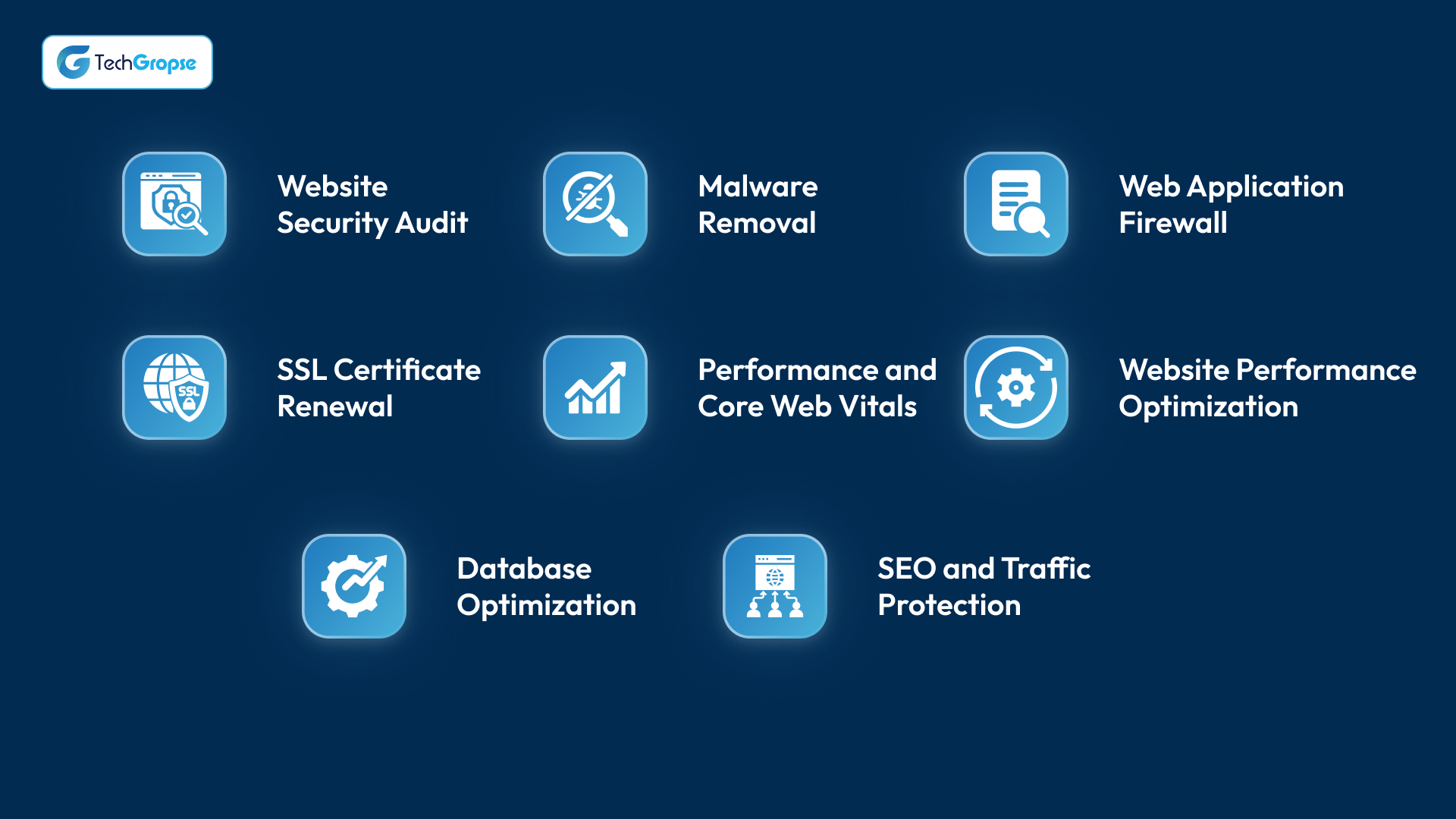
Website Security Audit
A website security audit identifies vulnerabilities in plugins, themes, hosting configuration, and server permissions. Without it, you are guessing. Small businesses often skip this step to reduce website maintenance budget. That decision usually backfires.
Malware Removal
If your site gets infected, malware removal can cost hundreds or thousands. Worse, Google may blacklist your domain. Recovery becomes expensive and time-consuming. Regular monitoring prevents that scenario.
Web Application Firewall
A web application firewall filters malicious traffic before it reaches your server. It reduces brute force attacks and bot abuse. For ecommerce website maintenance cost, this is especially critical because payment data is involved.
SSL Certificate Renewal
An expired SSL certificate instantly damages trust. Users see security warnings. Conversions drop. SSL certificate renewal is a small recurring expense, but skipping it hurts revenue fast.
DNS Health Checkup
DNS problems can cause downtime, slow website access, email delivery issues, and SEO losses. Regular DNS health checkups help detect incorrect DNS records, domain IP issues, and routing problems before they impact users or search rankings.
This keeps your website stable, accessible, and properly connected to your hosting infrastructure.
Performance and Core Web Vitals
Speed is money. Google’s ranking systems heavily consider core web vitals. If your site loads slowly or shifts visually while loading, rankings suffer.
Website Performance Optimization
Website performance optimization includes caching, image compression, script minification, and hosting upgrades. It directly impacts website traffic optimization and conversion rate.
Database Optimization
Over time, databases accumulate clutter. Post revisions, spam comments, orphaned data. Database optimization keeps backend performance healthy, especially for WordPress website maintenance cost planning.
SEO and Traffic Protection
Many business owners think SEO maintenance cost only relates to content updates.
Broken schema, crawl errors, indexing issues, duplicate pages. These quietly damage traffic. Regular audits prevent long-term ranking decline.
A Detailed Website Maintenance Cost Breakdown
When people search for a website maintenance cost breakdown, they usually want clarity. Not vague ranges. Not marketing fluff. They want to know what they are actually paying for.
Website maintenance cost is not one single fee. It is a combination of recurring services that keep your website secure, functional, and competitive. Let’s break it down component by component so you can see where your money goes.
| Cost Component | Estimated Monthly Cost | Estimated Annual Cost |
|---|---|---|
| Domain Name Renewal | Depends | $10 – $25 |
| SSL Certificate | $5 – $25 | $50 – $300 |
| Web Hosting | $5 – $500+ | $60 – $6,000+ |
| CMS Maintenance | $50 – $200 | $600 – $2,400 |
| Backup Services | $5 – $50 | $60 – $600 |
| Website Security | $10 – $500 | $120 – $6,000 |
| Content Updates | $50 – $300 | $600 – $3,600 |
| Tech Support | $50 – $400 | $600 – $4,800 |
| Performance Optimization | $50 – $300 | $600 – $3,600 |
Domain Name Renewal Cost
Every website needs a domain. And domains are not a one-time purchase.
The domain name renewal cost typically ranges between $10 and $25 per year for standard extensions like .com. Premium domains can cost significantly more.
This is the smallest part of your website maintenance budget, but forgetting it can take your entire website offline. I have seen businesses lose access to leads simply because they missed a renewal reminder.
SSL Certificate Cost
An SSL certificate encrypts data between your website and users. Without it, browsers show security warnings.
The SSL certificate cost varies. Basic certificates can range from free options to around $50 per year. Advanced or extended validation certificates may cost $100 to $300 annually.
SSL certificate renewal is essential. Expired certificates damage trust instantly and can affect conversions, especially for ecommerce websites.
Web Hosting Cost Per Month
Hosting is where your website lives. This is not an area where cutting corners usually works well.
The web hosting cost per month can range:
- Shared hosting: $5 to $20
- Managed hosting: $25 to $100
- Dedicated or cloud hosting: $100 to $500+
For growing businesses, managed hosting often makes sense because it includes performance monitoring, backups, and server maintenance. Cheap hosting often leads to slow speed and downtime, which quietly increases your website management cost in other ways.
CMS Maintenance Cost
If your site runs on WordPress, Shopify, Magento, or another CMS, it requires regular updates.
The CMS maintenance cost includes:
Plugin and Theme Updates
Outdated plugins are one of the biggest security risks. Regular updates prevent vulnerabilities and compatibility issues.
CMS Software Updates
Core software updates fix bugs and security flaws. Skipping them increases your website security cost later.
Plugin Update Cost WordPress
For WordPress website maintenance cost planning, plugin updates may be included in a monthly care plan. If handled separately by a developer, costs can range from $50 to $200 per month depending on complexity.
Ignoring updates saves money short term but increases long-term repair costs.
Website Backup Services Cost
Backups are your safety net.
Website backup services cost typically ranges from $5 to $50 per month depending on frequency and storage. Ecommerce websites often require daily or real-time backups.
If your site crashes or gets hacked, backups are what save weeks of work.
Website Security Cost
Website security cost includes firewalls, malware scanning, and security monitoring.
Basic security tools may cost $10 to $30 per month. Advanced website security audit services and managed protection plans can range from $100 to $500 per month.
Security is not dramatic when it works. It becomes dramatic when it fails.
Website Performance Optimization Cost
Speed directly impacts SEO and user experience.
Website performance optimization cost can range from $50 per month for light monitoring to several hundred dollars for advanced page speed optimization, database optimization, and core web vitals improvements.
For ecommerce website maintenance cost, performance work is often ongoing because even small delays affect revenue.
How Much Does Website Maintenance Cost in 2026?
In 2026, website maintenance cost is not just a technical expense. It is part of your business continuity strategy. The more your revenue depends on your website, the more structured your maintenance approach should be. Now let’s answer the core question clearly.
| Website Type | Monthly Cost | Annual Cost |
|---|---|---|
| Small Business Website Maintenance Cost | $100 – $500 | $1,200 – $6,000 |
| WordPress Website Maintenance Cost | $80 – $400 | $960 – $4,800 |
| Ecommerce Website Maintenance Cost | $300 – $2,000+ | $3,600 – $24,000+ |
| Corporate or Enterprise Website | $1,000 – $5,000+ | $12,000 – $60,000+ |
| Website AMC Cost India | ₹3,000 – ₹40,000 | ₹36,000 – ₹4,80,000 |
So how much does it cost to maintain a website monthly in 2026? The average website maintenance cost per month ranges between $100 and $800 for most business websites. Larger or revenue-heavy platforms may exceed that.
Small brochure-style websites sit at the lower end. Ecommerce platforms, membership sites, and high-traffic portals sit at the higher end. If you choose professional website maintenance services, the monthly website maintenance cost includes updates, security monitoring, backups, uptime monitoring, and support.
The average cost of website maintenance per year typically ranges from $1,200 to $10,000 for small to mid-sized businesses. Enterprise platforms can exceed that significantly.
Website Maintenance Cost in India
A lot of startups and overseas businesses also outsource website maintenance to Indian agencies. When you outsource website maintenance, you often get skilled developers at a more affordable rate compared to hiring in-house teams in the US or UK. The key is choosing a reliable website maintenance company India that offers clear deliverables and response times.
Here is a broad comparison to give you perspective.
| Service Type | India Cost | US/UK Cost |
|---|---|---|
| Basic Business Website Maintenance | ₹3,000 – ₹10,000 per month | $100 – $500 per month |
| WordPress Website Maintenance | ₹4,000 – ₹15,000 per month | $150 – $600 per month |
| Ecommerce Website Maintenance | ₹10,000 – ₹40,000 per month | $300 – $2,000+ per month |
| Enterprise or Custom Platform | ₹40,000+ per month | $1,000 – $5,000+ per month |
Factors Affecting Website Maintenance Pricing
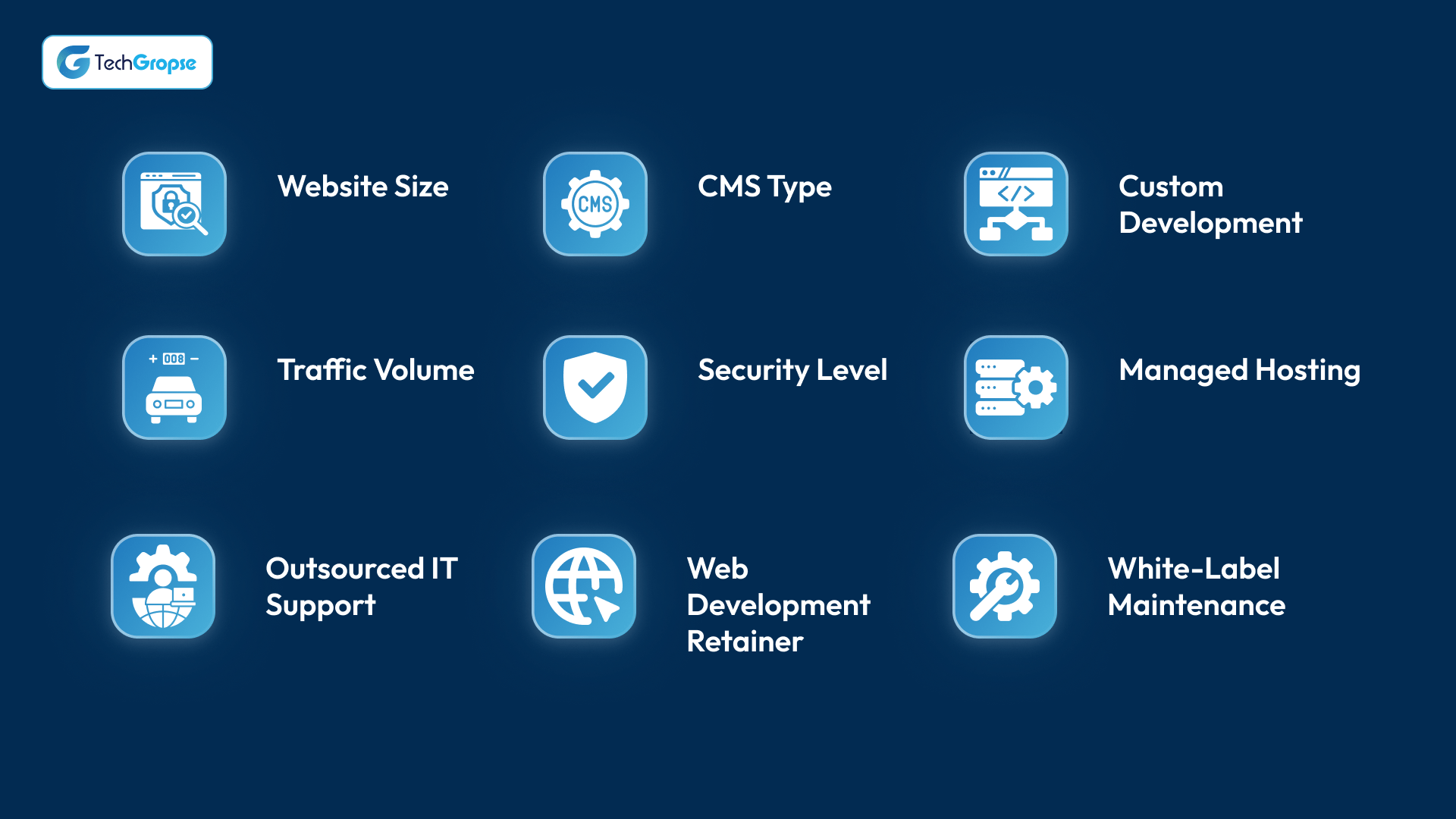
No two websites have identical maintenance costs. The final website maintenance pricing depends on several practical factors. Let’s walk through the ones that genuinely influence your monthly website maintenance cost.
Website Size
A five-page brochure site is easier to manage than a 500-page ecommerce store.
Larger websites require more frequent monitoring, more complex backups, and more time for updates. They also increase website content update cost and testing time after every change. More pages mean more risk areas.
CMS Type
Your content management system plays a big role in CMS maintenance cost.
WordPress website maintenance cost may be lower initially because the ecosystem is large and flexible. However, it often requires frequent plugin updates.
Shopify or other managed platforms may reduce server-level work but can increase app-related maintenance.
Custom CMS platforms typically increase website maintenance pricing because fewer developers can handle them.
Custom Development
The more custom code your website has, the more specialized your maintenance becomes.
Custom APIs, payment integrations, or booking systems increase complexity. This affects website support and maintenance cost because every update must be tested carefully to avoid breaking functionality.
Traffic Volume
Traffic changes everything.
A website with 1,000 monthly visitors does not require the same performance monitoring as a website with 200,000 visitors. High traffic requires better hosting, advanced caching, database optimization, and stronger website uptime monitoring.
This directly affects web hosting cost per month and website performance optimization cost.
Security Level
If you collect customer data, process payments, or operate in regulated industries, your website security cost increases.
Ecommerce website maintenance cost is typically higher because it includes malware scanning, firewall management, SSL certificate renewal tracking, and sometimes compliance checks.
Security is not an optional add-on. It is part of your business risk management strategy.
Managed Hosting
Managed hosting providers include server maintenance, security patches, and sometimes automatic backups.
While managed hosting increases your monthly hosting fee, it often reduces internal tech support for website cost. You shift responsibility to experts who handle server-level issues.
Outsourced IT Support
Some companies rely on outsourced IT support instead of a dedicated website maintenance agency.
This can reduce staffing expenses but may increase response times if your IT provider is not specialized in web platforms. Outsourced IT support works best when clearly structured with defined service-level agreements.
Web Development Retainer
Many businesses choose a web development retainer instead of ad-hoc billing.
A retainer provides a set number of hours each month for updates, fixes, and improvements. This stabilizes your website management cost and prevents sudden spikes when unexpected issues arise.
Retainers are common for growing businesses that need ongoing technical SEO fixes, conversion optimization, or feature enhancements.
White-Label Maintenance
Agencies sometimes use white-label maintenance services to manage client websites.
In this model, a third-party team performs updates and monitoring behind the scenes. White-label maintenance can reduce operational costs for marketing agencies but still maintain service quality.
For end clients, it usually does not change pricing dramatically, but it affects who actually handles the technical work.
Website Maintenance Packages and Pricing Models of Famous Sites

If you look at how established agencies and large digital brands structure their website maintenance packages, you will notice a pattern. They do not sell random fixes. They sell structured plans.
Most website maintenance services pricing packages 2026 follow tier-based models. The scope increases as your website grows in traffic, complexity, and revenue dependency. The website support and maintenance cost reflects how much responsibility the provider takes on.
Let’s break down the typical web maintenance packages pricing structure you will see across the industry.
Basic Plan
This plan suits small brochure websites, personal brands, and early-stage startups.
A Basic website care plan usually includes:
- Core CMS updates
- Plugin and theme updates
- Monthly backups
- Basic website monitoring service
- Minor content updates
- Email based website support service
This plan focuses on stability rather than growth. It covers essential preventive website maintenance so your site stays secure and functional.
Basic plans work well if your website is not your primary revenue driver. However, they rarely include performance optimization or deep technical SEO fixes.
Professional Plan
This is where most growing businesses land.
A Professional web support contract typically includes:
- Everything in the Basic plan
- Advanced security monitoring and firewall setup
- Weekly or daily backups
- Uptime monitoring
- Website performance optimization
- Technical SEO fixes
- Priority website support service
- Limited development hours per month
This tier reflects a higher website support and maintenance cost because it includes proactive improvements, not just maintenance.
Companies that generate leads online or rely on inbound traffic usually benefit from this level. It balances protection, speed, and ongoing improvement.
Ecommerce Plan
Ecommerce websites require a different level of attention.
An Ecommerce website care plan usually includes:
- Real time backups
- Payment gateway monitoring
- Advanced malware scanning
- Web application firewall management
- Conversion tracking checks
- Database optimization
- Load testing
- Dedicated technical support
Ecommerce website maintenance packages cost more because downtime directly affects revenue. A single hour of outage can cost thousands in lost sales.
That is why web maintenance packages pricing for ecommerce businesses reflects higher responsibility and faster response time guarantees.
How to Reduce Website Maintenance Cost in Long Run?
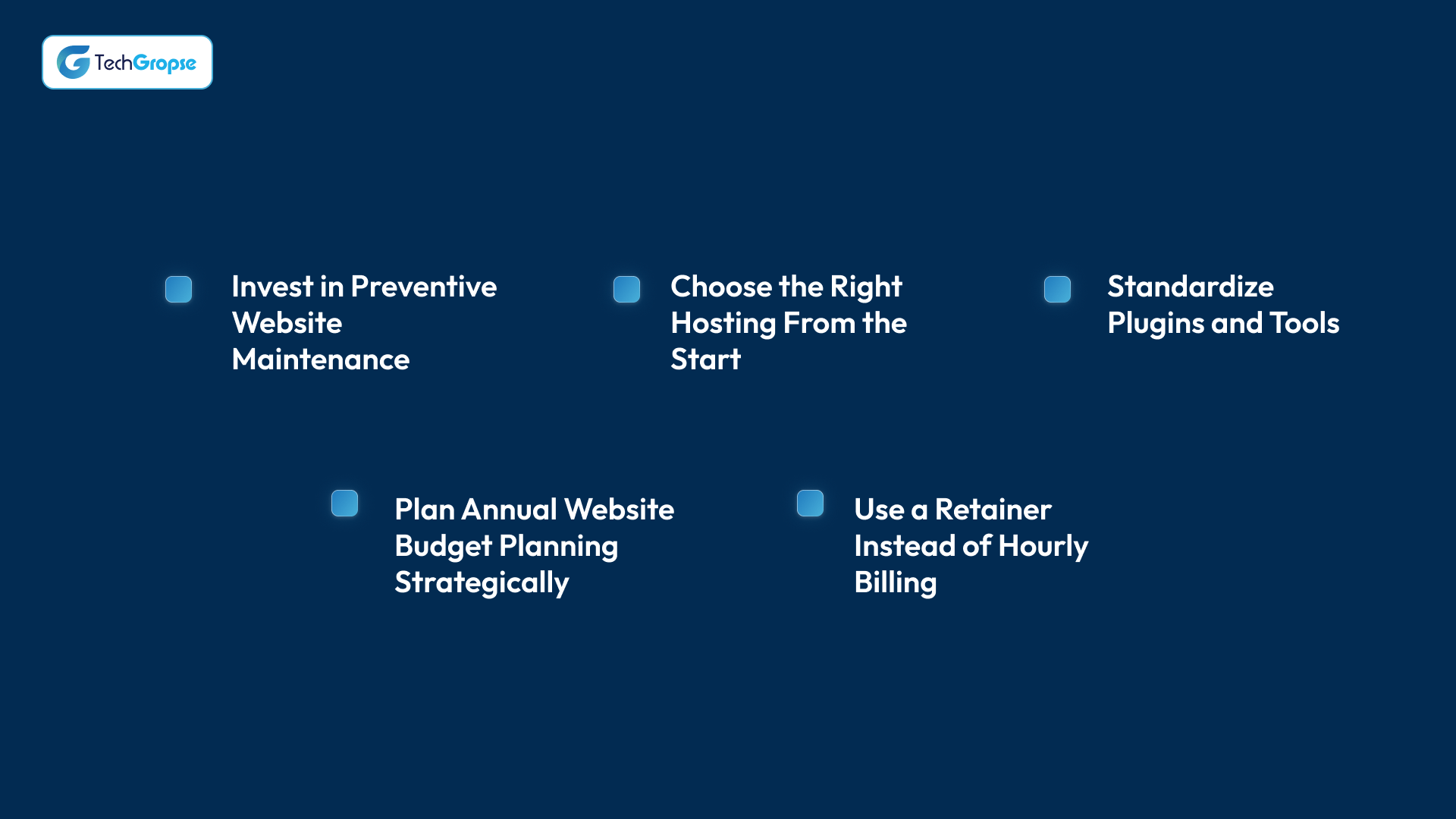
Everyone wants to reduce website maintenance cost. The mistake most businesses make is cutting services blindly instead of optimizing strategically.
If you want to know how to reduce website maintenance costs without increasing risk, focus on prevention.
1. Invest in Preventive Website Maintenance
Fixing a hacked website costs far more than maintaining one properly.
Regular updates, routine backups, and basic security monitoring reduce emergency repair bills. Preventive website maintenance lowers long-term website support and maintenance cost because you avoid crisis-driven expenses.
2. Choose the Right Hosting From the Start
Cheap hosting often increases troubleshooting time and downtime.
A reliable managed hosting provider may cost more upfront, but it reduces server related issues. That improves IT maintenance budget optimization over time.
3. Standardize Plugins and Tools
Too many plugins increase maintenance complexity.
If you run WordPress, audit your plugin stack every six months. Remove redundant tools. Fewer integrations mean fewer compatibility issues and lower CMS maintenance cost.
4. Plan Annual Website Budget Planning Strategically
Do not treat maintenance as a surprise expense.
Build annual website budget planning around realistic projections:
- Security upgrades
- Hosting upgrades
- Performance improvements
- Technical SEO adjustments
When you allocate funds intentionally, you avoid last-minute spending spikes.
5. Use a Retainer Instead of Hourly Billing
If your business requires regular updates, a monthly retainer often costs less than repeated hourly payments. It stabilizes website management costs and gives you predictable support.
What Happens If You Don’t Maintain Your Website?
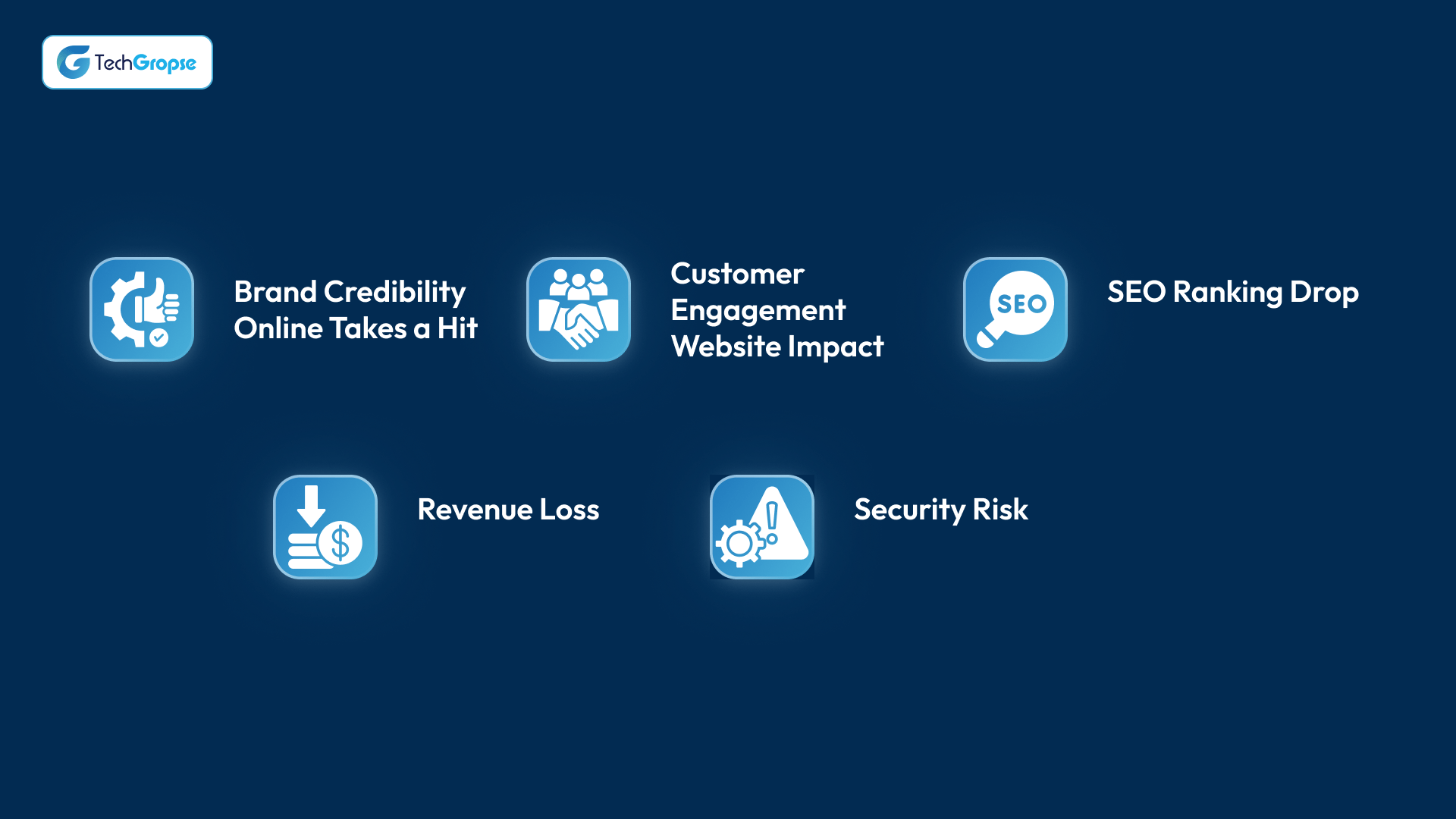
Skipping maintenance rarely causes instant disaster. That is what makes it dangerous. Problems build slowly, quietly, and then show up all at once.
Let’s look at what actually happens when website maintenance cost is treated as optional.
Brand Credibility Online Takes a Hit
Imagine clicking on a business website and seeing a broken layout, outdated copyright year, slow loading pages, or a security warning. It immediately affects brand credibility online.
Users judge your professionalism within seconds. A poorly maintained website signals neglect. Even if your service is excellent, perception shapes trust.
Preventive website maintenance protects your reputation just as much as it protects your server.
Customer Engagement Website Impact
If forms stop working, checkout pages fail, or pages load slowly, customer engagement website metrics drop quickly.
Visitors leave. Bounce rates increase. Leads disappear. Ecommerce businesses feel this impact faster because even a small glitch in the checkout flow reduces conversions.
You may not even notice the issue immediately. That is why website monitoring service tools and regular testing matter. Maintenance keeps your digital storefront open and functional.
SEO Ranking Drop
Search engines reward technical stability.
Outdated plugins, broken links, poor core web vitals, and slow server response times gradually lead to SEO ranking drop. It does not happen overnight, but rankings slide over time.
Technical SEO fixes are part of most website maintenance services pricing packages 2026 for a reason. Once traffic declines, recovery costs more than regular upkeep.
Revenue Loss
This is where the impact becomes measurable.
If your website generates leads or sales, downtime and performance issues directly affect revenue. Even a few hours of outage during peak traffic can cause significant loss.
Businesses that hesitate over website support and maintenance cost often underestimate the revenue risk of doing nothing.
Maintenance is not just a technical task. It is revenue protection.
Security Risk
Unpatched CMS systems and outdated plugins create entry points for attackers.
A hacked website can lead to data leaks, malware infections, blacklisting by search engines, and expensive recovery processes. Website security cost may feel like an extra expense, but compared to breach recovery, it is minimal.
In 2026, security risk is one of the strongest reasons businesses invest in structured website care plan models.
Website Maintenance Checklist Before You Choose
A structured website maintenance checklist ensures you maintain control over your digital asset instead of reacting to problems.
The goal is simple. Treat your website like business infrastructure, not a one-time project. When you plan maintenance strategically, you protect revenue, reputation, and long-term growth.
Before selecting a provider or plan, use this website maintenance checklist. It helps you avoid overpaying or under-protecting your site.
Monthly Tasks
- Update CMS core, plugins, and themes
- Check website monitoring service alerts
- Review backups
- Fix broken links
- Test contact forms and checkout flows
- Perform basic website health check
Quarterly Tasks
- Conduct website security audit
- Review website performance optimization metrics
- Optimize database
- Analyze traffic performance
- Review digital asset management cost
- Check web infrastructure cost against traffic growth
Yearly Tasks
- Renew domain and SSL certificate
- Review hosting performance
- Evaluate server maintenance setup
- Reassess web support contract
- Plan next year’s annual website budget
Final Verdict
So what should you realistically budget? The answer depends on your business size and how much your website contributes to revenue.
Focus on basic website maintenance packages. Ensure updates, backups, and security monitoring are covered. Keep it simple but consistent. Invest in a professional website care plan. Include performance optimization and technical SEO fixes. Your website is a growth channel, not just an information page.
Instead of asking how to reduce website maintenance cost blindly, plan realistically.
Allocate a defined percentage of your overall digital spend to maintenance. That approach ensures IT maintenance budget optimization without cutting critical services.
If your website generates 50 leads per month or drives consistent online sales, the cost of keeping it secure and optimized becomes an investment, not an expense.
Framing it as a business website investment changes the conversation. You are not paying to fix problems. You are paying to protect growth.
FAQs
Website maintenance cost in 2026 varies based on size and complexity. Small business websites typically require lower monthly budgets, while ecommerce and enterprise platforms demand higher investment due to security and performance needs.
The average monthly website maintenance cost depends on hosting, CMS updates, security, and support level. Basic sites cost less, while high traffic or revenue generating websites require broader service coverage.
The average cost of website maintenance per year combines hosting, updates, backups, security, and support. Businesses often choose annual contracts or website AMC cost India models to simplify budgeting.
Most website maintenance services pricing packages 2026 include CMS updates, plugin and theme updates, backups, security monitoring, uptime tracking, and technical support. Higher tiers add performance optimization and SEO maintenance.
Yes. Preventive website maintenance protects revenue, search rankings, and brand credibility online. Ignoring it often leads to higher repair expenses and lost business opportunities.
WordPress website maintenance cost depends on plugin complexity, hosting setup, and support structure. Sites with many integrations usually require more frequent updates and monitoring.
Website size, CMS type, traffic volume, security requirements, hosting environment, and support model all influence website maintenance pricing.
Ecommerce website maintenance cost is higher than standard sites because it includes payment monitoring, advanced security, performance optimization, and database management.
Freelancers may reduce short term website support and maintenance cost, but agencies often provide structured web support contract models with defined response times and broader expertise.
Web hosting cost per month depends on hosting type. Shared hosting is affordable, while managed or cloud hosting costs more but improves stability and performance.
SSL certificate cost varies based on type and validation level. Basic certificates are affordable, while advanced certificates cost more but offer stronger verification.
Domain name renewal cost is usually modest and billed annually. However, missing renewal can cause complete website downtime.
Website AMC cost India refers to Annual Maintenance Contract. It bundles updates, monitoring, and support into a fixed yearly agreement.
You can manage basic updates yourself if you have technical knowledge. However, as your website grows, professional website maintenance reduces risk and ensures consistent performance.

Hello All, Aman Mishra has years of experience in the IT industry. His passion for helping people in all aspects of mobile app development. Therefore, He write several blogs that help the readers to get the appropriate information about mobile app development trends, technology, and many other aspects.In addition to providing mobile app development services in USA, he also provides maintenance & support services for businesses of all sizes. He tried to solve all their readers' queries and ensure that the given information would be helpful for them.



 info@techgropse.com