



























































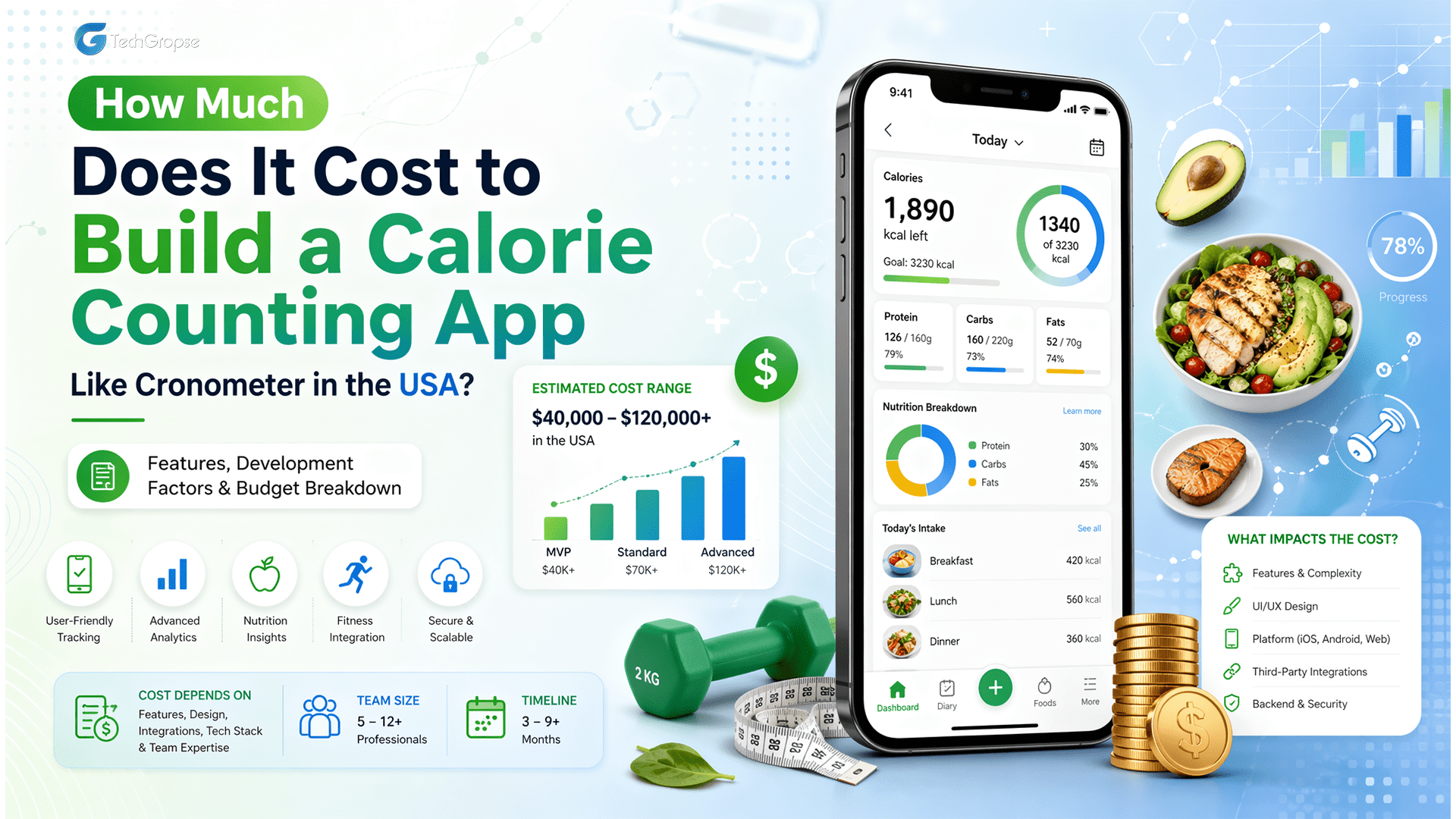
Why are global businesses evaluating the cost to build a calorie-counting app?
Over the past few years, the fitness and well-being sector has seen some drastic changes, particularly through the advent of mobile applications that assist in managing the health of individuals. In this context, many calorie-counting apps have come up in recent times. These apps help users keep track of their food consumption and maintain an ideal caloric balance. The Cronometer calorie tracking app has made its mark by providing nutritional information in detail; hence, they are quite popular amongst fitness experts, athletes, and healthcare practitioners.
The cost of developing a mobile application is essential if you want to venture into such a lucrative business. It is imperative that you learn about the cost to build a calorie-counting app so that you can plan the whole project effectively.
In the coming section, we will cover all that you would want to know regarding the process from the idea for a calorie-counting app to the cost of development, its components, hidden costs, and methods to cut back on it.
What is a Calorie Counting App?
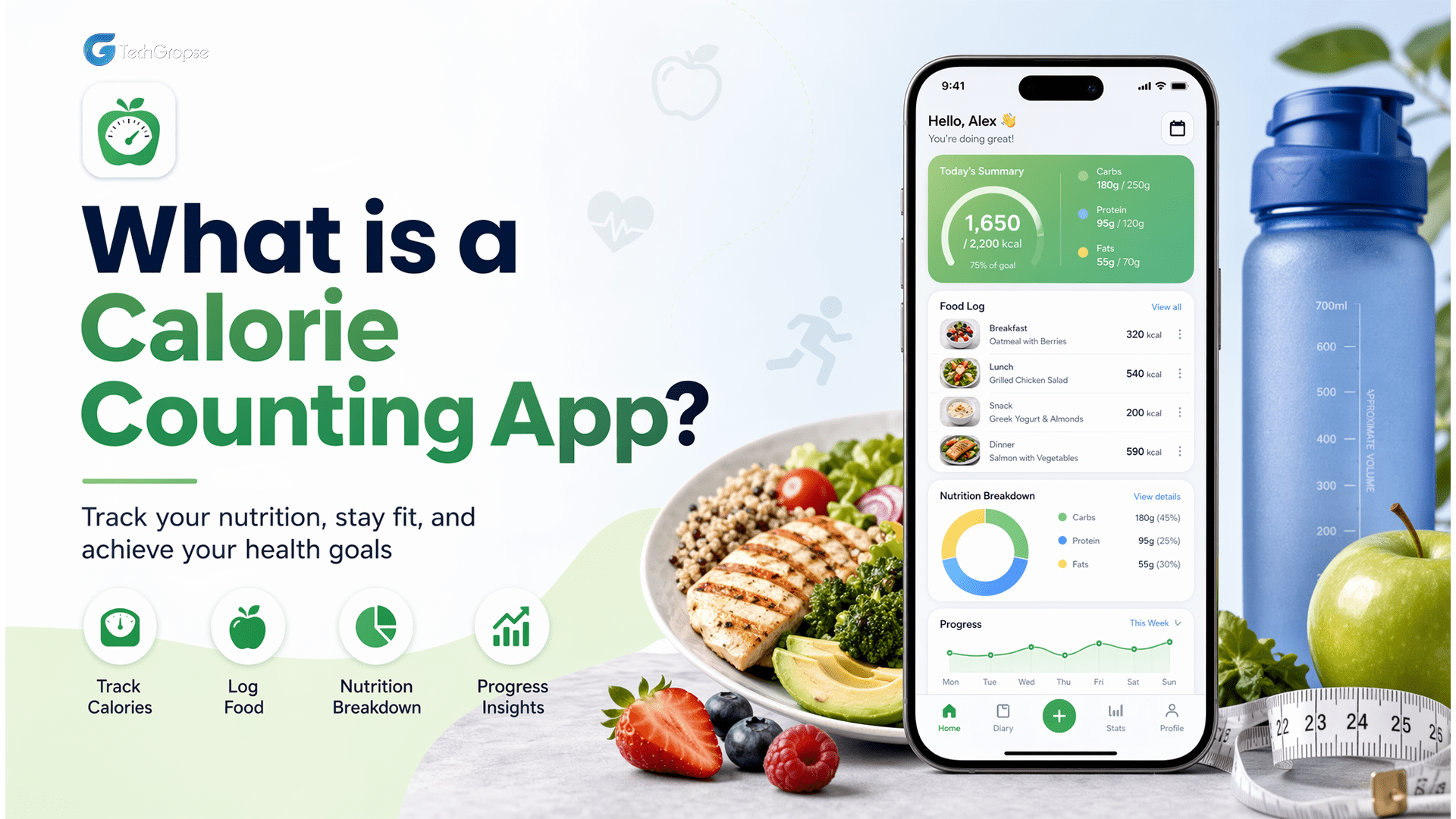
A calorie-counting application is designed to allow users to monitor and record their daily intake of calories. Such applications allow users to record their meals and obtain information about the intake of different nutrients, among other useful information.
In contrast to conventional tools that users can utilize to record their diets, modern calorie-counting applications include some advanced features like barcode recognition, artificial intelligence-driven recommendations, and wearable technology.
The main purpose of a calorie-counting application is not only to record the consumed foods but also to assist users in making better food choices by providing accurate data.
Market Demand & Opportunity of a Calorie Counting App in the USA
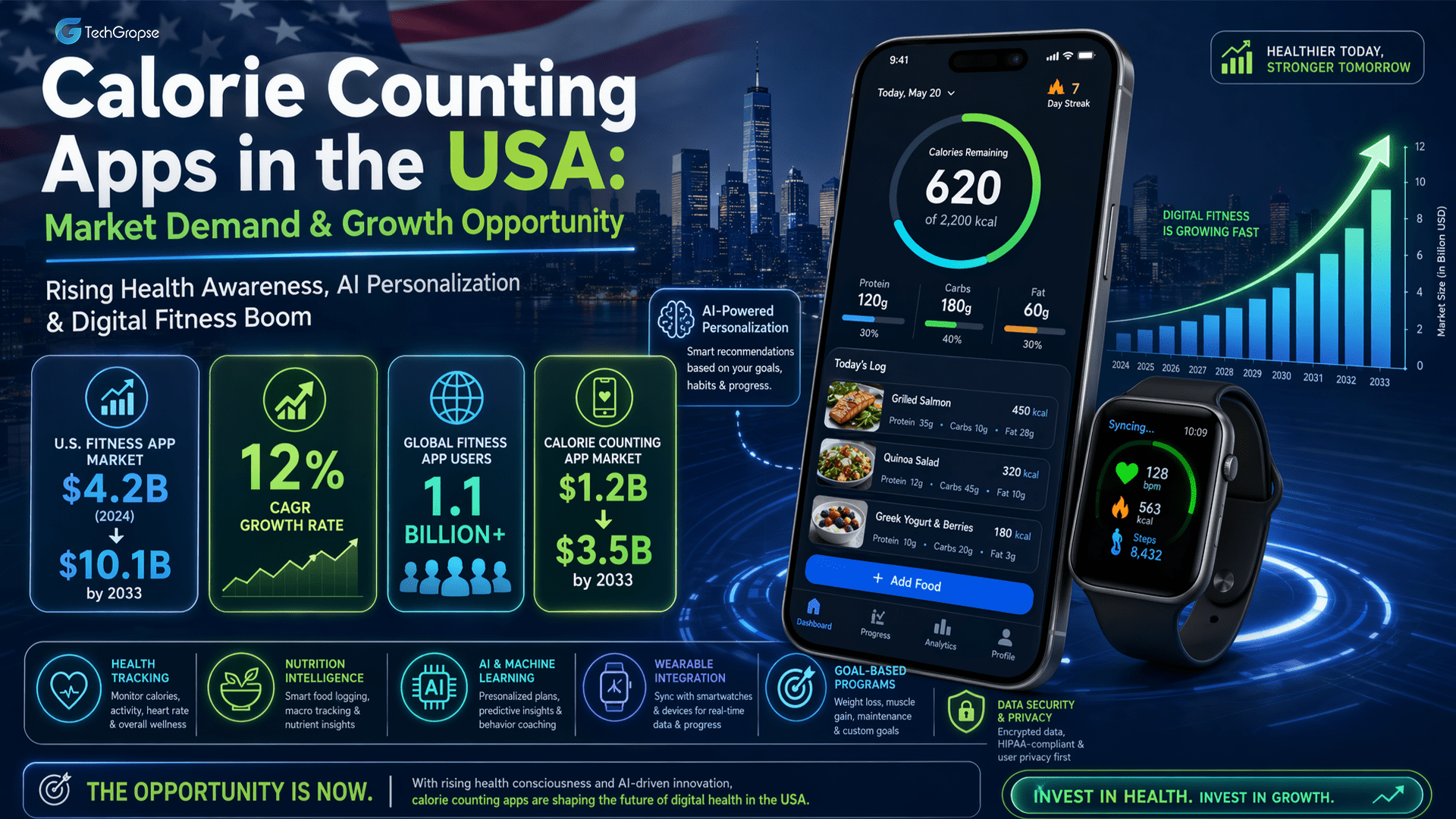
There is an increase in the demand for calorie tracker applications and nutritional tracking systems in the USA. The reason behind this is increased awareness regarding health conditions, obesity issues, and the emergence of the culture of being fit.
Currently, people have become health-conscious and take care of what food items they eat and their consumption. Therefore, applications that offer accurate information about the nutritional value of food items are now in high demand.
In addition, the use of wearable devices like fitness bands and smartwatches is another factor contributing to the rise in the number of users searching for calorie tracker app development. It is because users find it convenient to connect their devices with applications and keep track of their daily activities, including the calories they burn.
Therefore, there are many opportunities for entrepreneurs to develop applications of this kind to benefit from this trend and generate revenue.
Why Do You Need to Evaluate the Cost to Build a Calorie Counting App?
Thinking about the cost should be one of our top priorities before we go ahead with the whole development. This way, aside from helping us budget our finances, we will be able to ensure that the process will be smooth and without any hiccups.
Financial Clarity
When you have an idea of the cost, you will be more aware of the kind of investments that will be required, and this will make it easier for you to not only plan effectively but also to stay within your budget.
Feature Listing
Once you know your budget, it becomes easier for you to determine what features are crucial for your app’s first release and what features can wait.
Right Development Approach
You may choose between native, cross-platform, and hybrid mobile development according to your budget and requirements.
ROI Analysis
Knowing the calorie-counting app development cost will enable you to estimate the returns from the app you are developing.
Risk Management
It makes sure that your project succeeds in the end.
Factors Affecting the Cost to Build a Calorie Counting App
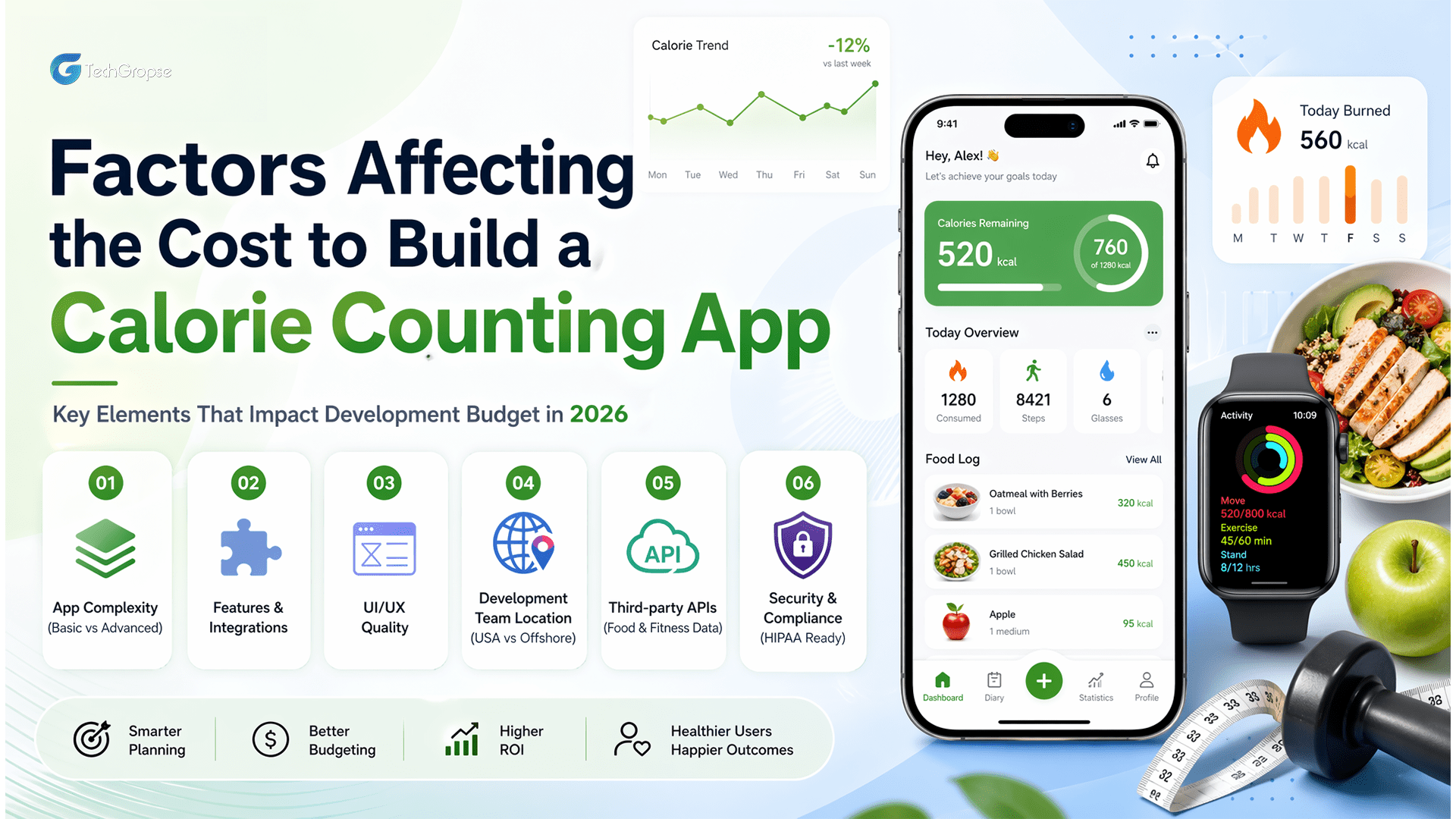
Factors affecting the total development cost include:
App complexity (basic vs advanced)
Complexity – the level of sophistication of the application. The level of complexity of the app is an important determinant of its cost. Basic Applications include things like counting calories and entering foods by hand.
Some of the things that intermediate applications can do are scan barcodes, make user profiles, and do analytics. Some advanced features are AI-based, real-time data tracking, and compatibility with wearables. Developing a more complex app will be more expensive.
Features & integrations
The feature list forms the heart of an app. Adding sophisticated features like a food database API, an activity tracker, and a smart AI-based calorie calculator will increase costs significantly.
For instance, by implementing a food nutrition database API, one can give the users access to a huge number of food types, but that comes at an extra cost.
UI/UX quality
Good user interfaces make users’ experiences and engagement more enjoyable. However, the design of good-looking interfaces is not easy and thus requires good designers who are costly to employ. An app such as Cronometer works well due to its user-friendly interface.
Development team location (USA vs offshore)
Where your development team is based affects the pricing dramatically. Developers based in the USA will be more expensive. Offshore development teams provide cheaper alternatives without compromising on the quality.
Third-party APIs (food database, fitness APIs)
Usually, APIs are necessary for putting together features such as scanning barcodes, accessing the food database, and tracking a user’s fitness activity. Using these APIs requires paying for their subscription, which will be part of your app budget.
Security & compliance (HIPAA if health-related)
Besides, if the app stores sensitive health information, it has to adhere to laws, for example, HIPAA compliance requirements for mobile apps .Ensuring compliance requires additional security measures, increasing development costs.
Cost to Build a Calorie Counting App (Based on App Type)
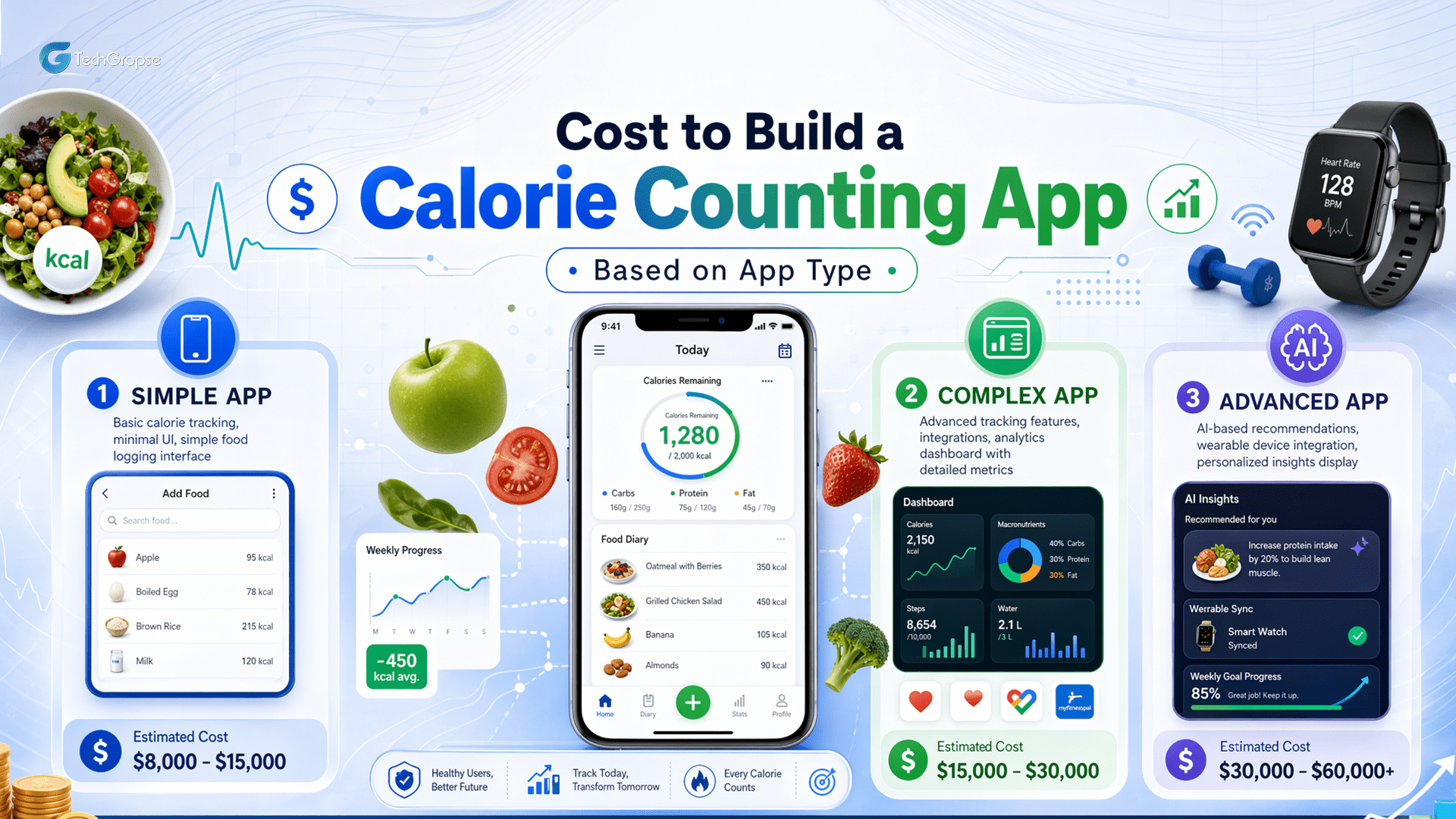
While working on calculating the development cost for creating an app to count calories, the first factor that needs to be considered is the type of app to develop. Three key factors will play into your budget; these include complexity, feature list, and scalability of the app itself. Let’s look at each type:
Simple App
Low investment is a major benefit when choosing simple calorie-counting apps, such as those made in countries with the lowest app developer rates, which should be ideal for startups or a company that is considering entering the market. They usually have very basic functionalities and very few complex integrations for analytics.
At the most basic level, these apps allow the user to manually enter the food they have eaten, keep track of the calories, and, through a simple user interface, log their meals and see the number of calories they have consumed throughout the day. Typically, the design of such apps is very simple, and there are very few options available for the user to customize their experience.
Given the simplicity of the features, this means less work for the developers, and thus the cost of development will be on the lower side. However, such apps might also be lacking in terms of the ability to scale and the implementation of sophisticated user engagement techniques.
Estimated Cost: $10,000 – $25,000
Complex App
A complicated calorie-counting app provides an extra-rich user experience with various features that enhance usability and accuracy. Such apps target the audience generally interested in obtaining in-depth knowledge about their diet and physical activities.
Major elements include a barcode scanner for efficient food logging, user profile maintenance, customized dashboards, and sophisticated analytics showing calorie consumption trends over a period. Coupling with food databases permits users to retrieve nutritional facts immediately.
Adding these features means longer development time and the use of more technical skills, so the cost will also be higher. However, such apps are more competitive in the market and can retain users better.
Estimated Cost: $25,000 – $60,000
Advanced App
The latest calorie tracking applications belong to extremely advanced technologies and provide users with the possibility to monitor their overall health condition in an integrated way. In this regard, these applications can be considered to be no less effective than high-end products like Cronometer.
Some of their perks are AI-generated, live tracking, integration with wearable devices, analysis of mixing and micronutrients, and forecasting on health. Oftentimes, these apps apply machine learning algorithms to come up with diet plans and to enhance user engagement.
Because of their intricacy, these apps are in high demand for a very talented development team, require cutting-edge technologies and long development time frames, which means this category of apps is the most expensive one.
Estimated Cost: $60,000 – $150,000+
Cost to Build a Calorie Counting App (Based on Development Stage)
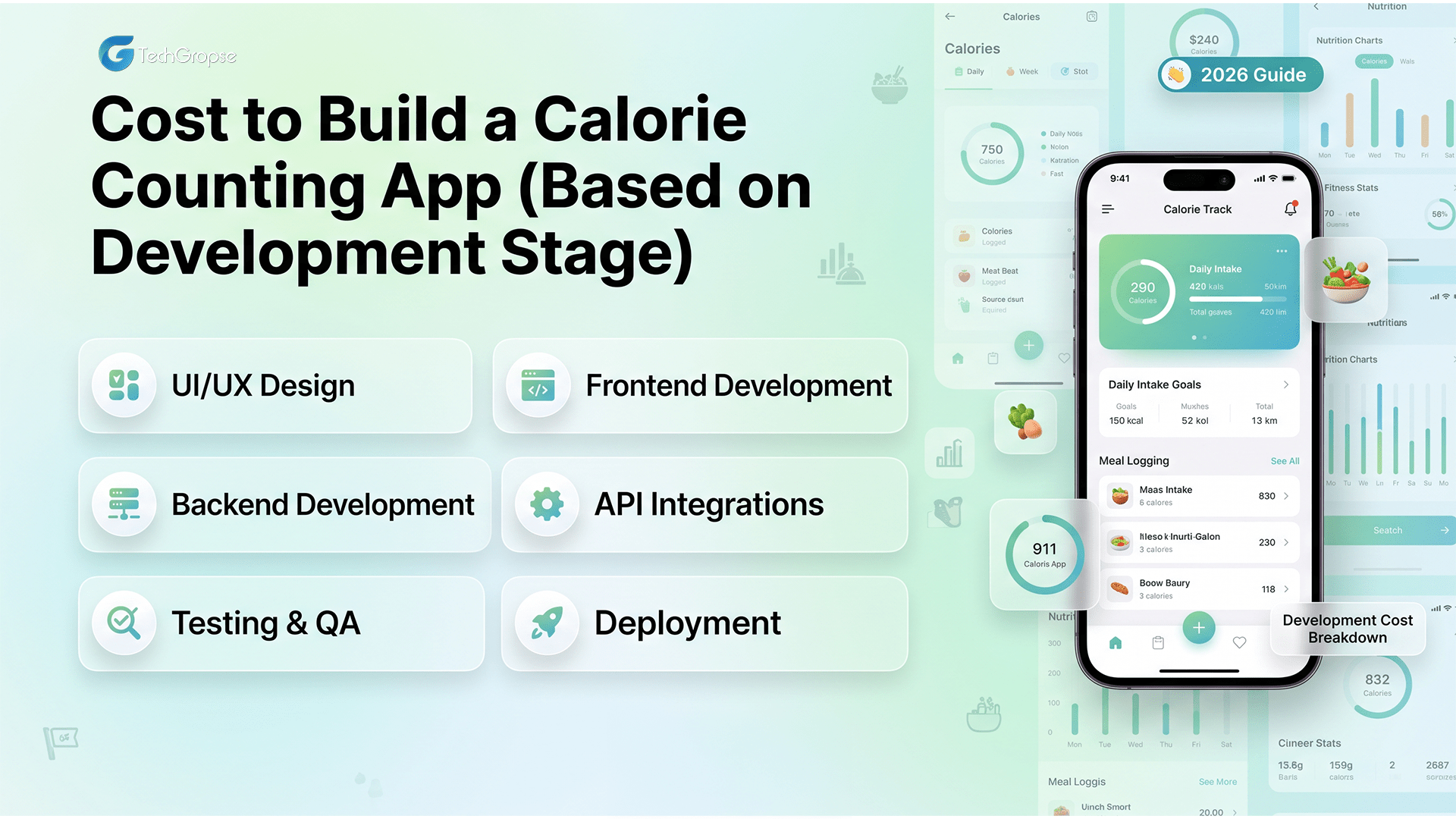
It should be noted that there are several steps involved in the process of creating such software, all of which affect the final cost. The more detailed one knows about these processes, the better he or she can plan the budget needed.
UI/UX design
The designing step is primarily about crafting an interface that is not only easy to use but also attractive to the eye, thereby giving a boost to the user’s experience. A great design will also make it very easy for the user to move through the app, it will keep them engaged, and it will even lead to higher retention rates.
The creators plan the basic frameworks, the trial version,s and the final settings to make sure that the application corresponds to the users’ demands. As the design is paramount for the app’s effectiveness, a commitment to the premium UI/UX quality is a must.
Cost: $3,000 – $10,000
Frontend development
Frontend development involves the creation of user-facing elements of software. Such things as designing, writing code for the responsive pages, and ensuring the functionality of the site across all devices fall under this category.
The most important objectives that developers strive to achieve are increased performance, intuitive design, and proper functioning of everything so that users can enjoy their experience.
Cost: $10,000 – $30,000
Backend development
The main concern of the backend is managing data, server-side processing, and the logic of a given application. This helps to ensure that the program runs efficiently and securely without exposing any sensitive information about the users.
In the process of backend programming, some of the areas that may need to be addressed include database management, API creation, authentication processes, and server processing. A strong back end is needed to make sure that the site performs effectively.
Cost: $15,000 – $40,000
API integrations
APIs are an integral part of apps by providing them with external services. For example, a calorie-counting app may rely on APIs for accessing a food database, she can scan barcodes via an API, and fitness tracking is also an API functionality. Incorporating such APIs means having the right skills, and it will be a cost that adds up to the entire budget.
Cost: $5,000 – $20,000
Testing & QA
Testing is the only way to confirm that the app is working correctly and is able to handle different situations. QA teams perform various types of tests, among them are functional, performance, and security tests. This phase is pivotal in delivering an excellent user experience and also saves from facing any problems post-launch.
Cost: $5,000 – $15,000
Deployment
Deployment refers to the process of distributing your application to customers using app stores such as Google Play and Apple App Store. Apart from other activities, deployment involves conducting final tests, ensuring that the app complies with relevant standards, and distributing the application.
Cost: $2,000 – $5,000
Cost to Build a Calorie Counting App (Based on Platform)
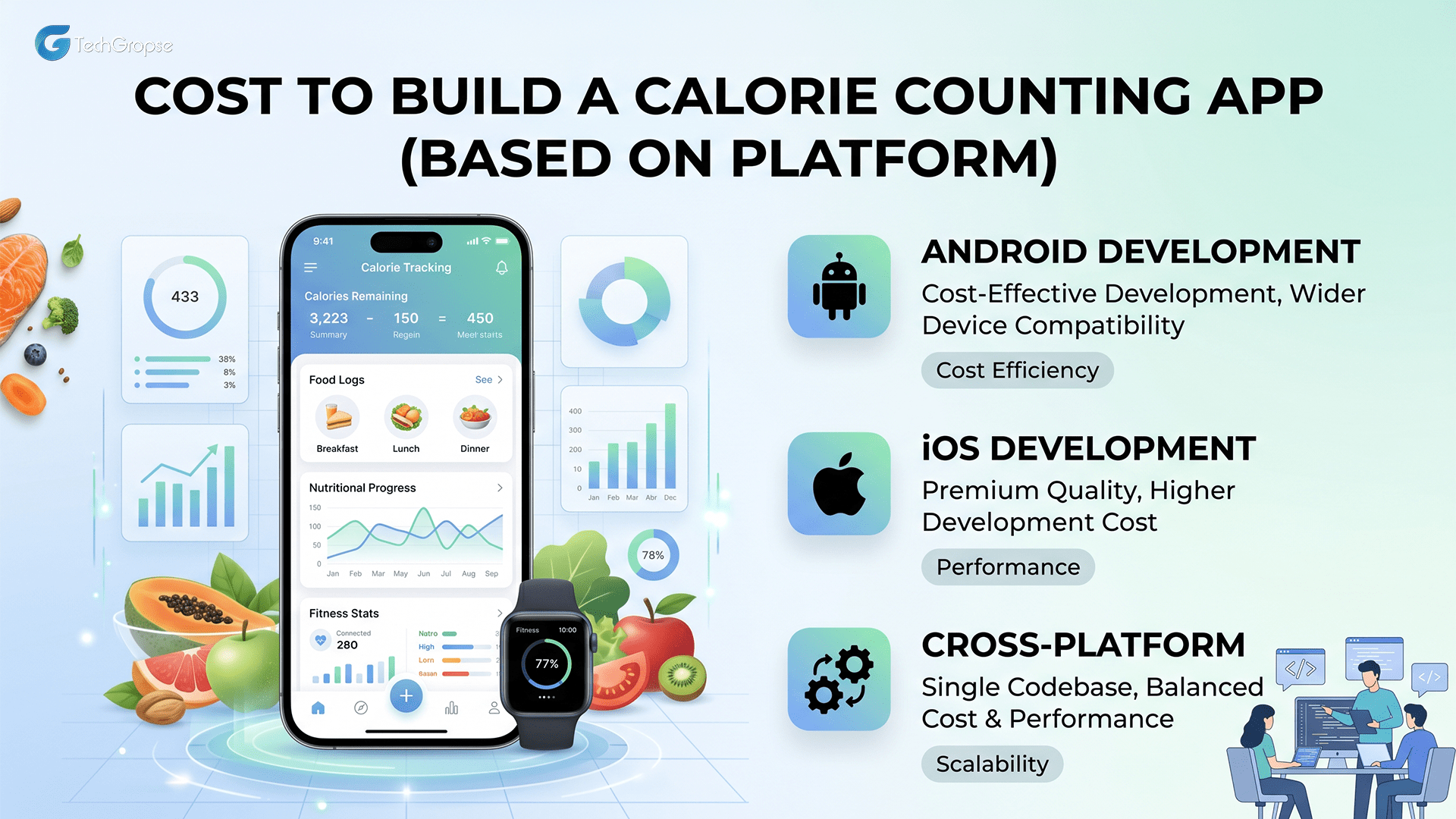
The choice of the platform upon which your application will run can significantly impact your budget.
Android
Making an Android app allows you to cater to a vast audience globally. But on the flip side, you’ll have to get it to work on a variety of devices and screen sizes.
Cost: $15,000 – $50,000
iOS
On the other hand, iOS apps deliver exceptional user experience and can generate higher revenues. And still, the cost of making an app for iOS is a tad higher, mainly due to the stringent guidelines and designer standards.
Cost: $20,000 – $60,000
Cross-Platform
Developing a cross-platform app is an option that lets you create a single app that works seamlessly on both Android and iOS platforms. This method not only trims down the time and cost of development but also helps to keep the level of performance the same. In fact, cross-platform development is usually the most budget-friendly option for startup companies aiming to maximize their customer base with very low resources.
Cost: $25,000 – $80,000
Hidden Costs You Should Not Ignore Before Building a Calorie Counting App
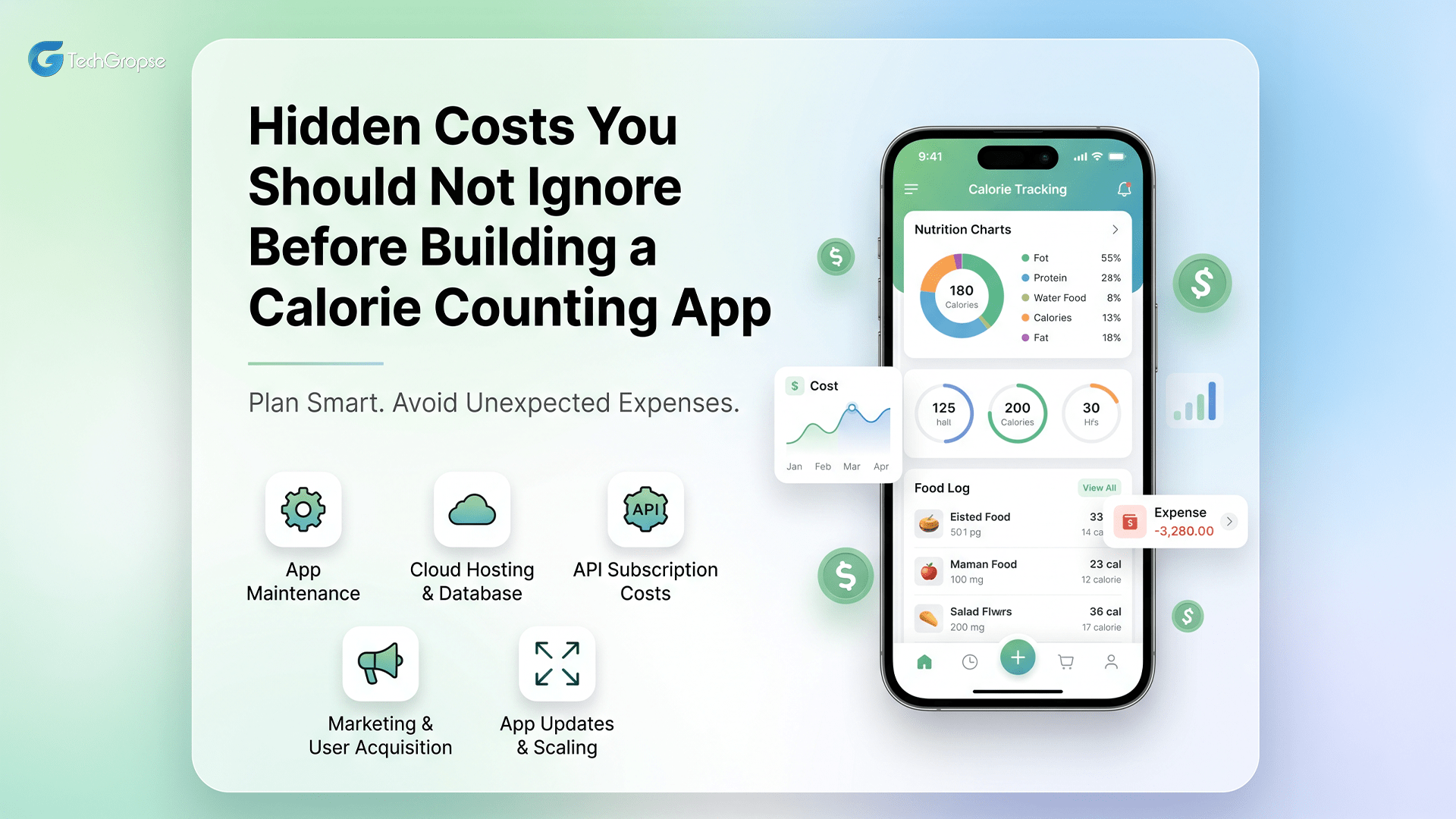
Apart from the cost factors mentioned above, you need to take into account other costs that you will incur after the development stage.
App maintenance
After launching, your application needs to be constantly maintained by means of updating, bug fixing, and performance enhancements. It allows the application to stay updated and working properly.
Cloud hosting & database
Using cloud services is essential as they help to store data and run backend operations. Their cost is associated with the size of your application.
API subscription costs
Many APIs used for building apps for tracking calories are based on subscriptions. These can involve certain costs.
Marketing & user acquisition
It is necessary to spend money on marketing efforts in order to advertise your application and attract potential users.
App updates & scaling
The growth in the number of your users will inevitably lead to increased costs due to scaling and upgrading.
How TechGropse Helps Reduce the Cost to Build a Calorie Counting App
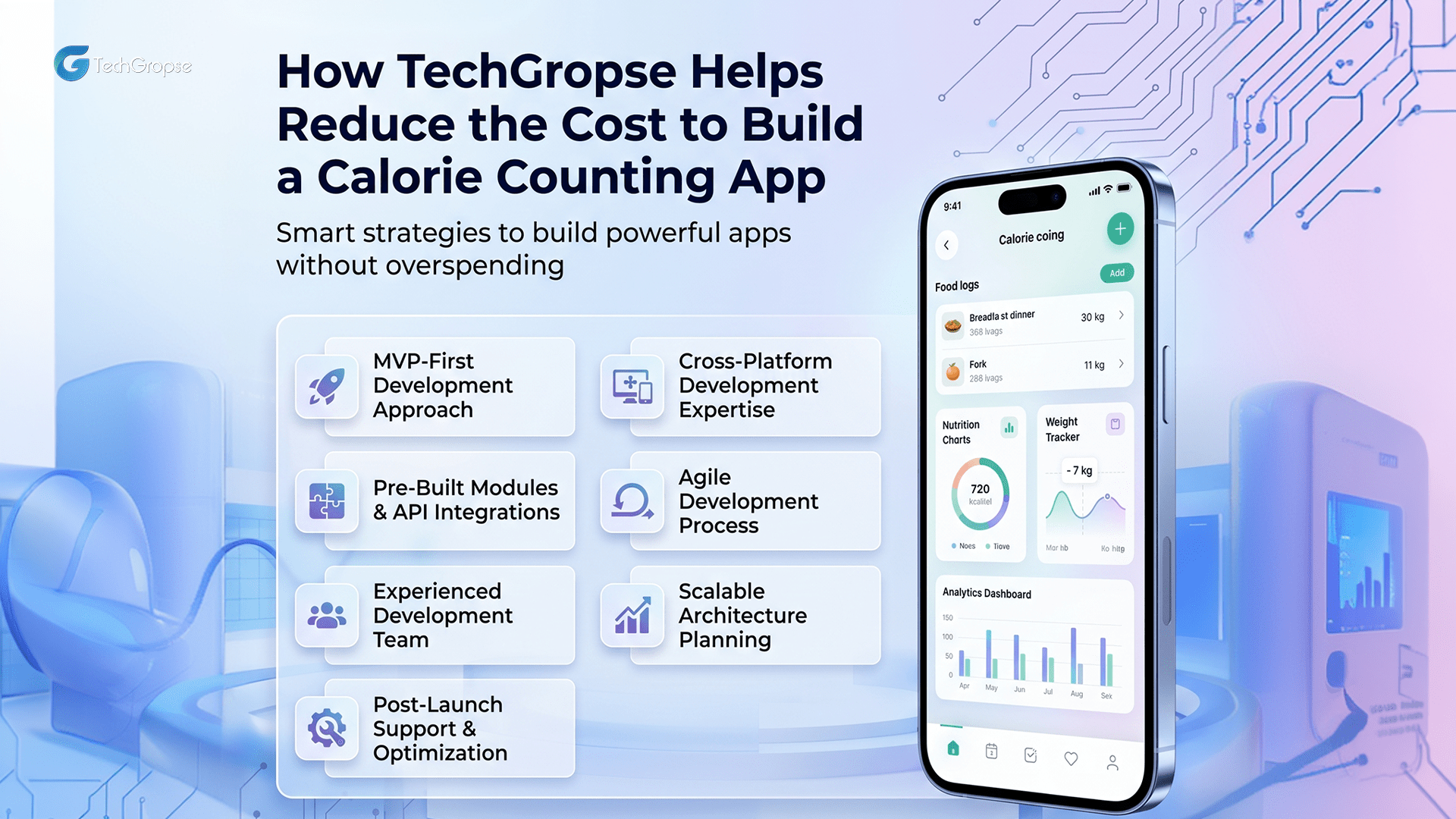
Picking a suitable partner will influence your budget and make your product successful.
MVP-First Development Approach
Having an MVP will give you the possibility to start the project with basic functionality and understand whether people need something more advanced.
Cross-Platform Development Expertise
Implementing cross-platform technologies will save you from spending extra money because of less programming.
Pre-Built Modules & API Integrations
The use of frameworks will allow you to save time during the process and spend less money on everything.
Agile Development Process
An agile methodology is needed for your app to be created as fast as possible and with optimal costs.
Experienced Development Team
A professional development team will help you avoid mistakes.
Scalable Architecture Planning
The scalability of the application is made possible through this. In case there is any increase in traffic or new features have been added in the future, this will make it easy for the application to handle all of that without any problem, which may even result in saving money.
Post-Launch Support & Optimization
This involves enhancing the software and ensuring its improved functionality and ease of use for the users.
Conclusion
Creating a calorie counter app, such as Cronometer, calls for detailed planning and adequate financial investments while understanding well what kind of target audience you are addressing and what your objectives are. The cost to build a calorie-counting app may range between $10,000 and $150,000, depending on various factors.
With the right features and the best development company selected, along with the adoption of an MVP approach, you can develop a great and useful application that will be successful in a highly competitive health tech industry. Smart spending of your finances on design and marketing is key to your application success and sustainability.
FAQs (Frequently Asked Questions)
Generally, in the USA, it would cost between $10,000 and $150,000+ for developing a calorie counter application. The exact figure would depend on the project specifics and the development strategy that is chosen.
The development time for a calorie-counting application would be around 39 months,s depending on how complex the project is and its features.
The most important features you should include in your app are the tracking of food intake, barcode scanning, nutrition database integration, user profile creation, data analysis, and goal setting.
The cost of creating an app similar to Cronometer may vary depending on the functionality level, but it generally falls between $50,000 and $150,000+
Many elements impact the cost of developing an app, such as its complexity, es design, location of developers, third-party integrations, and security requirements.
Initially, yes, cross-platform development will be cheaper for you since there is a need to write only one codebase for both Android and iOS applications.
Besides, there are several ways to reduce the costs during the development process: apply MVP methodology, use cross-platform technologies, implement pre-built components, and hire an experienced development team.
Typically, the yearly maintenance cost of a calorie counter application will be about 15%- 20% of the initial development price.
A great tech stack features React Native or Flutter as the front-end technology, Node.js as the back-end technology, and either Firebase for mobile app backend or AWS as a database and hosting provider.
Calorie-counting apps generate revenue through multiple channels, such as subscription plans, in-app advertisements, premium features, and affiliations.

Hello All, Aman Mishra has years of experience in the IT industry. His passion for helping people in all aspects of mobile app development. Therefore, He write several blogs that help the readers to get the appropriate information about mobile app development trends, technology, and many other aspects.In addition to providing mobile app development services in USA, he also provides maintenance & support services for businesses of all sizes. He tried to solve all their readers' queries and ensure that the given information would be helpful for them.



 info@techgropse.com