



























































More retailers that once had physical stores in Qatar are now entering the online space to enhance their market share. For this, it is necessary to get the service of eCommerce platform development in Qatar.
An eCommerce platform development in Qatar is not only a work as an online store; it works as the engine that transforms customer intent into seamless and measurable revenue. This importance is further reflected in Statista’s Qatar market growth trends. Here, the revenue through the eCommerce market will reach US$ 5 billion by 2029-30.
Considering this, many investors are planning to invest or open their eCommerce business in Qatar from scratch. However, they want to know the answer to the following queries:
- Why is Qatar a good market for eCommerce?
- How much does it cost to build an eCommerce platform in Qatar?
- What features are essential for an eCommerce platform in Qatar?
- What are the legal requirements for eCommerce in Qatar?
- Who will develop an affordable eCommerce platform?
This blog will answer these queries and help you know Qatar’s eCommerce market, and why to choose Qatar.
Why is Qatar a good market for eCommerce?
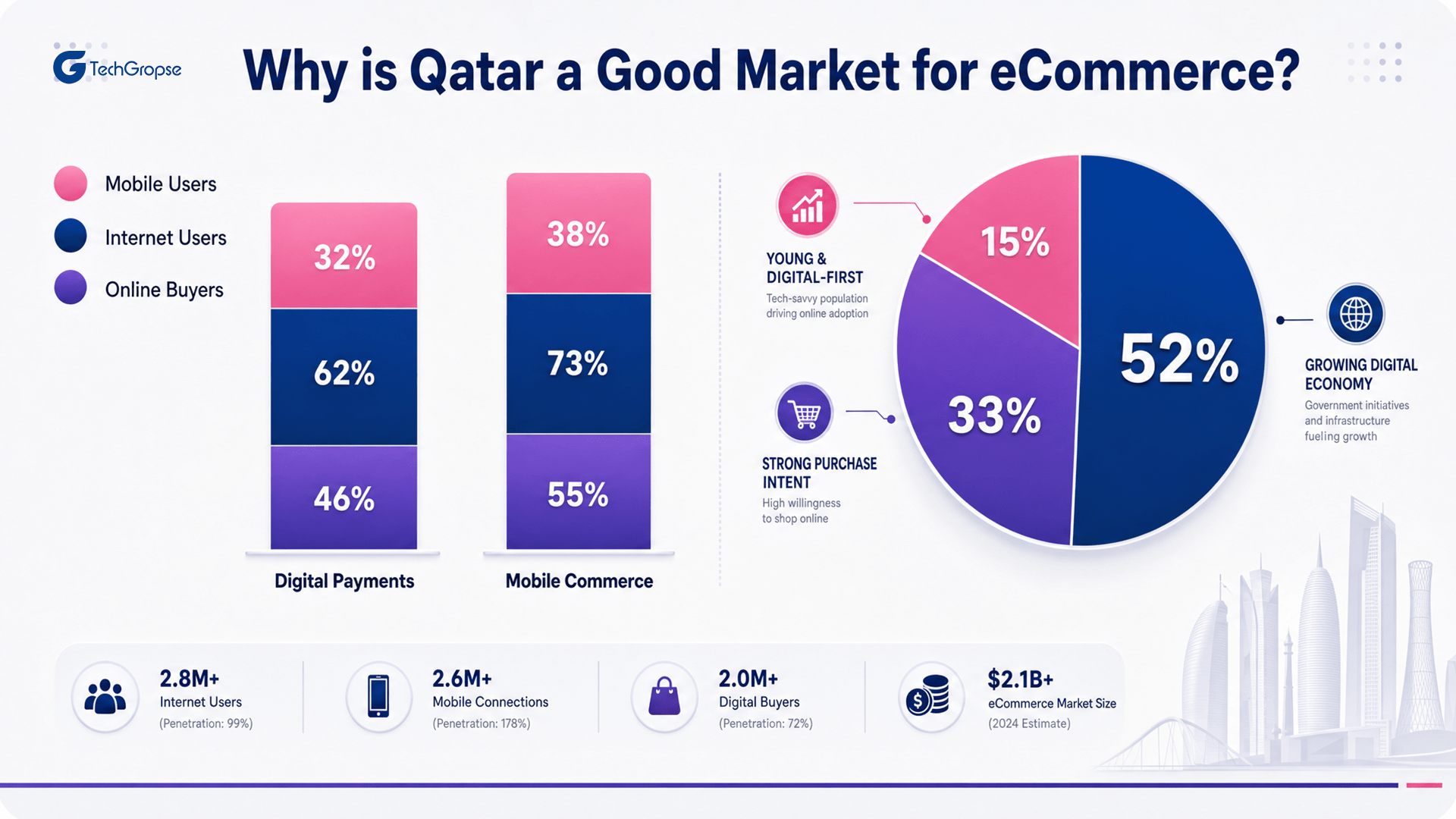
Because Qatar has one of the best digital infrastructures, high spending power among consumers, and a population that is mobile-first, it’s an extremely appealing eCommerce market. The eCommerce sector in the country crossed USD 14.8 billion in 2025 and is projected to exceed USD 38 billion by 2034 with an estimated CAGR of more than 11%, indicating constant and scalable demand for eCommerce in the country.
Factors Driving Growth of Qatar’s eCommerce Market
| Factors | Description |
|---|---|
| Qatar National Vision 2030 | The government’s long-term roadmap focuses on economic diversification, digital transformation, and innovation-driven growth, strongly accelerating eCommerce adoption across retail and services. |
| TASMU Smart Qatar Program | A national smart city initiative that promotes digital infrastructure, data-driven services, and smart logistics, creating a strong ecosystem for scalable eCommerce platforms. |
| 5G + Fiber Infrastructure | Qatar’s advanced connectivity, with near-universal high-speed fiber and widespread 5G coverage, enables seamless mobile commerce, faster transactions, and real-time user experiences. |
| Quick Commerce in Doha | Rapid delivery models (10 minutes) are gaining traction in urban areas like Doha, reshaping consumer expectations around convenience and boosting online retail demand. |
| High Per-Capita Income | Qatar has one of the highest per-capita incomes globally, leading to strong purchasing power and higher average order values in eCommerce transactions. |
How Much Does It Cost to Build an eCommerce Platform in Qatar?
Qatar’s startups and enterprises are looking for an ideal service provider of eCommerce platform development in Qatar. However, they are afraid of the cost. To help them, we have explained a reliable table.
| Platform Type | Features | Cost in QAR | Cost in USD |
|---|---|---|---|
| Basic eCommerce App | Pre-built Templates Limited Product Listings Basic UI Standard Payment Integration | QAR 20,000 – 45,000 | $5,500 – $12,500 |
| Mid-level eCommerce App | Custom UI/UX Mobile Responsive Design Inventory System Multi-payment Gateways SEO Setup | QAR 45,000 – 120,000 | $12,500 – $33,000 |
| Advanced eCommerce App | Scalable Architecture Multi-language (Arabic + English) AI Recommendations Analytics Dashboard | QAR 120,000 – 250,000 | $33,000 – $68,500 |
| Marketplace Application | Vendor Management System Commission Engine Advanced Logistics Real-time tracking | QAR 200,000 – 400,000+ | $55,000 – $110,000+ |
| Enterprise eCommerce Ecosystem | Headless Architecture ERP/CRM Integration Cloud Scalability Automation High Traffic Support | QAR 400,000 – 800,000+ | $110,000 – $220,000+ |
* All QAR figures are based on 1 USD = 3.64 QAR (fixed peg)
What Factors Affect eCommerce App Development Cost in Qatar?
The cost given above is not stable and varies due to a lot of factors given here:
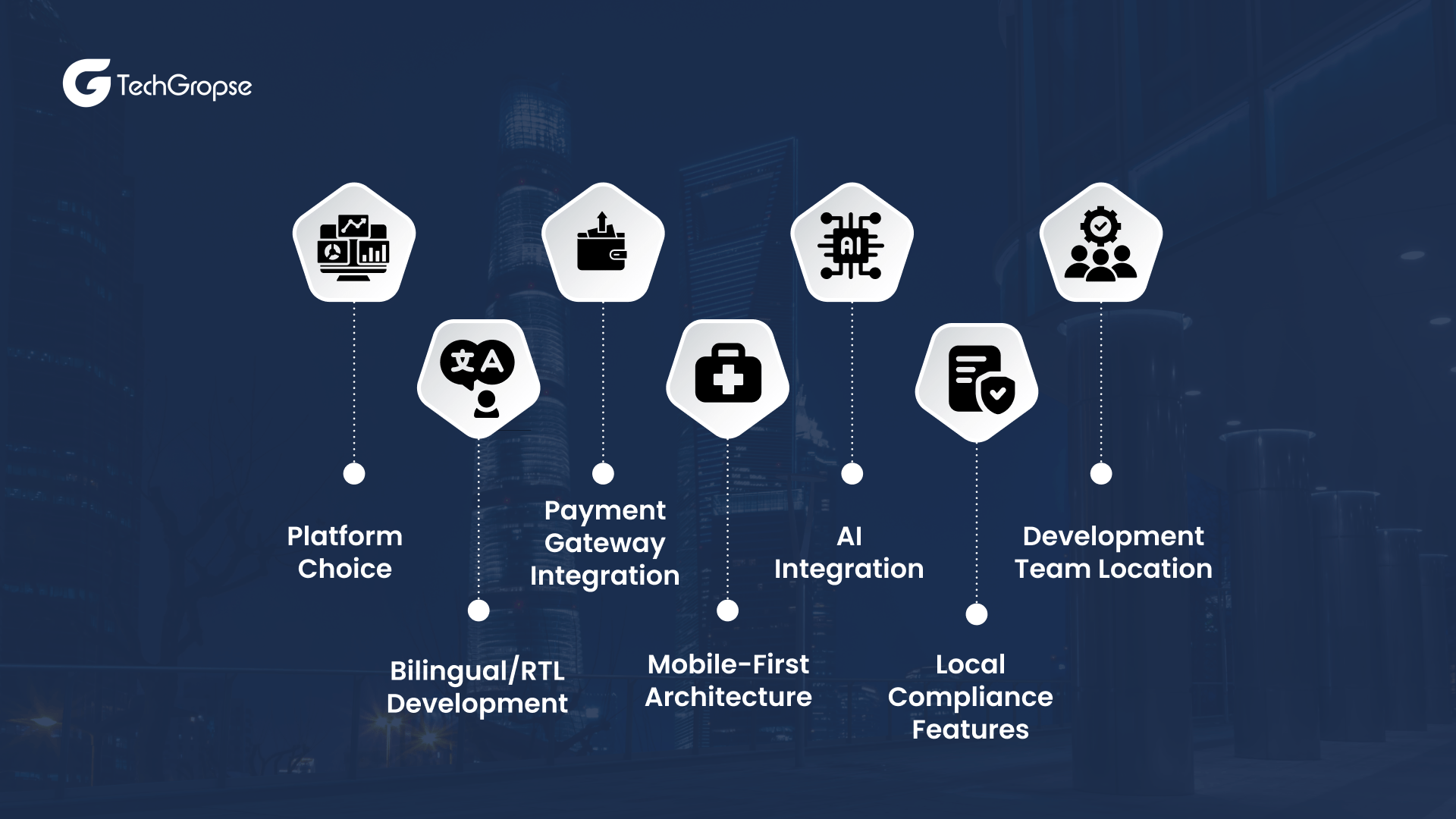
Platform Selection
In Qatar, the platform plays a major role in the development expense of an eCommerce solution. Scalability and flexibility depend on whether you go with Shopify, Magento, WooCommerce, or a fully customized solution. Generally, custom platforms come with a higher price tag as they require more advanced architecture and development efforts.
Bilingual/RTL Development
The Qatar market requires bilingual content, which has both Arabic and English translations. Arabic needs some design and developer modifications, such as Right-To-Left (RTL) layout changes. Correct localization leads to cultural relevance and usability. This feature enhances accessibility, the user experience, and engagement when dealing with different users.
Secure Payment Gateway Integration
By implementing payment gateways that are compatible with transactions in Qatar, smooth and secure transactions are ensured. It offers local banking options as well as global banking options, such as cards and digital wallets. Compliance with security standards is very important. This will boost trust, decrease cart abandonment, and increase the overall checkout experience.
Mobile-first Architecture
Mobile-First Architecture is a design technique that takes the mobile-first approach. In Qatar, performance and responsiveness are essential as most users are shopping through mobile devices. It needs to be optimized for layout, loading speed, and user-friendliness. This method not only enhances user experience but also boosts your website’s search engine optimization (SEO) ranking and conversion rates.
AI Integration
Costs are high for AI integrations, like product suggestions, chatbots, and predictive search. The systems demand advanced algorithms, information processing, and third-party API integrations. But they enhance personalization and conversion rates, making them a great long-term deal.
Local Compliance Features
Compliance with Qatar’s digital laws and regulations adds to development complexity. Data protection, secure user authentication, and payment compliance are just some features that need to be carefully considered. There is a need for further backend development and security auditing to ensure compliance with local legal requirements.
Development Team Location
Development team location plays a significant role in cost. Generally, teams from Qatar or the GCC region are more costly than offshore teams. But the local teams have the advantages of better communication, understanding of the market, and quicker alignment with the regional business needs.
Shopify vs Custom eCommerce App Development: Which Is Right for Your Qatar Business?
| Factor | Shopify | Custom App |
|---|---|---|
| Upfront Cost | Low | High |
| Monthly Fee | Yes | No |
| Arabic/RTL Support | App-dependent | Fully Controlled |
| Local Payment Gateways | Limited Option | Full Integrations |
| Scalability | Limited by Platform Rules | Unlimited |
| Time to Market | 2 to 3 Months | 3 to 9 Months |
| Code Ownership | No | Yes |
Qatar-based businesses launching their eCommerce platform may like Shopify due to lower upfront cost requirement and faster time to market. This works due to the following.
- Faster time to market (launch in days or weeks)
- Lower upfront development cost
- Built-in security, hosting, and scalability
- Large ecosystem of apps for marketing, payments, and analytics
- Easy to manage without deep technical knowledge
However, limited customization, recurring subscription, platform dependency, etc., make custom eCommerce platform development in Qatar a lucrative option.
What Features Does Your Qatar eCommerce Platform Need in 2026?
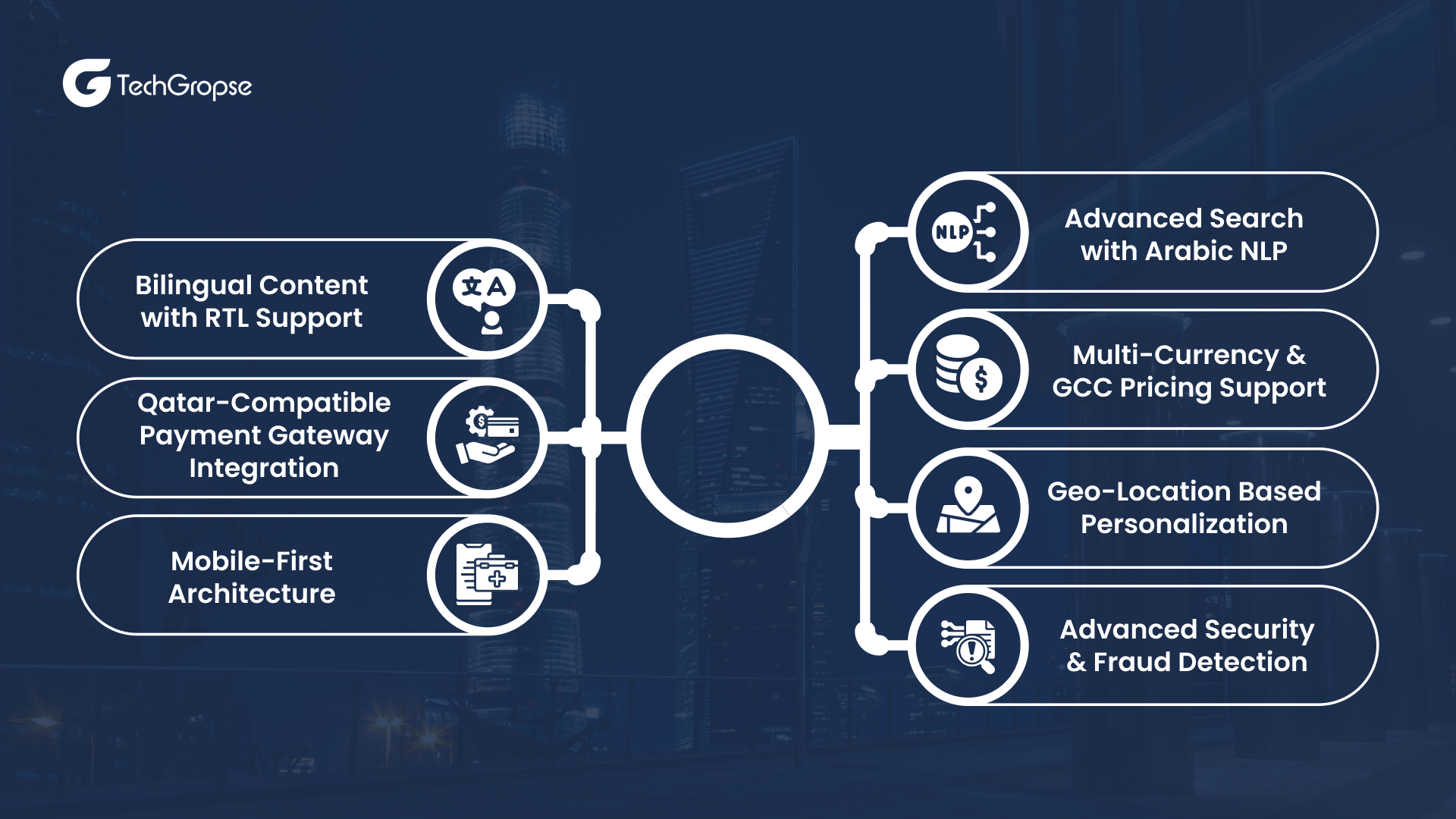
Bilingual Content with RTL Support
Bilingual content with Arabic and English support is essential for the Qatar market. Arabic requires Right-to-Left (RTL) layout adjustments, impacting design and development. Proper localization ensures cultural relevance and usability. This feature improves accessibility, user experience, and engagement across diverse audiences.
Qatar-Compatible Payment Gateway Integration
Integrating Qatar-compatible payment gateways ensures smooth and secure transactions. It includes support for local banking systems alongside global options like cards and digital wallets. Compliance with security standards is critical. This feature enhances trust, reduces cart abandonment, and improves overall checkout experience.
Mobile-First Architecture
Mobile-first architecture prioritizes designing for smartphones before desktops. Since most users in Qatar shop via mobile devices, performance and responsiveness are crucial. It requires optimized layouts, fast loading speeds, and intuitive navigation. This approach improves user engagement, SEO rankings, and conversion rates.
Advanced Search with Arabic NLP
Advanced search powered by Arabic Natural Language Processing improves product discovery. It understands user intent, synonyms, and Arabic language nuances. This enables more accurate and relevant search results. Enhanced search functionality reduces friction, increases conversions, and significantly improves the overall shopping experience.
Multi-Currency & GCC Pricing Support
Users can view prices in QAR and other GCC currencies, thanks to the multi-currency support. It makes cross-border shopping easier and boosts price transparency. Dynamic currency conversion on the internet provides improved convenience to international users. This capability helps improve customer confidence, drive conversions, and facilitate business growth across the region.
Geo-Location Based Personalization
Geo-location personalization provides location-based content, offers, and delivery. It adds value by making experiences relevant to specific areas or cities in Qatar. This enhances the engagement and the satisfaction of the customers. High conversions and loyalty in relation to personalized experiences.
Advanced Security & Fraud Detection
The user’s information and transactions are safeguarded by advanced security systems. Security features include AI-driven fraud detection, secure authentication, and encryption. All this is done to meet security requirements. Robust security instills consumer confidence, helps avoid monetary losses, and protects platform credibility.
What are the Top eCommerce Trends in Qatar in 2026?
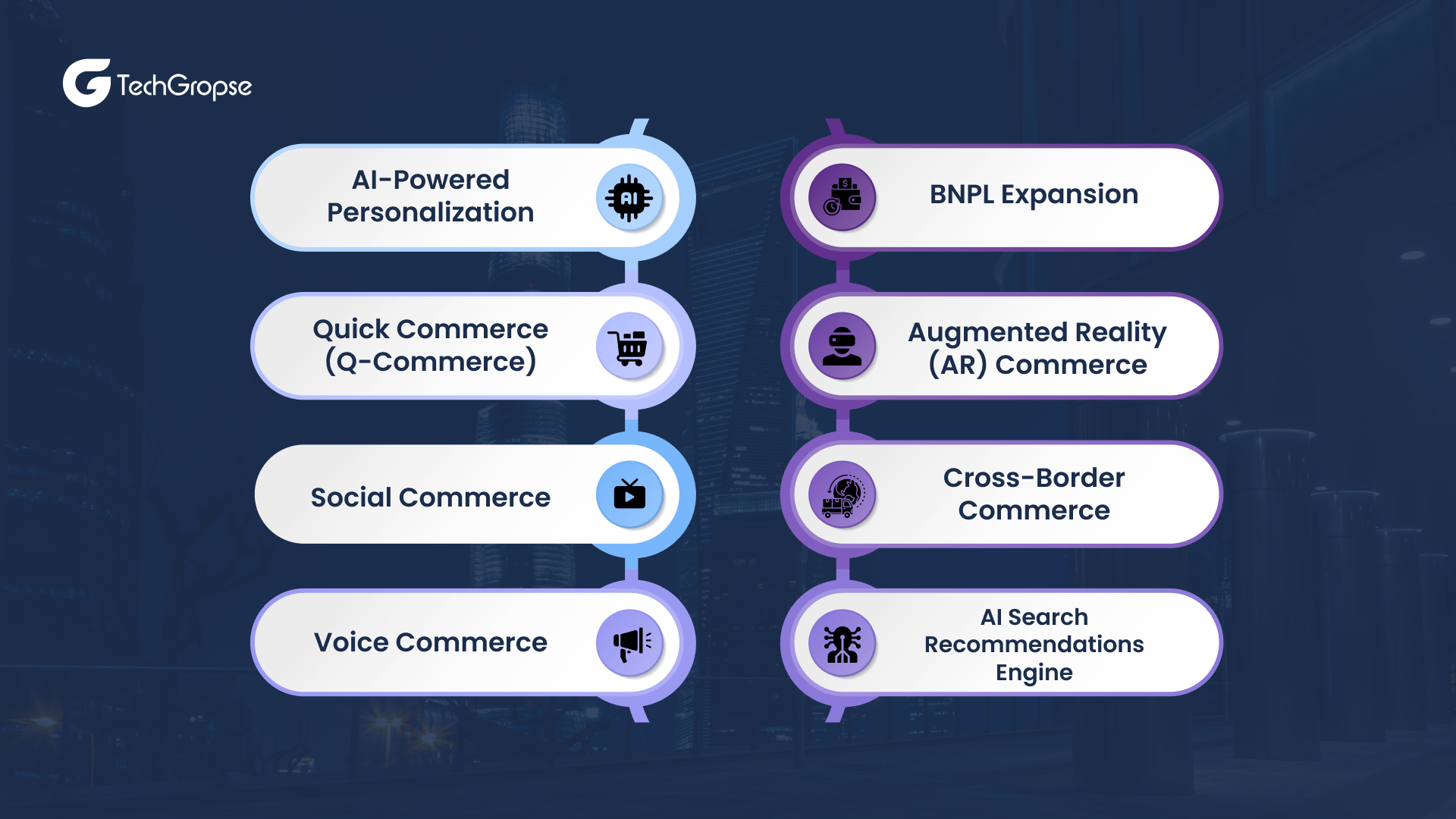
AI-Powered Personalization
AI-driven personalisation makes product recommendations based on user behaviour. It reviews data on browsing habits, preferences, and buying trends. This results in shopper-relevant shopping experiences, better engagement, and higher conversion rates. Elevated businesses can provide smarter and data-driven consumer trips at scale.
Quick Commerce (Q-Commerce)
Quick commerce allows for the delivery of goods in less than an hour or even minutes. It is based on hyperlocal warehouses and optimized logistics systems. This feature addresses the need consumers now have for speed. It has a tremendous impact on customers’ satisfaction and on enhancing companies’ competitive edge in cities.
Social Commerce
Social commerce is a new type of commerce that incorporates the purchase directly into social media. In-app users can find, browse and buy products without leaving apps. It harnesses influencers, user-generated content, and social interaction. This is a great way to make your brand more visible and generate impulse purchases.
Voice Commerce
Consumers can search and buy products using voice commands with voice commerce. It supports smart assistants and mobile devices. This makes it easier and more convenient to use. It can be particularly helpful when shopping without assistance and for quicker product discovery trips.
BNPL Expansion (Buy Now, Pay Later)
BNPL solutions enable consumers to buy goods and pay in installments. It alleviates budget constraints and enhances spending potential. This feature boosts conversion rates and average order value. It has widespread use in today’s modern eCommerce ecosystem around the world.
Augmented Reality (AR) Commerce
AR commerce allows users to experience and picture products in reality without purchasing. Helps to make decisions with less uncertainty. People can take a virtual tour of things such as furniture or fashion. This results in increased engagement and lower bounce rates.
Related Link: Bianca Case Study
Cross-Border Commerce
Unlike domestic businesses, a cross-border business can sell its products across the border. It also offers multi-currency support, support for global shipping, and localized experiences. This increases the market and earning potential. Helps brands connect with a global audience beyond regional limitations effectively.
AI Search Recommendations Engine
An AI Search Recommendation Engine in eCommerce personalizes product discovery using user behavior, intent, and real-time data. It enhances search accuracy, improves conversions, reduces bounce rates, and delivers hyper-relevant results, making online shopping faster, smarter, and more intuitive for customers today.

How TechGropse’s eCommerce Platform Development in Qatar Can Help?
TechGropse is a premium mobile app development company in Qatar, which is renowned for helping businesses ready to mitigate the common challenges. It delivers scalable, high-performance mobile solutions tailored to meet the diverse industry needs with multiple features, such as a seamless user experience.
TechGropse, an award-winning firm for eCommerce platform development in Qatar in Qatar, is renowned for building highly scalable and secure eCommerce apps localized for the Qatar market. Apart from that, you can choose TechGropse for the following reasons:
- Transparent pricing of the eCommerce solutions delivered on time and with proper quality.
- Provide support through L1, L2, & L3 with ticket management and a dedicated project manager.
- Recognized for our world-class eCommerce solutions delivery by Clutch, TechBehemoth, DesignRush, etc.
- Over 10 years of local experience in building tailored solutions to help retailers and wholesalers increase their revenue.
Frequently Asked Questions
We see rapid digital adoption, high income levels, and strong government initiatives driving eCommerce growth, making Qatar ideal for scalable online businesses.
We typically deliver eCommerce platforms within 8–16 weeks, depending on features, integrations, and customization requirements.
We use scalable technologies like Shopify, Magento, and WooCommerce, along with custom frameworks tailored to business needs.
Yes, we build responsive and mobile-first platforms to ensure seamless shopping experiences across smartphones, tablets, and desktops.
We integrate secure local and international payment gateways to support smooth transactions tailored to Qatar’s financial ecosystem.
Yes, we develop bilingual platforms with Arabic and English support to cater to Qatar’s diverse customer base.
Our pricing depends on features, complexity, and integrations, but we offer flexible packages suitable for startups to enterprise-level businesses.
We design scalable architectures that grow with your business, handling increased traffic, products, and transactions efficiently.
Yes, we offer ongoing support, updates, security monitoring, and performance optimization after launch.
We provide SEO-friendly development and can assist with digital marketing strategies to improve visibility and drive conversions.

Hello All, Aman Mishra has years of experience in the IT industry. His passion for helping people in all aspects of mobile app development. Therefore, He write several blogs that help the readers to get the appropriate information about mobile app development trends, technology, and many other aspects.In addition to providing mobile app development services in USA, he also provides maintenance & support services for businesses of all sizes. He tried to solve all their readers' queries and ensure that the given information would be helpful for them.


 info@techgropse.com