




























































The defence sector is currently experiencing its most important technological transformation in all its recorded history. Modern military operations utilize data and coordination systems and quick decision-making abilities as their main operational components.
A modern defence ERP system enables military organizations and their contractors to control all their logistical and purchasing and employee and financial activities from one central system. The organization provides leaders with direct access to essential mission resources through its unified system which replaces the need for multiple separate tools.
The push to achieve digital modernization has entered a period of rapid acceleration. Industry experts predict that global spending on defence digital transformation technologies will reach over 70 billion dollars by 2030. As a result, many organisations are prioritising defence ERP software development to create secure, unified systems that bring operational data together.
Let’s explore how defence ERP systems work, the features defence ERP development company include, how they are developed and how they help modernise military operations.
What is a Defence ERP System?
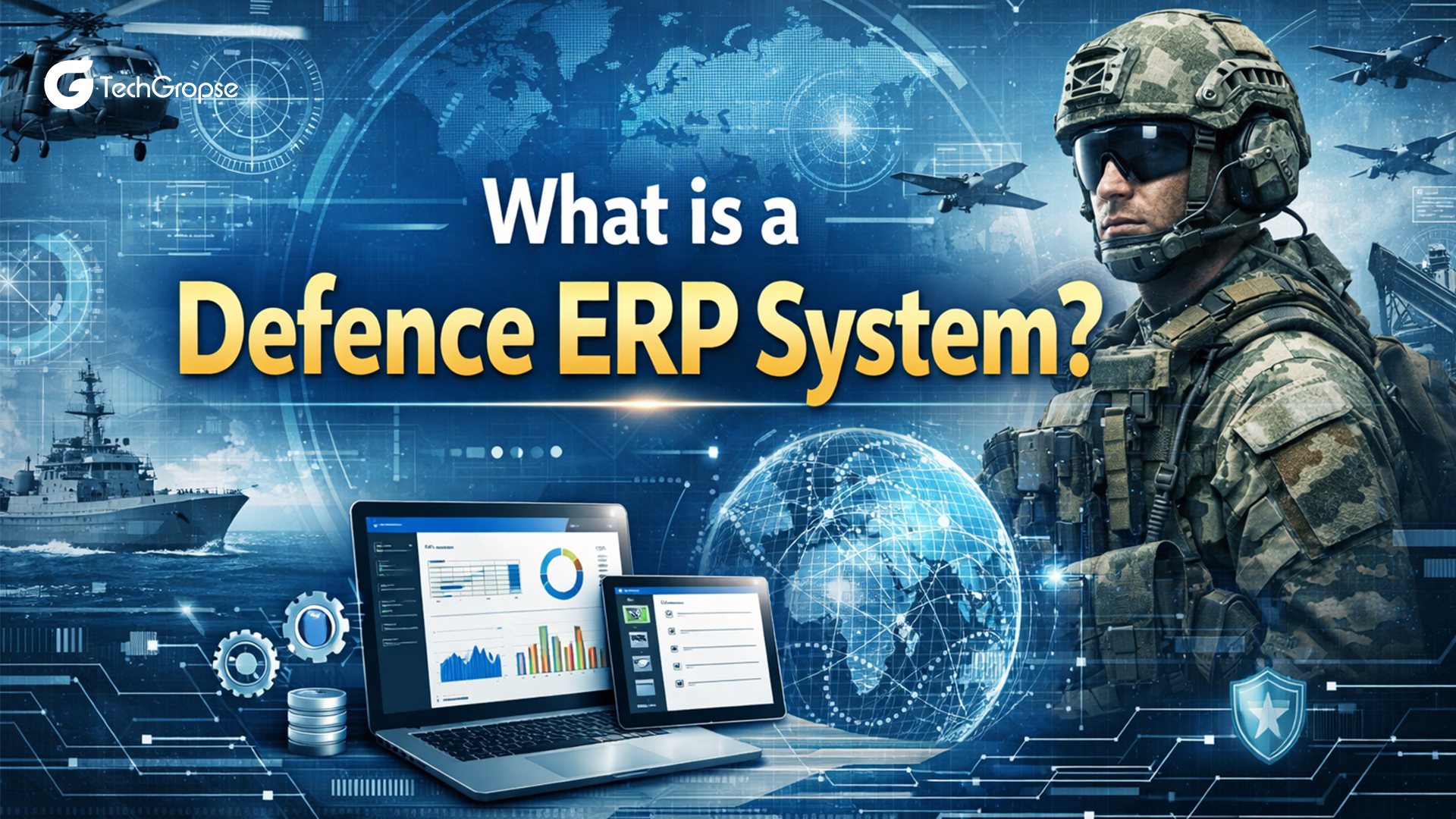
The defence ERP system functions as a central command system which oversees all operational activities and administrative tasks that defence organizations undertake. An ERP system integrates multiple departments and processes into a single digital environment which enables information to flow seamlessly throughout the entire organization.
The military sector requires this integration to operate effectively. Defence operations require the management of multiple equipment assets through their entire lifecycle and the coordination of various logistics systems and procurement methods and all personnel resources. The use of different software applications to handle these systems results in operational delays and creates problems with data accuracy.
A well-designed ERP system for defence organisations eliminates these challenges by creating a unified digital infrastructure.
Key Functions of a Defence ERP System
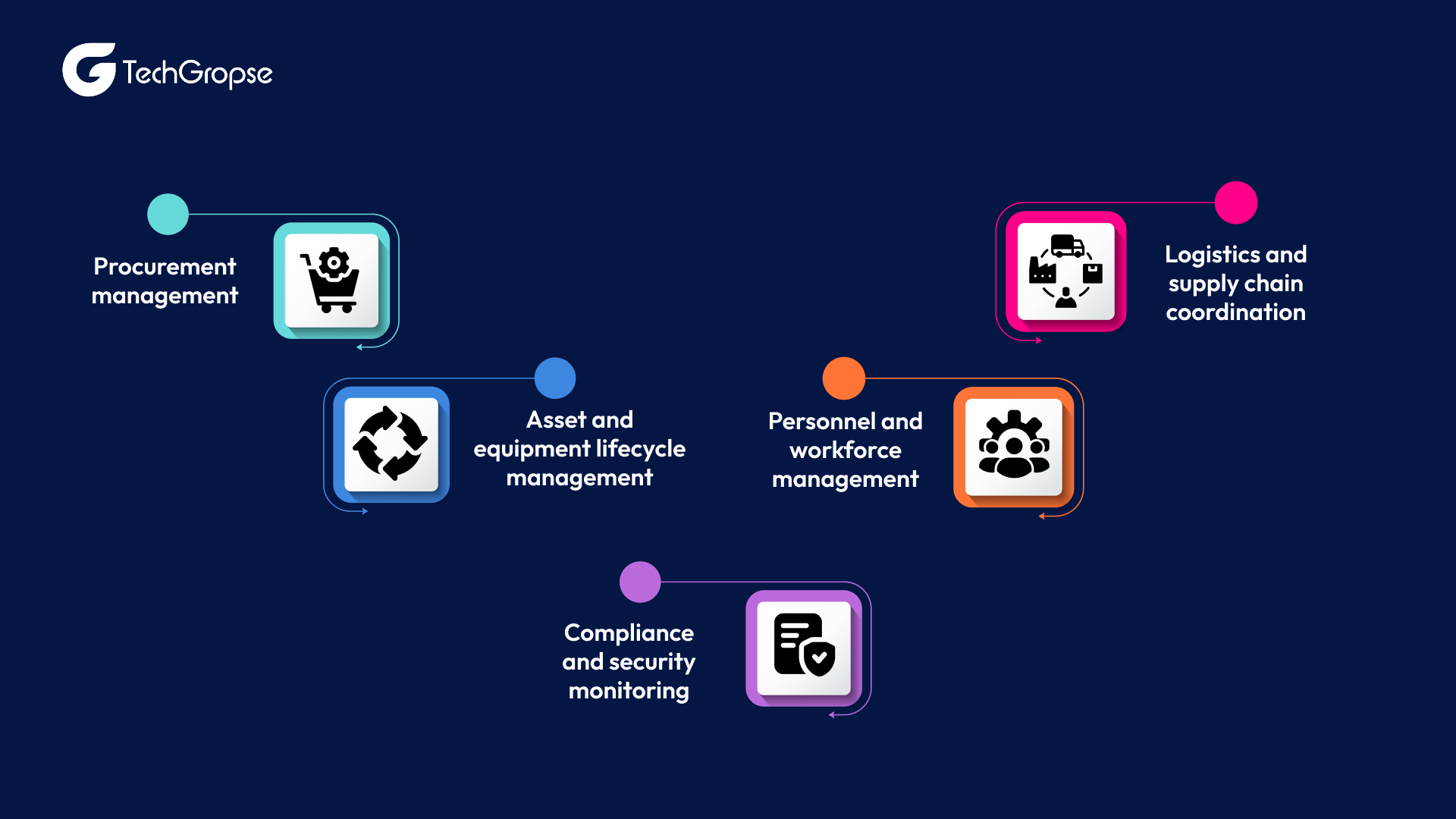
A typical defence ERP platform brings together several mission-critical capabilities.
Procurement management
Handles defence acquisitions, supplier approvals and contract management. Military procurement processes are highly regulated, and ERP platforms help ensure compliance while maintaining efficiency.
Logistics and supply chain coordination
Defence operations depend on accurate logistics management. ERP tools help track inventory levels, manage supply routes and monitor equipment movement across bases and operational zones.
Asset and equipment lifecycle management
Military organisations operate thousands of assets including vehicles, aircraft, weapons systems and communication equipment. ERP platforms track these assets from acquisition to maintenance and retirement.
Personnel and workforce management
Personnel records, training schedules, deployment planning and workforce coordination are all handled through integrated ERP modules.
Compliance and security monitoring
Because defence organisations operate under strict regulatory frameworks, ERP platforms also support security management and compliance monitoring.
Why the Defence Sector Needs Custom ERP Solutions?
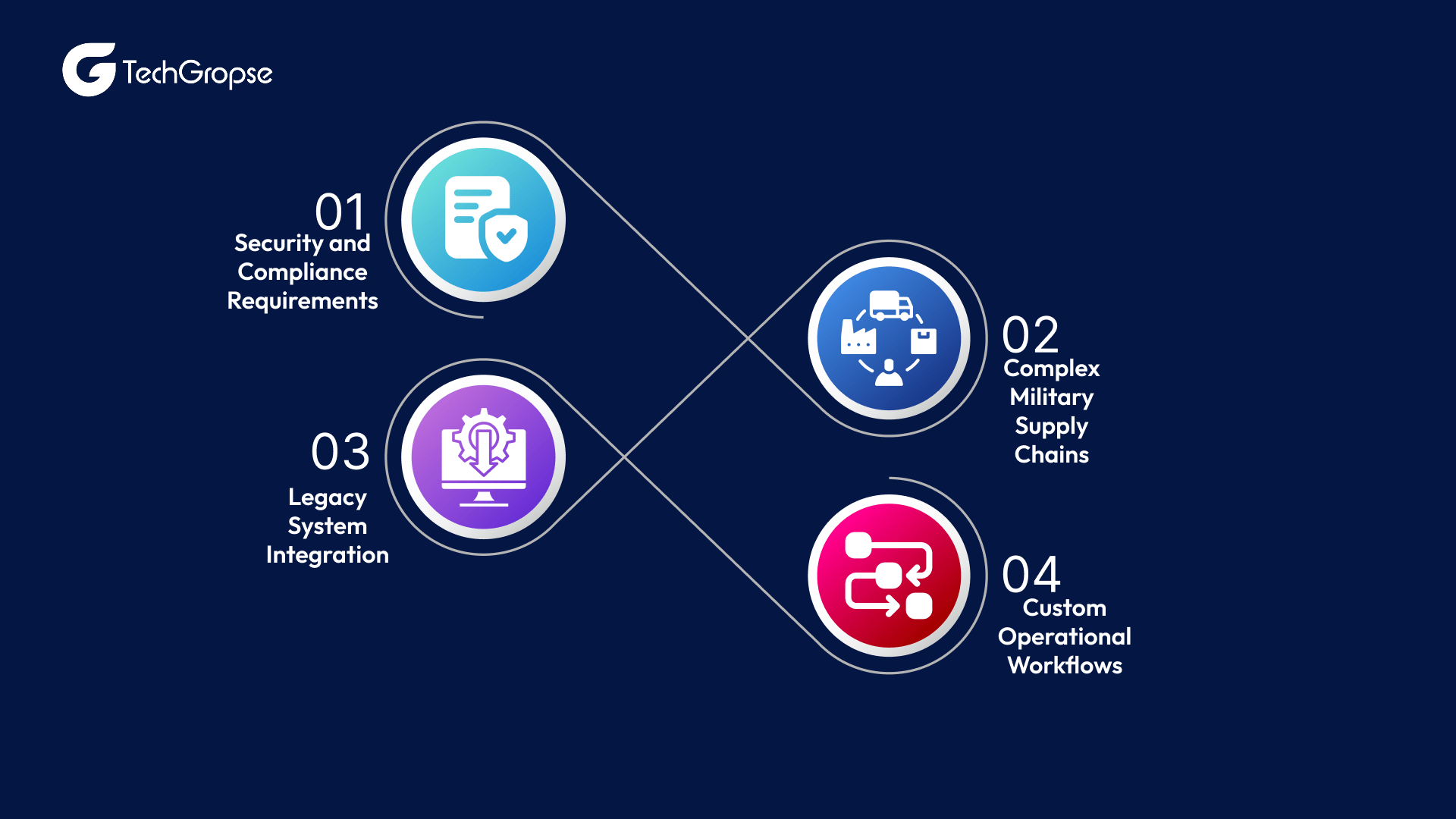
Many enterprise ERP tools are designed for manufacturing, retail or finance. They work well for those industries, but defence operations involve layers of security controls, specialised logistics and military grade infrastructure that require deeper customisation. This is where custom ERP for defence sector projects become essential.
Let’s look at the major reasons why defence organisations invest in defence ERP software development.
Security and Compliance Requirements
Security is the first and most obvious reason. Defence systems store classified information related to national infrastructure, equipment and operations. A standard ERP platform rarely includes the level of protection required in military environments.
Custom systems allow developers to implement advanced security frameworks such as ITAR compliance ERP standards and CMMC compliance software development requirements. These frameworks ensure that sensitive technical data and defence related information are protected according to strict government regulations.
For example, defence ERP systems often include:
- multi layer encryption protocols
- role based access control for classified data
- secure audit trails for sensitive activities
Complex Military Supply Chains
Military supply chains are far more complicated than typical commercial logistics networks. Equipment and materials may travel across multiple countries, defence bases and contractors before reaching operational units.
This is where specialised defence supply chain management software becomes critical. A modern defence ERP software development helps manage inventory, track equipment and coordinate suppliers across several tiers.
Key capabilities include:
- real time inventory visibility
- multi tier vendor management
- supply chain risk monitoring
Legacy System Integration
Another challenge within defence organisations is the presence of legacy technology. Many systems that control radar infrastructure, communication networks or weapons platforms were built decades ago.
A successful government ERP system development project must integrate with these existing platforms. Custom ERP solutions allow developers to build secure interfaces that connect ERP systems with:
- radar monitoring systems
- weapon system databases
- defence logistics platforms
Custom Operational Workflows
Military operations follow highly specialised procedures. Mission planning, field maintenance scheduling and operational readiness assessments all require customised workflows.
Standard ERP software rarely includes these capabilities out of the box. However, custom ERP platforms can be designed to support:
- mission planning coordination
- field equipment maintenance scheduling
- operational readiness tracking
Ultimately, the complexity of defence operations makes customisation unavoidable. This is why many military agencies and contractors invest in ERP for government defence contractors that are built specifically for their environment.
This is why organisations invest in custom ERP for defence sector operations instead of relying on generic ERP platforms.
Key Features of a Defence ERP System
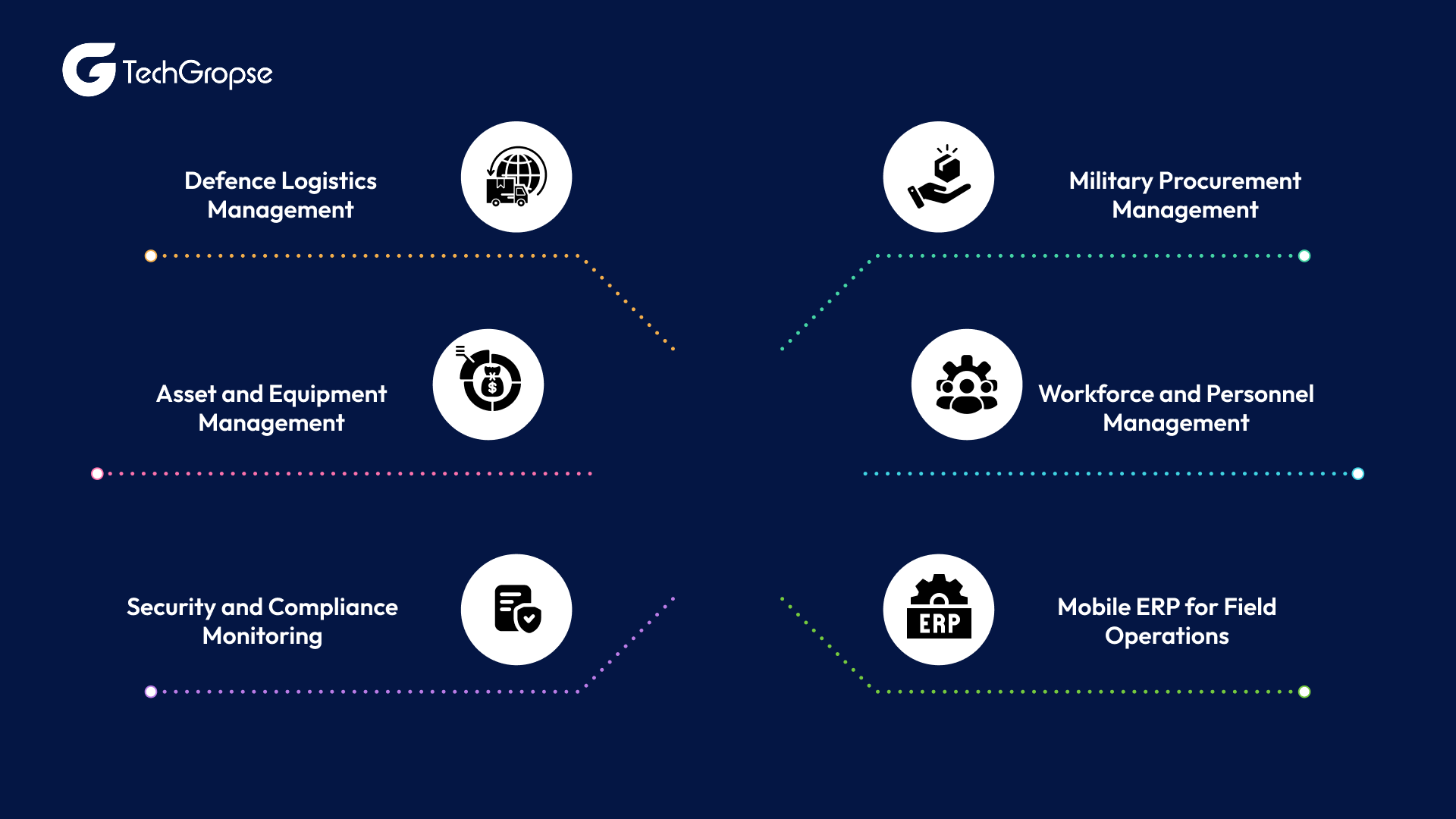
A modern defence ERP platform is much more than a traditional enterprise management tool. It acts as a central operating system for logistics, personnel coordination, procurement and equipment management. Because defence environments are highly dynamic, these systems must provide real time visibility across several operational layers.
Below are some of the most important features found in a well designed defence ERP software development solution.
Defence Logistics Management
Efficient logistics is the backbone of military readiness. Defence organisations move large volumes of equipment, supplies and vehicles between bases and operational locations.
A strong defence logistics software module helps coordinate these activities in real time.
Key capabilities often include:
- fleet logistics coordination across multiple bases
- inventory tracking for equipment and spare parts
- base supply monitoring to prevent shortages
For example, if a vehicle unit requires urgent equipment replacement, the ERP system can immediately identify available inventory and arrange supply transfers.
Military Procurement Management
Procurement processes in defence environments are heavily regulated and involve strict approval procedures. A dedicated military procurement software module helps manage these processes efficiently.
Important functions include:
- supplier approval workflows
- contract and vendor management
- procurement compliance monitoring
These tools ensure that defence purchases follow government regulations while maintaining transparency throughout the procurement cycle.
Asset and Equipment Management
Military organisations operate thousands of assets, including vehicles, communication devices, aircraft and weapons systems. Tracking the lifecycle of these assets is essential for operational readiness.
A robust defence asset management system helps organisations manage equipment from acquisition to retirement.
Typical features include:
- weapon system lifecycle monitoring
- predictive maintenance scheduling
- equipment deployment tracking
For example, maintenance teams can receive alerts when a critical component approaches its service interval, helping prevent unexpected failures.
Workforce and Personnel Management
Managing military personnel requires careful coordination. Training programs, deployment schedules and workforce availability must all be tracked accurately.
A defence workforce management software module helps centralise these responsibilities.
Common capabilities include:
- soldier and personnel record management
- workforce scheduling across units and bases
- training and certification tracking
Security and Compliance Monitoring
Because defence systems manage highly sensitive information, security monitoring is a built in requirement. Defence ERP software development include advanced mechanisms that protect classified data and ensure compliance with defence regulations.
Key security features often include:
- ITAR compliance ERP frameworks
- role based access control for different security levels
- encrypted data storage and communication protocols
Mobile ERP for Field Operations
Modern defence operations increasingly rely on mobile access to critical data. Command teams and field personnel often need real time information while working outside traditional office environments.
This is where defence ERP mobile app development becomes valuable.
Mobile ERP tools allow authorised users to:
- access secure dashboards from remote locations
- receive mission updates instantly
- submit field reports and operational data in real time
For example, maintenance teams working at a remote base can update equipment status directly through a secure mobile interface, ensuring that headquarters always has the latest operational information.
Benefits of ERP in Modernising Defence Operations
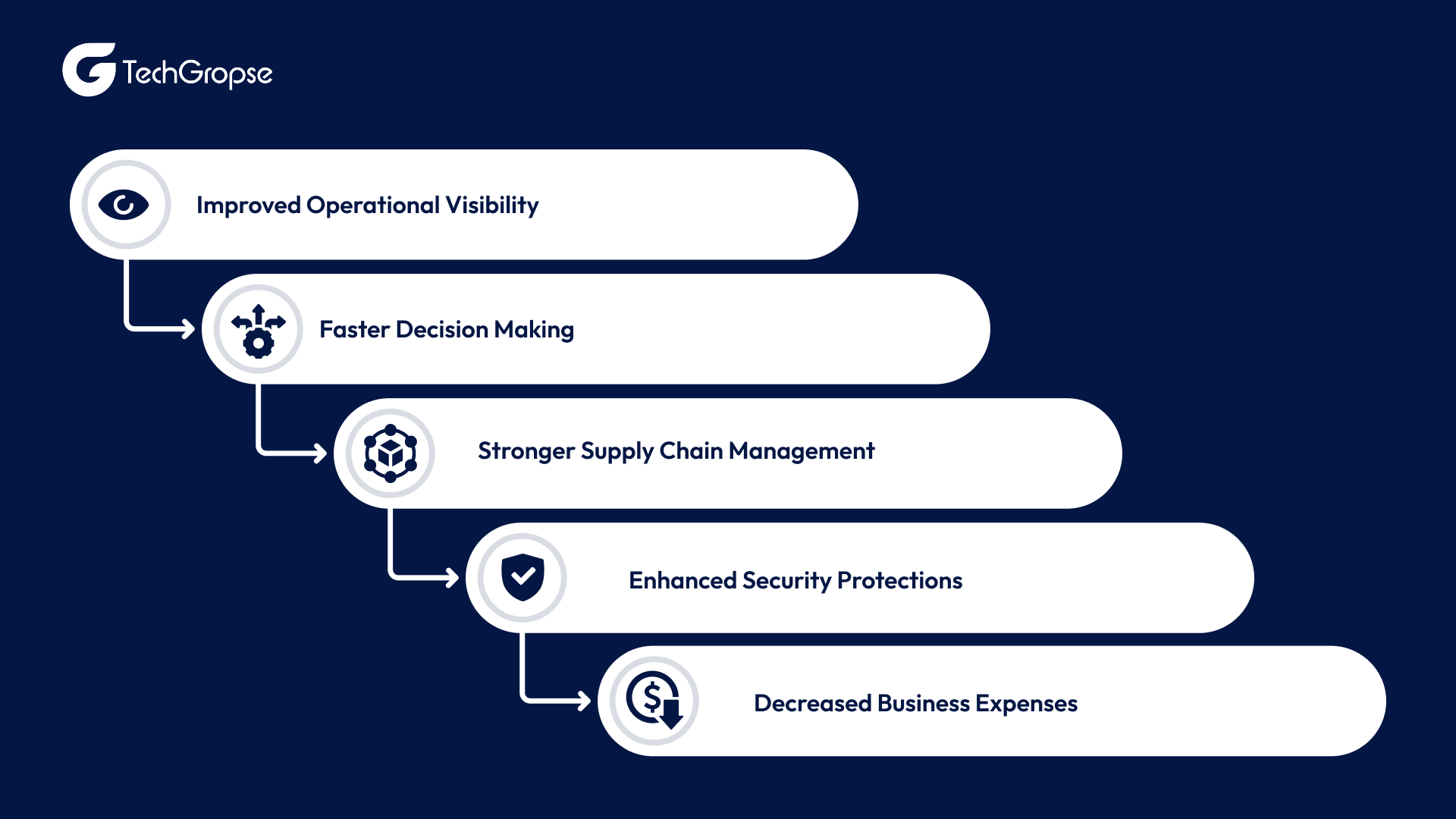
Below are some of the most significant benefits that defence organisations experience after implementing ERP platforms.
Improved Operational Visibility
Business leaders need precise information for operational decision-making, but dispersed databases fail to deliver that required transparency.
A centralised ERP platform provides a single dashboard which combines all logistics information and personnel data and procurement activities. Commanders and operational leaders can access real time insights across departments.
A base commander can immediately access equipment availability information and maintenance status data and supply level information without needing to request reports from various teams.
Faster Decision Making
Operational risks occur in defence environments because information delivery requires too much time. The ERP platforms eliminate this waiting period by enabling departments to share their data through interconnected dashboards.
Leadership teams can use real time analytics instead of waiting for manual reports. Procurement teams monitor supplier performance while logistics managers track inventory levels and operational units assess deployment readiness.
The defence ERP software development process depends on improved access to information because better technology enables quicker and better decision-making processes.
Stronger Supply Chain Management
Military supply chains operate in intricate ways because they involve multiple regions and different contracting partners. The network requires efficient management which depends on effective coordination.
ERP platforms deliver improved vendor tracking capabilities together with inventory management and logistics control systems. Defence contractors can achieve effective procurement and scheduling of delivery and equipment availability through ERP systems which function as a unified platform.
Organizations maintain operational capacity through total supply chain management which enables them to stop product shortages.
Enhanced Security Protections
Defence operations always treat security as their highest concern. ERP systems exist to help organizations comply with all relevant regulatory requirements which include ITAR and CMMC standards.
The platforms provide advanced capabilities which include role-based access control together with encrypted data handling and monitoring of user activities. The system enables secure access to sensitive data which only authorized users can reach.
Decreased Business Expenses
Defence organizations dedicate substantial resources to control their manual office work operations. Automated systems within ERP software handle multiple administrative tasks which organizations need to manage.
Automated workflows enable organizations to manage procurement approvals and asset tracking and maintenance scheduling activities. The system enables departments to accomplish their tasks more efficiently while decreasing their need for administrative support.
Automated systems enable defence agencies to achieve better budget control while keeping their operational functions intact.
Defence ERP Software Development Process (Step by Step)
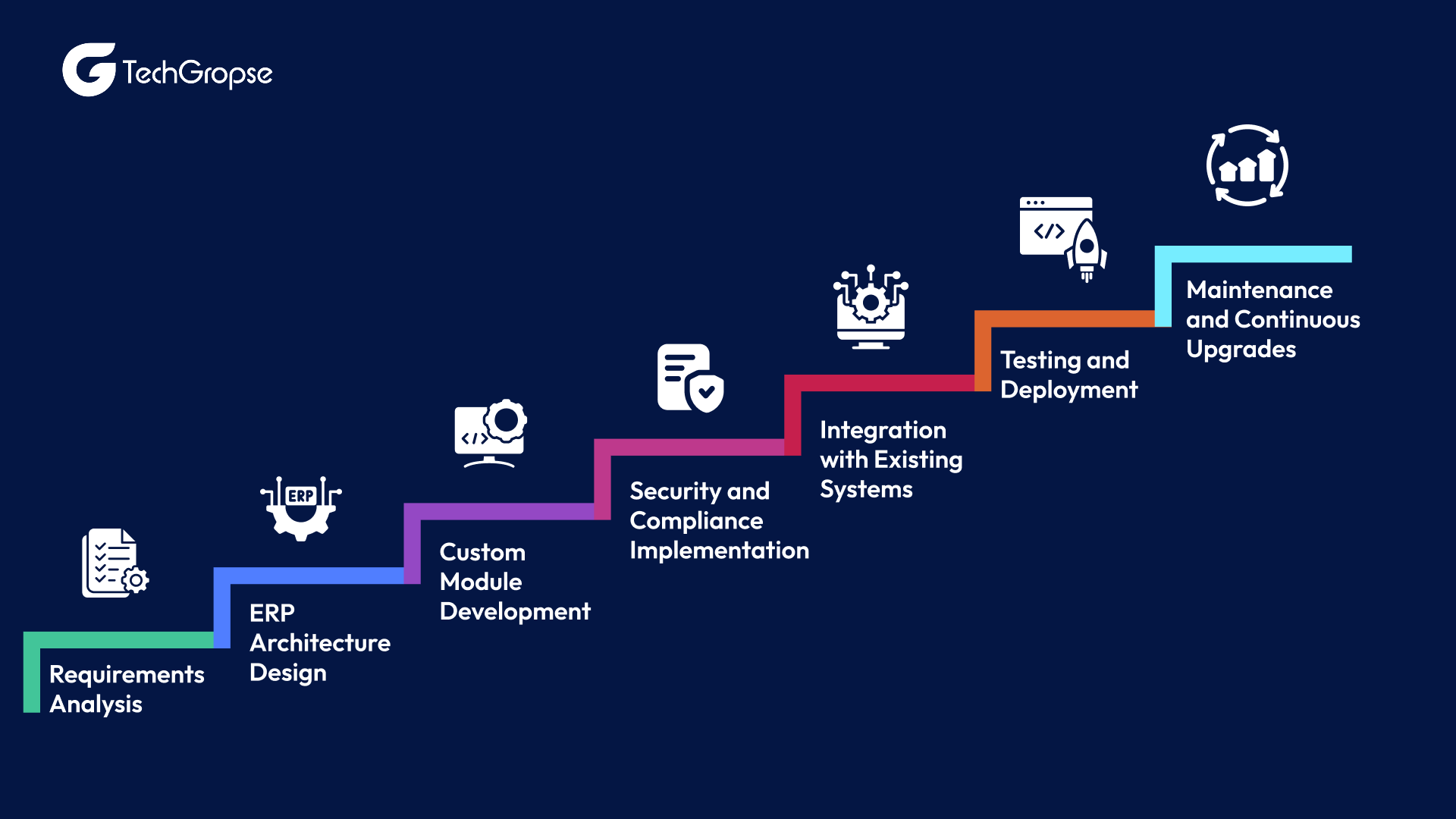
Understanding how to build a defence ERP system requires careful planning and a step by step development approach.
1. Requirements Analysis
The development process begins with a detailed assessment of operational requirements. Defence organisations operate differently from commercial businesses, so the ERP platform must align with their specific workflows.
During this stage, teams analyse:
- operational needs and organisational structure
- compliance requirements related to defence regulations
- existing system integrations and legacy infrastructure
2. ERP Architecture Design
Once requirements are clear, developers design the system architecture. Defence ERP platforms typically rely on scalable frameworks that support large volumes of data and users.
Many systems use microservices architecture, which allows different modules to operate independently while remaining connected.
Another key decision involves infrastructure. Some organisations prefer on premise deployment for security reasons, while others adopt cloud environments for scalability.
3. Custom Module Development
After designing the architecture, defence ERP software development teams begin building the individual modules that make up the ERP platform.
Typical modules include:
- procurement management systems
- logistics coordination platforms
- asset and equipment tracking tools
This stage is central to custom ERP development for military operations, since each defence organisation may require unique workflows.
4. Security and Compliance Implementation
Security implementation is one of the most critical stages of ERP development. Defence platforms must meet strict regulatory frameworks and data protection standards.
Developers integrate several security layers, including:
- advanced encryption protocols
- multi level access control systems
- defence compliance frameworks for regulated data
5. Integration with Existing Systems
Most defence organisations already operate several specialised systems, including command infrastructure, logistics platforms and manufacturing databases.
The ERP system must integrate with these technologies to ensure smooth data exchange. Integration often involves connecting the ERP platform with:
- legacy defence software
- command and communication systems
- defence manufacturing platforms
6. Testing and Deployment
Before deployment, the ERP platform undergoes extensive testing to ensure stability and security.
Testing phases usually include:
- penetration testing to identify vulnerabilities
- system performance testing under heavy workloads
- functional testing across different modules
Once testing is complete, the system is deployed in controlled stages to minimise operational disruption.
7. Maintenance and Continuous Upgrades
ERP systems are long term infrastructure platforms. After deployment, development teams continue supporting the platform through regular updates and improvements.
Maintenance activities typically include:
- feature updates and system enhancements
- compliance updates for new regulatory requirements
- performance optimisation and security monitoring
Technology Stack for Defence ERP Software Development
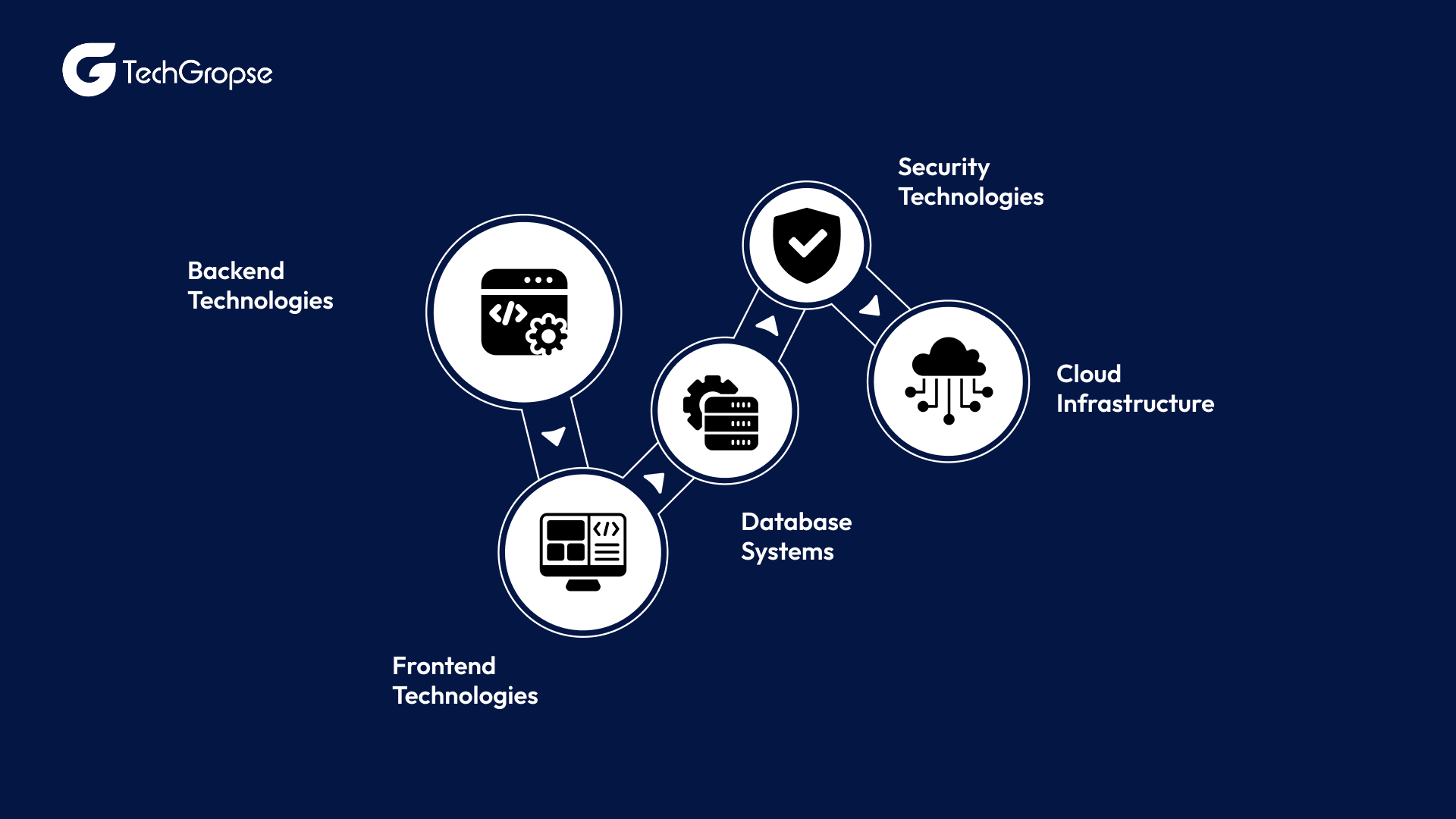
Developing enterprise systems for the defence sector requires robust technologies that can handle high security standards, large data volumes and complex integrations. The technology stack must support scalability while maintaining strict data protection protocols.
A well designed ERP platform typically combines several enterprise grade technologies.
Backend Technologies
The backend forms the foundation of ERP platforms. It handles business logic, database communication and system integrations.
Common backend technologies include:
- Java, widely used for large scale enterprise applications
- .NET, known for its stability and security features
- Python, often used for data processing and automation tools
These frameworks provide the performance and flexibility needed for secure ERP development.
Frontend Technologies
The user interface plays a major role in how defence personnel interact with ERP platforms. A clean and responsive interface helps users access operational data quickly.
Popular frontend frameworks include:
- Angular, suitable for complex enterprise dashboards
- React, widely used for building responsive web interfaces
These technologies enable interactive dashboards that display operational insights in real time.
Database Systems
Defence defence ERP software development process large volumes of sensitive data. Reliable database management systems are essential.
Common database technologies include:
- PostgreSQL for open source scalability
- Oracle for enterprise grade performance
- SQL Server for structured data management
These databases ensure that mission critical information is stored securely and retrieved quickly.
Cloud Infrastructure
Many modern ERP platforms rely on specialised government cloud environments. These platforms provide scalability while maintaining strict security standards.
Popular options include:
- AWS GovCloud, designed specifically for government workloads
- Azure Government, offering secure cloud environments for defence organisations
These platforms support the growing demand for cloud ERP for defence sector deployments.
Security Technologies
Security layers are essential for protecting defence infrastructure. Advanced technologies help safeguard sensitive operational data.
Important security tools may include:
- blockchain based identity verification systems
- advanced encryption protocols for data protection
- secure API gateways that control system access
Together, these technologies create a strong technical foundation for defence ERP platforms that must operate reliably in highly sensitive environments.
How Much Does Defence ERP Software Development Cost?
When organisations begin exploring enterprise platforms for military operations, one of the first questions that comes up is cost. The truth is, there is no single price tag for these systems. The defence ERP system cost depends on several technical and operational factors, including the number of modules, security requirements and the complexity of system integrations.
Unlike standard business software, defence ERP platforms must meet strict regulatory frameworks and operate within highly secure environments. As a result, development costs can vary widely depending on the organisation’s needs
| ERP Type | Estimated Cost |
|---|---|
| Basic Defence ERP | $50,000 – $80,000 |
| Mid scale ERP | $80,000 – $120,000 |
| Large Defence ERP Platform | $150,000+ |
Below are the major factors that influence defence ERP software development investment.
ERP Modules
The development cost of an ERP platform increases with every additional module which the system incorporates. Basic systems include procurement and logistics management but larger systems provide asset tracking and workforce management together with operational analytics.
The development process requires extra time for more modules because developers must complete testing and system connection work.
Security and Compliance
Defence organisations must comply with strict security frameworks such as ITAR and CMMC. The implementation of these requirements creates additional challenges during the development process.
The security system includes encrypted databases and access control systems together with compliance monitoring tools and complete audit trails. The defence department requires these security measures to safeguard its confidential information.
System Integrations
Most defence organisations already operate multiple legacy systems. ERP platforms require access to current operational systems which include command systems and logistics databases and manufacturing platforms.
The integration process needs development of custom APIs together with data synchronisation layers and testing procedures which require specialised knowledge.
Cloud vs On Premise Infrastructure
The architecture used for deployment impacts the overall expenses. Defence agencies select on-premise infrastructure because it gives them complete authority over their confidential data. Some organisations select secure government cloud environments to achieve both operational flexibility and access to remote facilities.
How TechGropse Builds Custom ERP for the Defence Sector
Developing ERP platforms for defence organisations requires more than technical expertise. It requires a deep understanding of operational workflows, security standards and enterprise architecture.
TechGropse approaches defence ERP software developmentwith a strong focus on scalability, security and real world operational needs. As a defence ERP development company, the team works closely with organisations to design platforms that integrate seamlessly with their existing infrastructure.
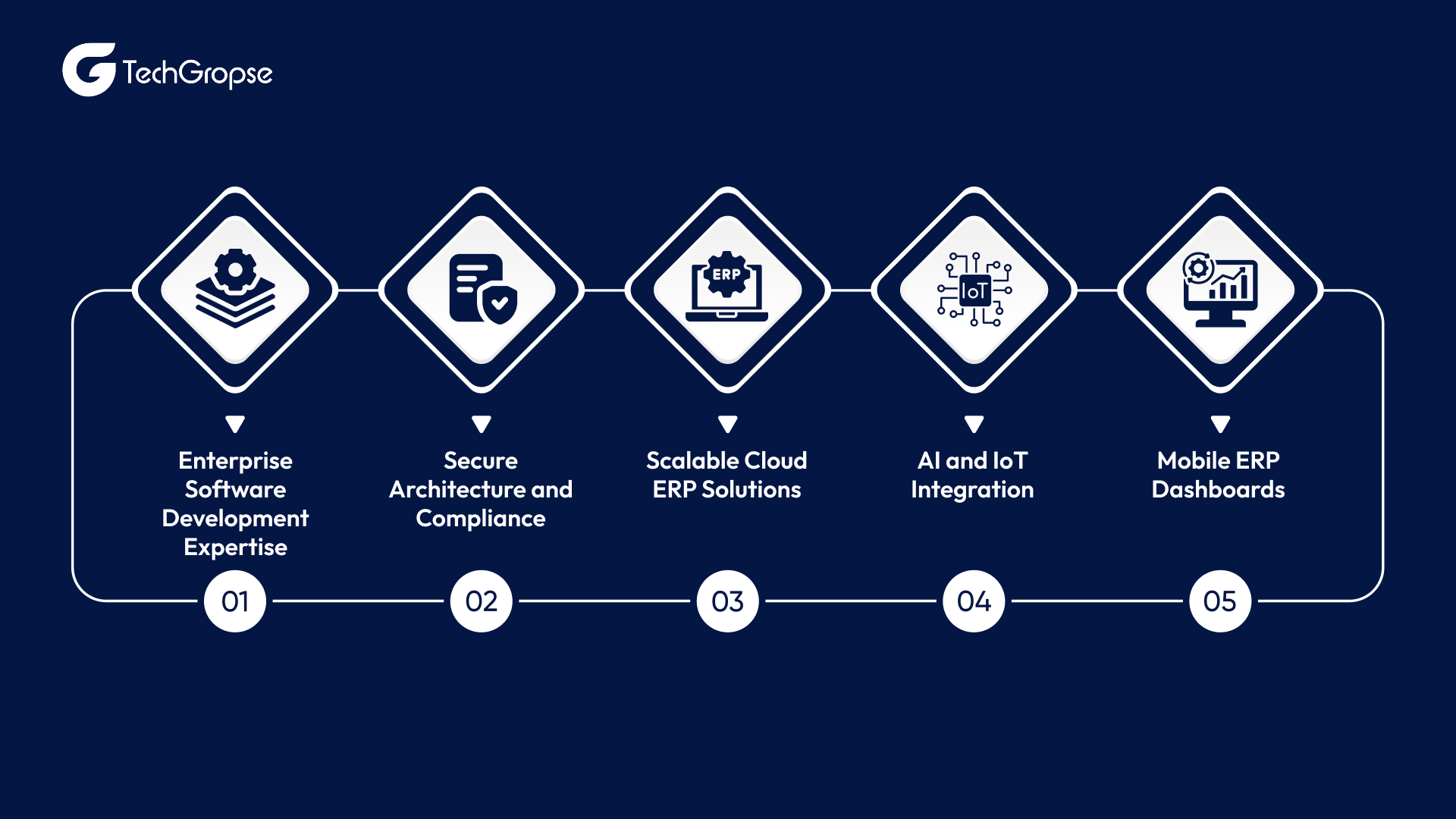
Enterprise Software Development Expertise
TechGropse has extensive experience delivering complex enterprise platforms across industries. This expertise allows the team to design systems capable of handling large data volumes, multi department workflows and high user loads.
Their Enterprise Software Development services focus on building stable and scalable platforms that support mission critical operations.
Secure Architecture and Compliance
Security remains at the centre of defence ERP platforms. TechGropse designs secure system architectures that incorporate encryption layers, access control protocols and regulatory compliance frameworks.
This ensures that organisations can manage classified information while maintaining strict security standards.
Scalable Cloud ERP Solutions
Many defence organisations are gradually moving toward secure cloud infrastructure. TechGropse builds scalable ERP environments that can operate on secure government cloud platforms or hybrid infrastructure.
These systems allow organisations to expand operations without rebuilding their technology stack.
AI and IoT Integration
Modern defence systems increasingly rely on intelligent data analysis and real time monitoring. Through AI & ML Development and IoT Development, TechGropse integrates advanced technologies into ERP platforms.
Examples include:
AI driven operational analytics
predictive maintenance for defence assets
IoT enabled logistics tracking
Mobile ERP Dashboards
Operational teams often require access to data outside traditional office environments. Through Mobile App Development, TechGropse builds secure mobile dashboards that allow authorised users to monitor logistics, asset status and operational updates in real time.
By combining enterprise architecture with emerging technologies, TechGropse delivers custom enterprise software for defence organisations that need secure and scalable digital infrastructure.
Conclusion
The defence sector is rapidly embracing digital transformation, and ERP platforms are becoming the backbone of this shift. By bringing logistics, procurement, personnel management and asset tracking into a single environment, ERP systems help organisations operate with greater clarity and efficiency.
More importantly, they create a secure foundation for data driven decision making. As defence infrastructure continues to evolve, organisations need systems that can scale, integrate with legacy technology and meet strict security standards.
This is why many agencies choose customised solutions rather than generic platforms. If your organisation is planning digital transformation, investing in defence ERP software development can streamline operations, improve security and modernise defence infrastructure.
Contact TechGropse to build a secure, scalable defence ERP solution tailored to your organisation’s operational needs.
FAQs
A defence ERP system is an enterprise platform that integrates logistics, procurement, workforce management and asset tracking into one secure environment. It centralises operational data so military organisations can manage resources, equipment and personnel efficiently across multiple departments and locations.
ERP platforms improve operational visibility and coordination. They connect procurement systems, logistics networks and asset management tools into a single platform. This integration helps commanders access real time data, improve planning and maintain operational readiness.
The cost of defence ERP development depends on system complexity, security requirements and integrations. Smaller ERP systems may start around $80,000, while large scale enterprise platforms for defence operations can exceed $500,000 depending on features and infrastructure requirements.
A modern defence ERP system should include logistics management, procurement tracking, asset lifecycle monitoring, workforce management and strong security controls. Advanced systems may also integrate AI analytics, predictive maintenance and mobile dashboards for operational monitoring.
Defence operations involve strict security regulations, specialised logistics networks and complex operational workflows. Generic ERP systems rarely meet these requirements. Custom ERP platforms allow organisations to build systems tailored to their operational structure and compliance needs.
Development timelines vary depending on system size and complexity. A smaller ERP platform may take six to eight months, while a full scale enterprise system with advanced integrations and security frameworks can require twelve to eighteen months.

Hello All, Aman Mishra has years of experience in the IT industry. His passion for helping people in all aspects of mobile app development. Therefore, He write several blogs that help the readers to get the appropriate information about mobile app development trends, technology, and many other aspects.In addition to providing mobile app development services in USA, he also provides maintenance & support services for businesses of all sizes. He tried to solve all their readers' queries and ensure that the given information would be helpful for them.

 info@techgropse.com