



























































The healthcare system of America is viewed as among the most expensive healthcare systems globally. Interestingly, however, the effectiveness of the digital healthcare solutions of America is one of the poorest in the world.
Every individual in America pays $10,500 annually for healthcare purposes. America spends about $5.3 trillion yearly on healthcare costs; nonetheless, it ranks 62nd in the world on the life expectancy index. Additionally, there is an increase in chronic illnesses in Americans, with some individuals having inadequate insurance coverage, while others lack insurance coverage.
So the ultimate question is:
Why are they achieving so little despite all this spending?
The answer is complicated – although it reveals a healthcare system which has been constructed for quantity, not quality; for treating symptoms rather than preventing illness, and with profit at the forefront.
The fault lines of the system are no longer microscopic cracks, but are growing weak. Be it the closure of rural hospitals struggling to survive financially, the overcrowding of hospital emergency wards with people seeking care that should have come from a primary care provider, or untreated mental illnesses owing to unaffordability.
Their present approach is not only inefficient but ultimately unsustainable.
How to attain Sustainability?
Creating a health care system with these characteristics – equity, affordability, technology, and sustainability – does not constitute wishful thinking about some imaginary future utopia. Such systems have existed in other nations before.
With proper policy change, prevention strategies, innovative technologies, and appropriate funding mechanisms, it can be accomplished in the United States.
This blog post will provide the precise details, step by step, for building a sustainable digital healthcare solution in the United States, which must benefit not only select individuals but all Americans, regardless of where they reside or their age group.
What is a Sustainable Healthcare System?
When many people hear about sustainability, they immediately start thinking of various environmental programs. In the health care setting, however, sustainability means quite the opposite: the development of a system that will be able to offer equal and high-quality services to all patients in the future at affordable prices.
Sustainability in healthcare means a system that is capable of handling stressors and changes while maintaining performance levels regardless of whatever challenges are thrown at the sector, such as an aging population, a global health crisis, and/or economic instability – all without pushing its workers to their limits, draining patients financially, or neglecting vulnerable populations.
In the context of the US, this is more than a hypothetical discussion, but rather a necessary one. According to data from the National Health Expenditure Data, the country invests roughly $4.9 trillion in healthcare annually – yet still falls behind peer nations when evaluating metrics like longevity, preventable mortality rates, and health equity.
The basic principles of sustainability in digital healthcare solutions include four mandatory components:
- Accessibility – access for everyone irrespective of geographic location or economic condition.
- Affordability – nobody should risk being financially ruined to remain healthy.
- Quality – evidence-based medical assistance that will yield concrete results.
- Resilience – the ability to cope with any challenge.
Sustainability implies not only economizing but also prioritizing expenditures and thinking long-term.
Status of the US Healthcare System Today: Key Challenges
Before talking about solutions, let’s discuss the key challenges first
Quantity is rewarded, not quality – Providers earn money for every test, procedure, and visit – but never for maintaining good health in patients. There is an incentive to maximize services rather than minimize them, which could result in better results.
A physician preventing a surgical procedure makes less money than if the surgery were performed.
Rural residents are being abandoned – Dozens of rural facilities have closed their doors due to financial reasons.
Rural populations may need to travel hundreds of miles to see specialists or not seek medical advice at all. The implications are poor health and reduced life expectancy.
Mental health is taken less seriously – One in five Americans suffers from mental disorders annually; however, their treatment continues to be grossly insufficient.
The reason for that lies in high prices: both therapy and visits to psychiatrists require paying huge amounts of money, which many doctors are unwilling to accept from health insurers.
The burden of administrative costs is excessive – The number of specialists whose job is related to the processing of the billing department and insurance claims is too high.
Estimates put the proportion of the administrative costs in the total cost of healthcare services at close to 30%.
Importance of Prevention in Creating a Sustainable Healthcare System
This is what every successful digital healthcare solution in the world knows: It’s always more economical to maintain someone’s health than to treat him when he gets ill.
A stay in the hospital for a disease that could have been avoided will set you back thousands of dollars. Prevention measures such as regular health checks, screening, and wellness programs are much more affordable and effective.
If the resources are to be used to sustain the healthcare sector, they must shift from curative treatments to preventive measures, which should include:
- Efforts in the community that would help patients in the environment they reside, be it at work, schools, or communities, rather than making them attend hospitals.
- Screening efforts for free and reduced prices for common conditions like high blood pressure, diabetes, and certain cancers.
- Incentives concerning lifestyles to help individuals make more responsible choices by reducing the premiums on their health insurance policies whenever they get regular check-ups or attend gym classes.
- Healthy diets that can help prevent diseases since nutrition is one of the key contributors to many diseases. It is a public health issue as well as an economic one.
Finland and Japan are some of the countries that have placed a lot of emphasis on prevention in the last several decades, which is why they have achieved great health gains within their countries. The United States can also achieve similar results.
Impact of Technology and Digitization on the Future of Healthcare
Here is where it gets really interesting. Digital health USA solutions are already starting to transform the healthcare industry, and things can only get faster from here.
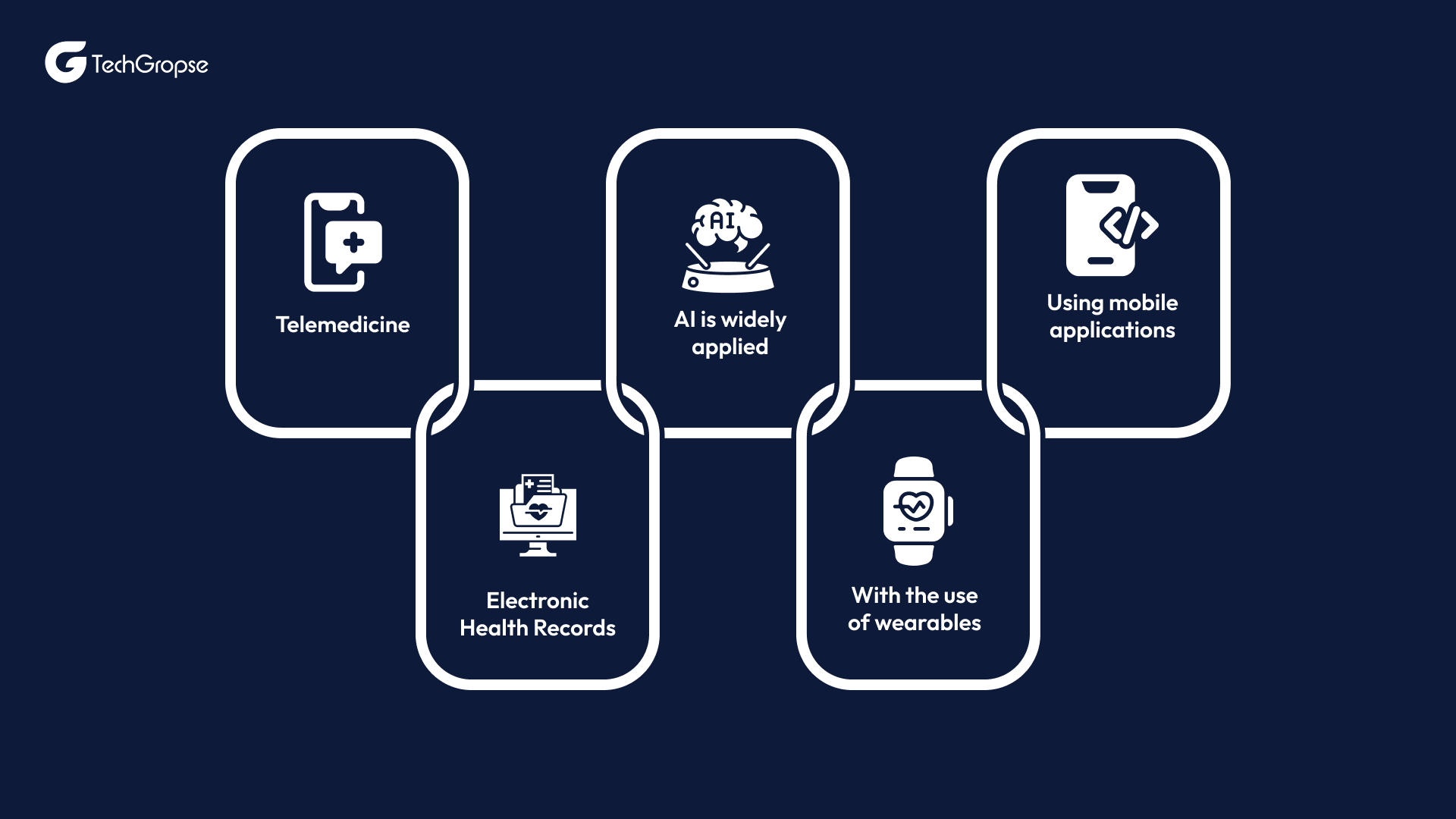
- Telemedicine took off amid the COVID-19 pandemic, and there has been no looking back since then. The opportunity to consult your doctor virtually, whether you stay in a remote place with no local doctor or cannot afford to take leave from work, is something that can really revolutionize accessibility.
- Electronic Health Records, when done properly, allow all the medical records of patients to travel along with them from one doctor to another. This means no need for repetitive tests or loss of important data.
Unfortunately, interoperability has been a big challenge in most Electronic Health Records until now.
- AI is widely applied in diagnosing diseases and making personalized treatments based on the algorithm’s analysis of imaging tests, and even forecasting some diseases even before a person experiences any symptoms.
- With the use of wearables, such as smart watches, glucometers, and all kinds of gym equipment, people get access to health information. And, by knowing about what is going on inside one’s body, they will be able to prevent health problems.
- Using mobile applications helps chronically ill individuals to track their health conditions, make appointments for treatment, take drugs on time, receive psychological assistance, etc.
People deprived of access to ordinary healthcare services because of various reasons may benefit from such applications.
Nevertheless, it is essential to guarantee equal access to technologies, and not just for the wealthy with high-end gadgets and the Internet.
Mental Well-being and Its Part in a Sustainable Healthcare System
Mental illness has been considered independent of physical illness far too long, whether in practice or perception. This separation has come at a steep price.
Mental illnesses that go untreated lead to greater occurrences of chronic illnesses, substance abuse, homelessness, and joblessness. They increase the number of visits to hospital emergency rooms. They decrease life expectancy. They cost the U.S. economy hundreds of billions annually in lost work potential.
A sustainable digital healthcare solution sees mind and body as what they truly are: inseparable.
- Increase insurance coverage of mental health services
- Including mental health screenings in primary care visits
- Increasing the number of providers of mental health treatments
- Employing technology to assist those in need, like Teletherapy
Proper treatment of mental disorders is not only humane, but it is also a good investment for society.
Role of Public-Private Partnerships in Creating Sustainable Changes in the System
The government alone cannot solve the problem of healthcare. The private sector alone cannot solve it either. But working together, with proper incentives and constraints, both sectors can do wonders.
There are already some examples of successful collaboration between public and private actors in certain fields:
- Healthcare infrastructure construction: private enterprises constructing and operating clinics in underdeveloped regions on the condition of governmental funding or tax breaks.
- R&D in medicines: companies developing drugs in partnership with relevant authorities based on the demands of the public sector, not private investors’ desires.
- Worker education: private firms are establishing training centers in cooperation with local colleges and universities in order to prepare specialists in underserved professions.
- Data exchanges: health providers exchanging anonymous statistics with research organizations to gain insight into the epidemiology of certain diseases and their treatment.
The main issue in ensuring the success of such initiatives is accountability on behalf of the private sector. Their activities should be measured by results rather than profit.
Key Lessons that the USA can Learn from Other Countries’ Healthcare Systems
There’s no need for Americans to reinvent the wheel. Other nations have been down this road before.
- Germany employs a multi-payer system that involves mandatory insurance but gives consumers the ability to select among various nonprofit insurers. The results include near-universal health coverage, excellent primary care, and far lower overhead costs than found in the US.
- In Japan, where people live longer and stay healthier despite their advanced age, there’s a combination of universal insurance, preventive medicine, and dietary practices.
- Netherland enjoy the reputation of having one of the best healthcare systems in the world, thanks to regulated insurance plans that require participation and provide subsidies for poorer patients.
No system is perfect; each nation faces its own unique issues and challenges. However, each of these systems works well compared to ours in terms of covering more citizens at more affordable prices and delivering better health outcomes.
Significance of App Development or Healthcare in a Sustainable System
The implementation of digital healthcare solutions in the USA is perhaps best seen through the emergence of specialized healthcare apps.
While there are many wellness-related applications that people use on a daily basis, the new generation of healthcare apps serves a much more serious purpose and helps provide better healthcare services, as well as helps patients maintain their own health.
Effective healthcare apps can:
- Allow patients to monitor their symptoms and communicate relevant data to their care providers.
- Send reminders about medications to ensure better compliance with prescribed treatment
- Offer telemedicine features for patients to consult remotely
- Provide psychological assistance to patients between appointments
- Manage chronic diseases, such as diabetes or hypertension
- Ensure better coordination of patients’ healthcare services
When it comes to developing apps for healthcare providers, it is not only about remaining relevant technologically but also meeting the clients where they are: their smartphones. Americans use their phones 47 times per day. Healthcare applications can leverage that habit for patients’ benefit.
A vital point here is that not all healthcare applications are created equally. Regulation, scientific approach, and usability testing are necessary for developing any application.
Conclusion: Building a Healthcare System that Lasts
Sustainable development of digital healthcare solutions in the USA can be achieved only through the right policy decisions, a correct attitude, and primarily with the help of the right technology.
Investments in digital health in the USA should not be left for tomorrow because it is the most efficient way of reaching a sustainable healthcare system.
Technology and knowledge – both of those are available today. What has been lacking to make them function properly and create something bigger is dedication and the right tech company.
How TechGropse can help you?
TechGropse is an experienced company that provides reliable digital healthcare app development services. No matter what kind of digital product you need,
- Telemedicine solutions
- Chronic illness management apps
- Psychological care applications
- Hospital management software, etc
The main thing that makes the difference when you are choosing a developer for your project is their knowledge of the sector. And the experience of TechGropse is rich enough to know everything about HIPAA compliance, EHR system integration, and patient data protection.
Moreover, all digital healthcare solutions are created uniquely, thoroughly developed, and rigorously tested on end-users.
TechGropse offers you much more than just another app, it is a provider tailored mobile apps.
It will become a powerful addition to your current strategy of providing healthcare services.
Partnering with TechGropse is a great option for those who want to develop custom mobile app and software that provides high performance.
FAQs (Frequently Asked Questions)
As per the given statistics, the amount spent by the US annually on healthcare totals around $4.9 trillion, while it holds 62nd place in the ranking for life expectancy rates, being one of the poorest performers among the rest. Presently, the system fosters over-medication and does not focus on patients’ well-being, hence its costs remain very high with no results.
The first thing to bear in mind about these principles is that none of them can be negotiated. They include accessibility, affordability, quality, and resilience, which means that everyone, whether living in a rural or urban area and irrespective of income level, will have affordable access to high-quality healthcare services.
The utilization of technology for making the healthcare industry sustainable includes telemedicine, Artificial Intelligence for diagnostics, EHR, wearables, and mobile apps for health purposes.
Mental health plays a very important role in ensuring that the healthcare system can become sustainable because people suffering from mental disorders can increase the expenses of healthcare services, chronic illnesses, and even losses in productivity.
TechGropse specializes in developing tailor-made healthcare applications, including telemedicine applications, mental health applications, and hospital management applications. With its vast experience in the sector and full-service development process, TechGropse creates applications that truly make a difference in patients’ lives and well-being.

Hello All, Aman Mishra has years of experience in the IT industry. His passion for helping people in all aspects of mobile app development. Therefore, He write several blogs that help the readers to get the appropriate information about mobile app development trends, technology, and many other aspects.In addition to providing mobile app development services in USA, he also provides maintenance & support services for businesses of all sizes. He tried to solve all their readers' queries and ensure that the given information would be helpful for them.


 info@techgropse.com